
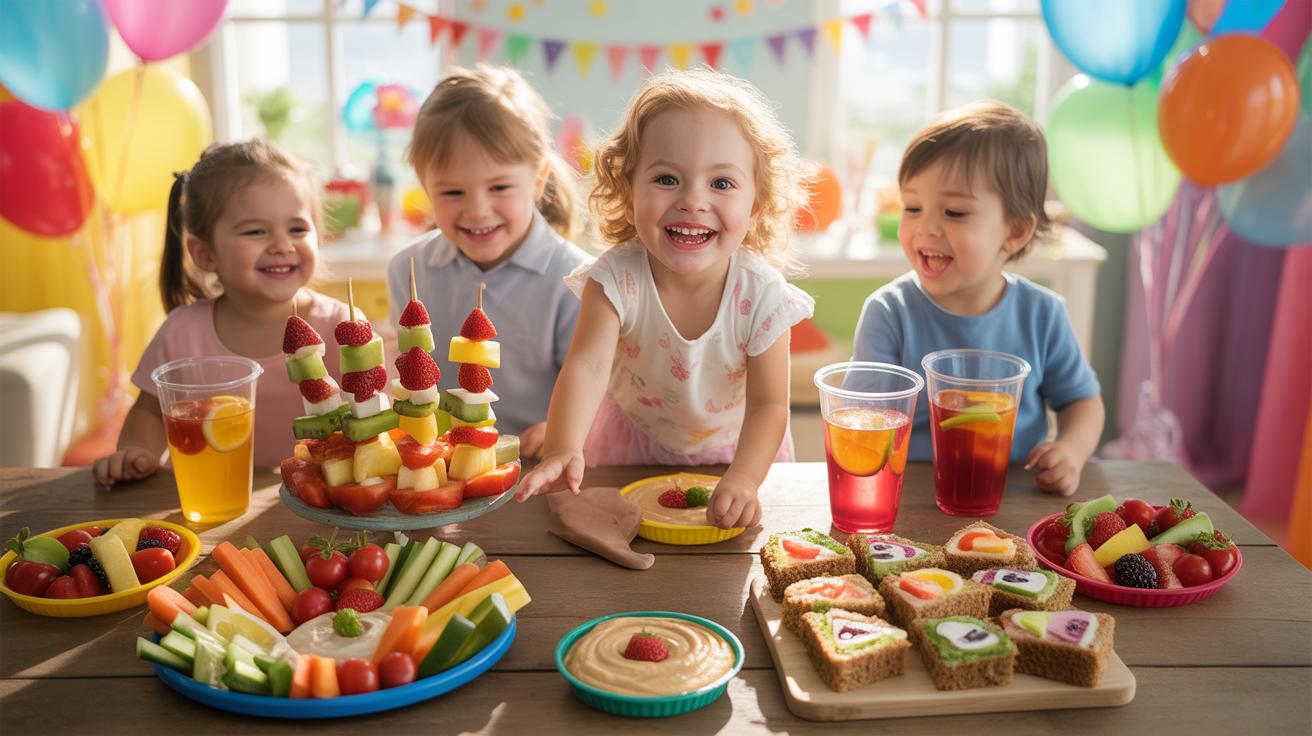
What Makes A Great Healthy Fun Kids Snack For A Birthday Party
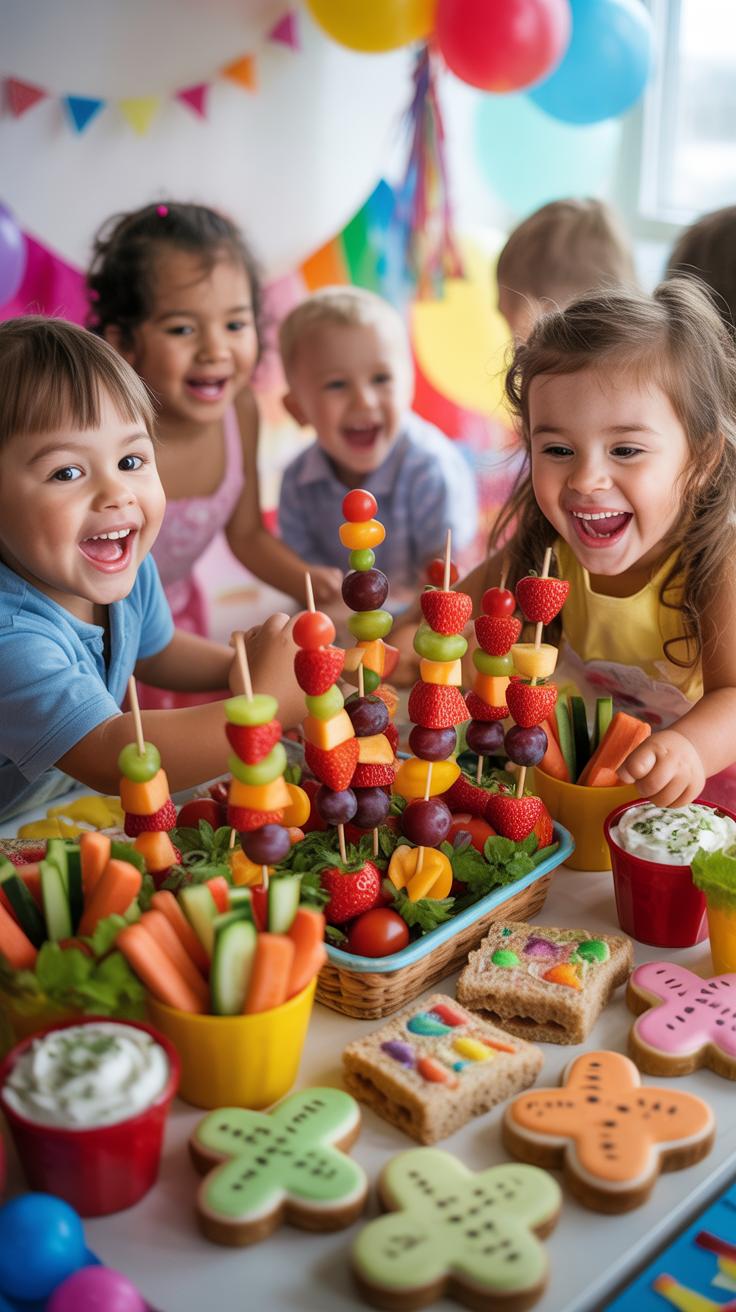
Balancing Nutrition And Fun So Kids Actually Want To Eat It
Nutrition fails if kids refuse to eat. You must bridge the gap between biological needs and kid appeal. Use bright colors from natural sources like berries, carrots, and peppers. High contrast attracts children to a plate. Focus on crunch and sweetness which are safe sensory profiles for most ages. Avoid the heavy use of greens that often trigger food neophobia in groups.
Tactical nutrition requires hiding high fiber and protein inside familiar shapes. Use cookie cutters to turn melon slices into stars or sandwiches into animals. This psychological trick shifts the focus from the ingredient to the form. Do not lecture kids on health benefits during the event. Let the visual presentation do the work. High quality fats and complex carbs will prevent the typical sugar crash.
How Portion Size And Finger Food Format Keep Party Snacking Stress Free
Size dictates consumption rates at a party. Small portions allow children to sample many items without wasting food. Use the finger food format to remove the need for silverware. This reduces the risk of spills and cuts cleanup time significantly. Handheld snacks empower kids to eat while moving. This fits the high energy nature of a typical birthday celebration.
Standardize sizes to help you track intake and manage inventory. Use muffin tins or small cups to define clear boundaries for each snack. These containers prevent cross contamination of allergens between different food groups. Individual servings also improve hygiene by stopping multiple hands from touching the same pile of food. Clear portions ensure that every guest gets an equal share of the high value snacks.
Fruit Decoration Ideas For Kids That Double As Party Centerpieces
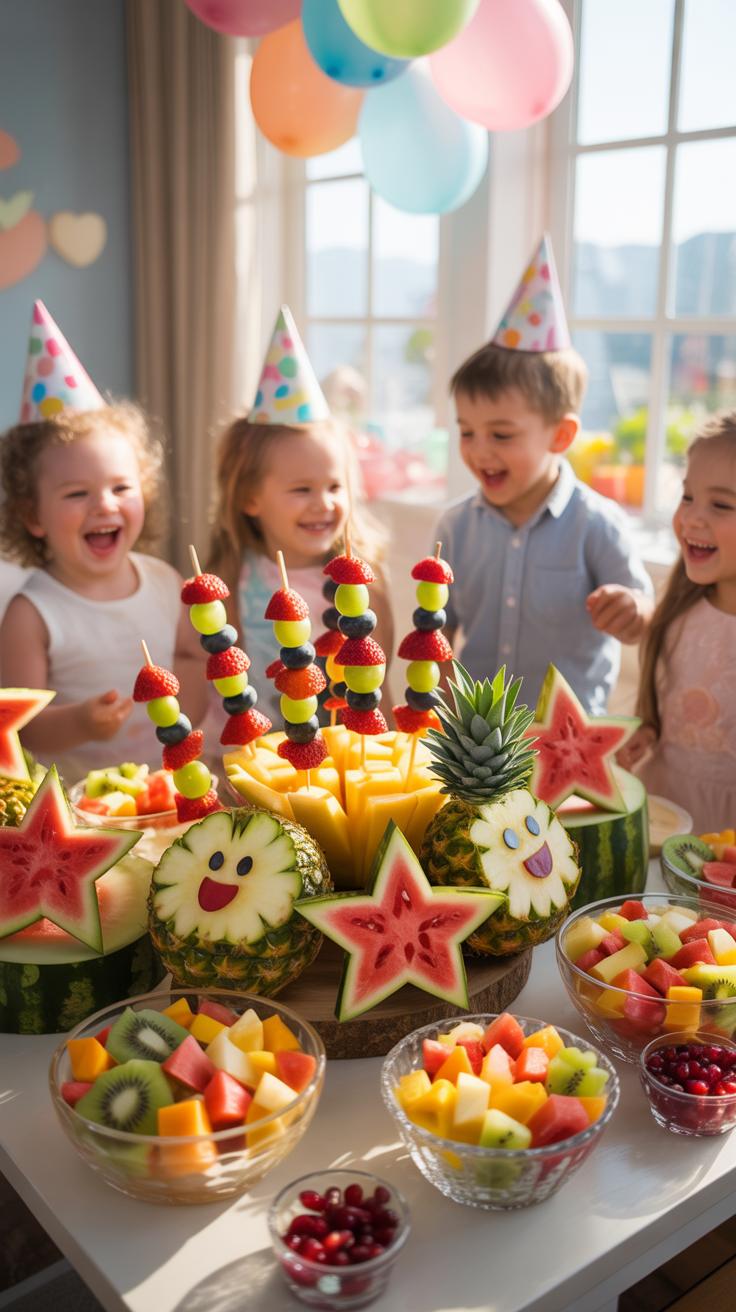
Turning Watermelon Strawberries And Grapes Into Edible Party Decorations
Watermelon serves as a structural base for large edible displays. Use the thick rind to carve hollow bowls or tiered towers. This fruit provides high water content and natural sugars without processed additives. Set the carved shell in the center of the table to anchor the food spread. It holds its shape for hours at room temperature. This makes it a reliable choice for long events.
Strawberries and grapes add color and texture to the display. Group strawberries tightly to create a bold red focal point. Use green and red grapes to fill gaps between larger fruit pieces. These small fruits do not require peeling or heavy prep work. Wash them thoroughly and dry them before assembly to prevent sliding. Arrange them in patterns to guide the eyes of the guests across the table.
Using Cookie Cutters And Skewers To Shape Fruit Into Fun Birthday Displays
Cookie cutters transform flat fruit slices into recognizable shapes. Slice melons and pineapples into consistent one inch rounds first. Press metal cutters through the flesh to create stars, hearts, or animals. This method reduces waste by using the scraps for juices or smoothies. Uniform shapes create a professional look that appeals to children. Clean edges ensure the fruit remains visually sharp throughout the party.
Skewers allow you to build vertical height on the snack table. Thread fruit shapes onto wooden sticks to create edible bouquets. Use firm fruits like cantaloupe or honeydew to prevent the pieces from falling off the sticks. Stick the finished skewers into a foam base or the watermelon shell. This keeps the food off the table surface and improves hygiene. Vertical displays save space on crowded tables and attract immediate attention.
Fruit Salad Cones And Fruit In Cones A Crowd Pleasing Party Treat
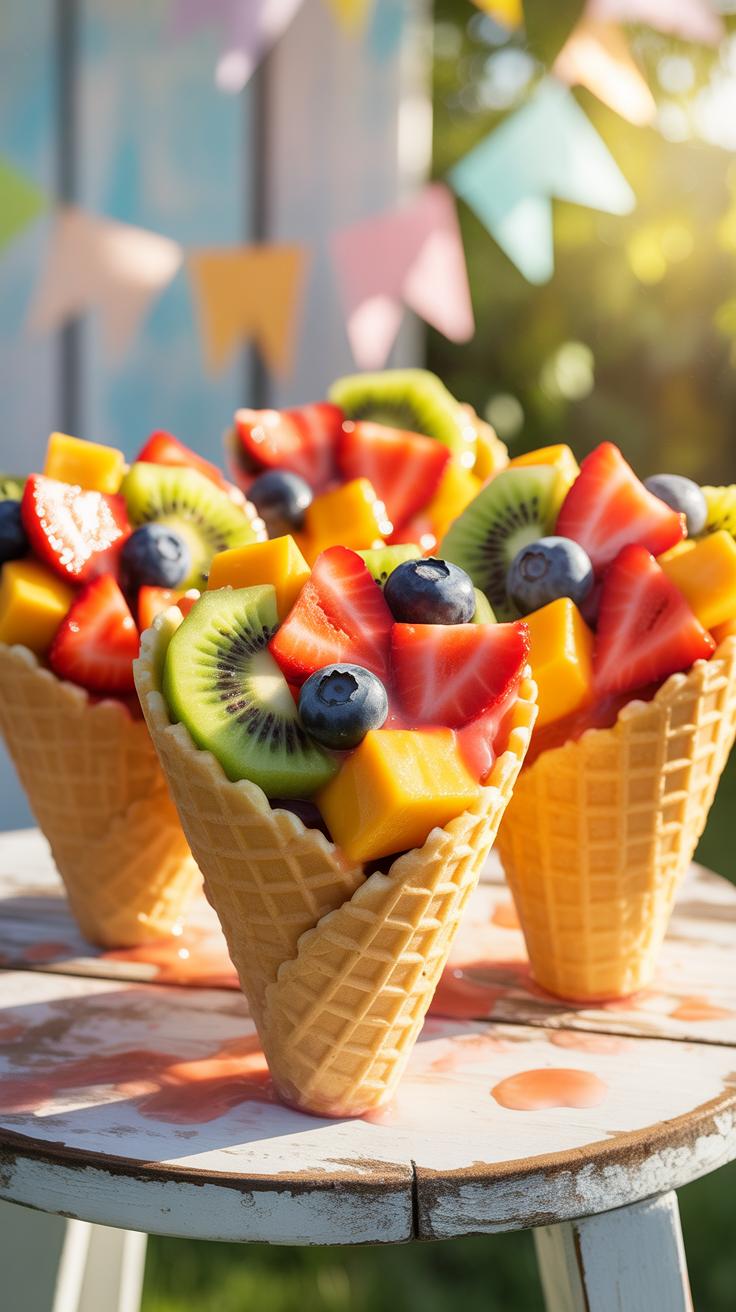
Why Serving Fruit Salad In Ice Cream Cones Is A Smart Party Hack
Serving fruit in ice cream cones eliminates the need for plastic bowls and spoons. This creates a zero-waste vessel that kids can consume entirely. It solves the common problem of heavy cleanup after a large event. The cone shape fits naturally in a child’s hand. This portability allows guests to move around and play without dropping sticky utensils or spilling messy bowls.
This method also controls portion sizes effectively. It prevents children from taking more than they can eat while still feeling like a treat. The novelty of the cone tricks the brain into viewing fruit as a dessert rather than a health food. Strategically, this reduces the demand for high-sugar alternatives like cake. You save money on disposable catering supplies while promoting a healthier eating environment.
Best Fruit Combinations To Fill Cones For A Colorful, Nutritious Snack
Select fruits based on their moisture content and structural integrity. High-water fruits like watermelon can make the cone soggy if left too long. Use firm bases like melon or apple to provide support. Aim for a mix of colors to increase visual appeal and nutritional variety. Denser fruits sit better at the bottom to act as a barrier against moisture.
- Berries and Grapes: Use whole blueberries, raspberries, and seedless grapes. These fruits require no slicing and do not brown. They maintain their shape well and provide a burst of natural sugar without creating a runny mess inside the cone base.
- Melon Spheres: Scoop cantaloupe and honeydew into small rounds. These firm textures hold up against the wafer walls. The different shades of orange and green provide contrast. Melons stay fresh for hours and offer high hydration for active children.
- Citrus Segments: Peel and divide mandarin oranges or clementines. These segments add a bright acidity that balances sweeter fruits. Their natural membranes keep the juice contained. This prevents the cone from softening and ensures a clean eating experience for the kids.
- Pineapple Chunks: Cut fresh pineapple into bite-sized cubes. These pieces are sturdy and hold their form. The yellow color adds a tropical aesthetic. Pineapple contains enzymes that aid digestion, making it a functional choice for a snack served during high-energy celebrations.
- Stone Fruit Slices: Add firm nectarines or peaches. Slice them into wedges that stand tall in the cone. These fruits provide a different texture and significant dietary fiber. Ensure they are ripe but not soft to maintain the architectural integrity of the fruit display.
Prepare the fruit no more than two hours before the event. Store the cut fruit in a chilled bowl. Fill the cones immediately before serving to keep the wafer crisp. Wet fruit will degrade the cone structure within fifteen minutes. If you must prep early, coat the inside of the cone with a thin layer of melted chocolate to create a moisture barrier.
Banana Sushi Roll For Kids A Fun And Easy Fruit Snack Everyone Loves
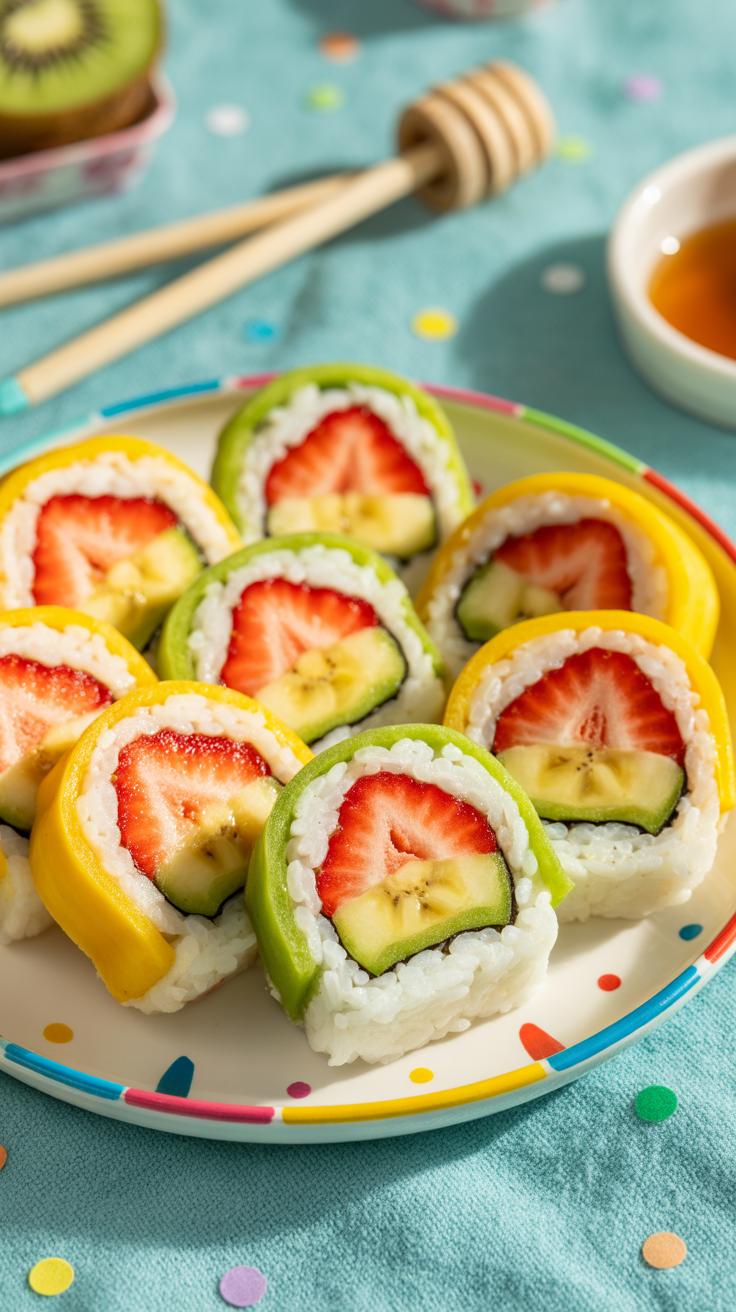
What Is A Banana Sushi Snack And Why Kids Go Crazy For It
Banana sushi is a tactical snack solution that replaces processed sugar with whole fruit. It consists of a peeled banana coated in a nut or seed butter and rolled in crunchy or sweet toppings. Once sliced into rounds, the pieces look like traditional sushi rolls. This visual similarity provides immediate engagement for children because it makes healthy fruit consumption feel like an interactive dining experience.
The snack succeeds because it balances textures and flavors. Kids enjoy the soft fruit center paired with a sticky binder and a crunchy exterior. From a nutritional standpoint, it delivers potassium, healthy fats, and protein without the glycemic crash of traditional party cake. The bite-sized format fits perfectly in small hands. It allows for quick consumption during active play periods without the need for utensils or structured seating.
How To Make A Simple Banana Sushi Roll Using Peanut Butter And Toppings
To assemble this snack, peel a firm banana and remove any stringy fibers. Apply a thin, even layer of creamy peanut butter or sunflower butter across the entire surface. If the banana is too soft, it will lose structural integrity during the slicing phase. Use a butter knife or small offset spatula for the coating process. Ensure the binder covers all sides to act as an effective adhesive for your toppings.
Once coated, roll the banana through a plate of toppings like crushed granola, chia seeds, or shredded coconut. Apply light pressure to embed the toppings into the binder layer. Use a sharp chef knife to cut the banana into one inch thick rounds. Arrange these pieces on a platter with the cut side facing up. Serve immediately to prevent the fruit from browning or losing its firm texture during the event.
Easy Fruit For Kids No Fuss Fresh Snacks That Require Minimal Prep
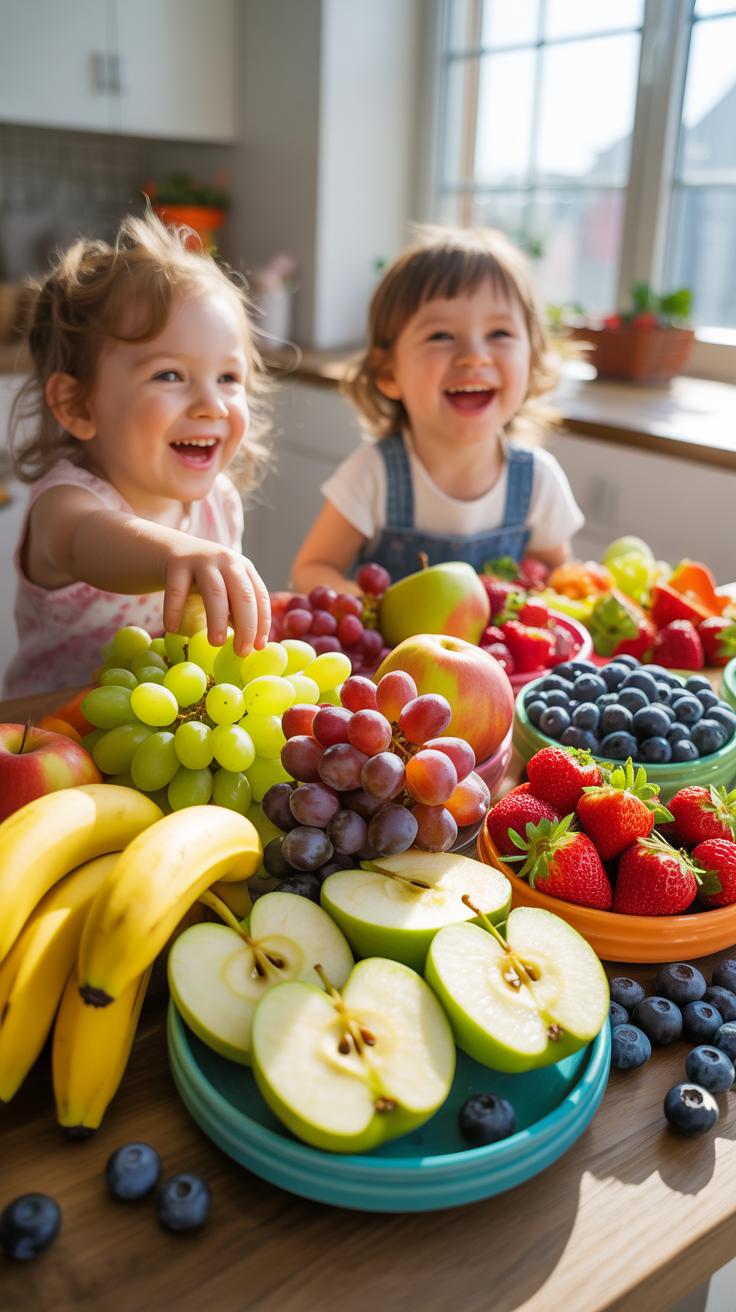
The Best Ready To Serve Fruits That Work Perfectly At A Kids’ Party
Select low-maintenance fruits that maintain structural integrity at room temperature. Berries, grapes, and citrus segments require the least preparation and produce minimal waste. Avoid apples or bananas for open displays because they oxidize and turn brown quickly. Select seedless varieties of grapes and small easy-peel oranges like clementines. These options provide high hydration and natural sugars without messy juices.
Prioritize safety and ease of consumption. Always slice grapes lengthwise to prevent choking hazards for younger children. Use firm fruits like melon or pineapple chunks if you want to provide high-volume options. These fruits hold up well in bowls and do not require individual packaging. Standardizing the size of fruit pieces ensures kids can eat them quickly between activities. Proper selection reduces clean-up time and eliminates the need for cutlery.
How To Set Up A Simple Fruit Station Kids Can Serve Themselves From
Place the fruit station at a lower table height to accommodate children. Use wide, shallow containers that allow kids to see all options clearly. High-traffic areas need durable bowls made of bamboo or melamine rather than glass. Position small tongs or scoops at each bowl to maintain hygiene. This setup prevents kids from touching all the food while still allowing them to choose their preferred portions.
Use clear signs to label each fruit variety for those with specific preferences. Arrange the station in a single line to control the flow of guests. Provide small paper cups instead of plates to help children carry their fruit easily while moving. Place a trash bin at the end of the station for immediate disposal of peels or napkins. This strategic layout minimizes spills and keeps the party area organized.
Easy Kid Recipes For Savory Party Snacks That Compete With The Cake
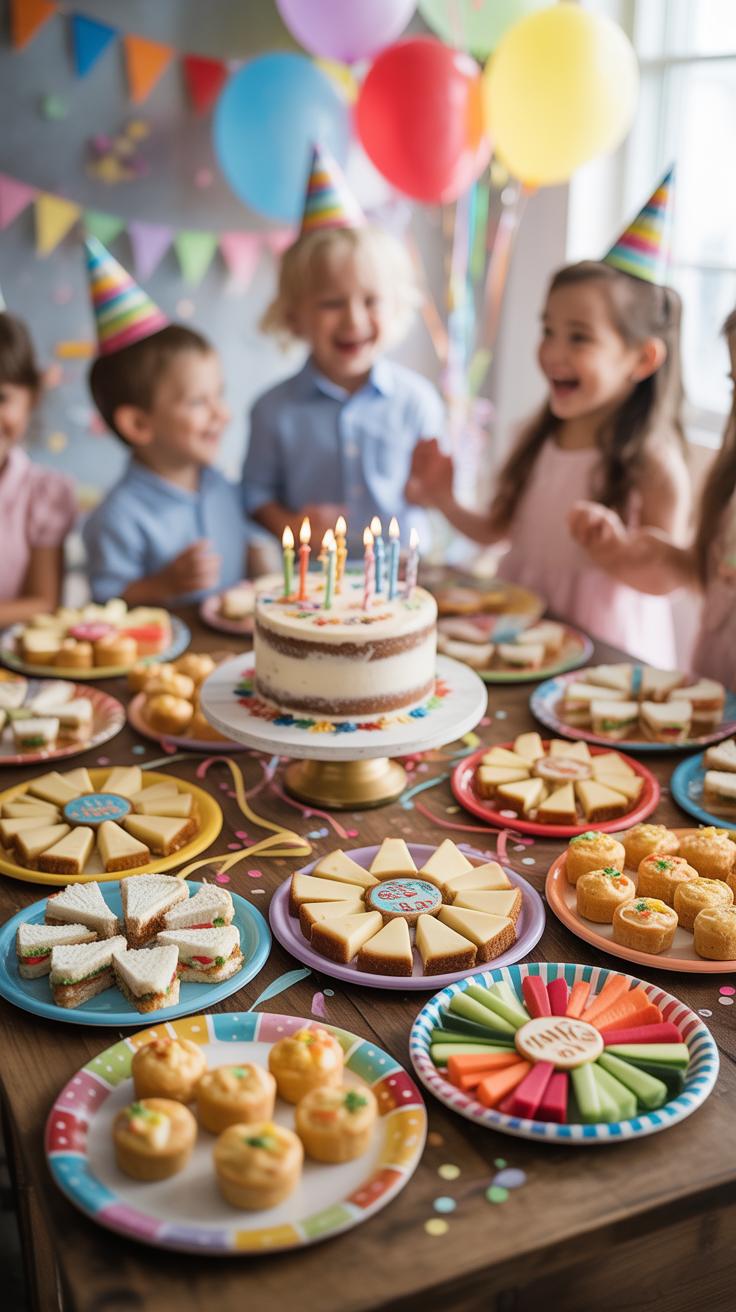
Mini Veggie Pinwheels And Hummus Cups Kids Can Help Assemble
Mini veggie pinwheels use whole wheat tortillas to provide complex carbohydrates. Spread a thin layer of cream cheese or hummus across the surface to act as a binder. Add finely shredded carrots and spinach to ensure the wrap stays closed when sliced. These small bites fit a child’s hand perfectly. They replace high-sodium crackers with fresh fiber and vitamins.
Hummus cups offer a mess-free way to serve legumes. Use clear plastic cups to layer two tablespoons of hummus at the bottom. Stick upright celery sticks and bell pepper strips into the dip. Kids can help by placing the vegetables into the cups. This tactile involvement increases the likelihood that they will eat the fiber-rich vegetables during the busy party.
Turkey And Cheese Roll Ups As A Protein Packed, Party Ready Finger Food
Turkey and cheese roll-ups eliminate the need for processed bread. Use nitrate-free turkey breast as the outer layer to provide lean protein. Place a slice of mild provolone or cheddar inside for calcium. Roll the meat and cheese tightly to create a dense, satisfying snack. This method stabilizes blood sugar levels and prevents the energy crashes often seen after eating cake.
Secure each roll-up with a toothpick if the children are old enough to handle them safely. For younger groups, simply press the seam down. Serve these chilled to maintain the structural integrity of the cheese and meat. This snack targets the savory palate and provides essential amino acids. It functions as a heavy appetizer that keeps kids full and focused on activities.
Healthy Olympic Themed Snacks For A Sports Or Games Birthday Party
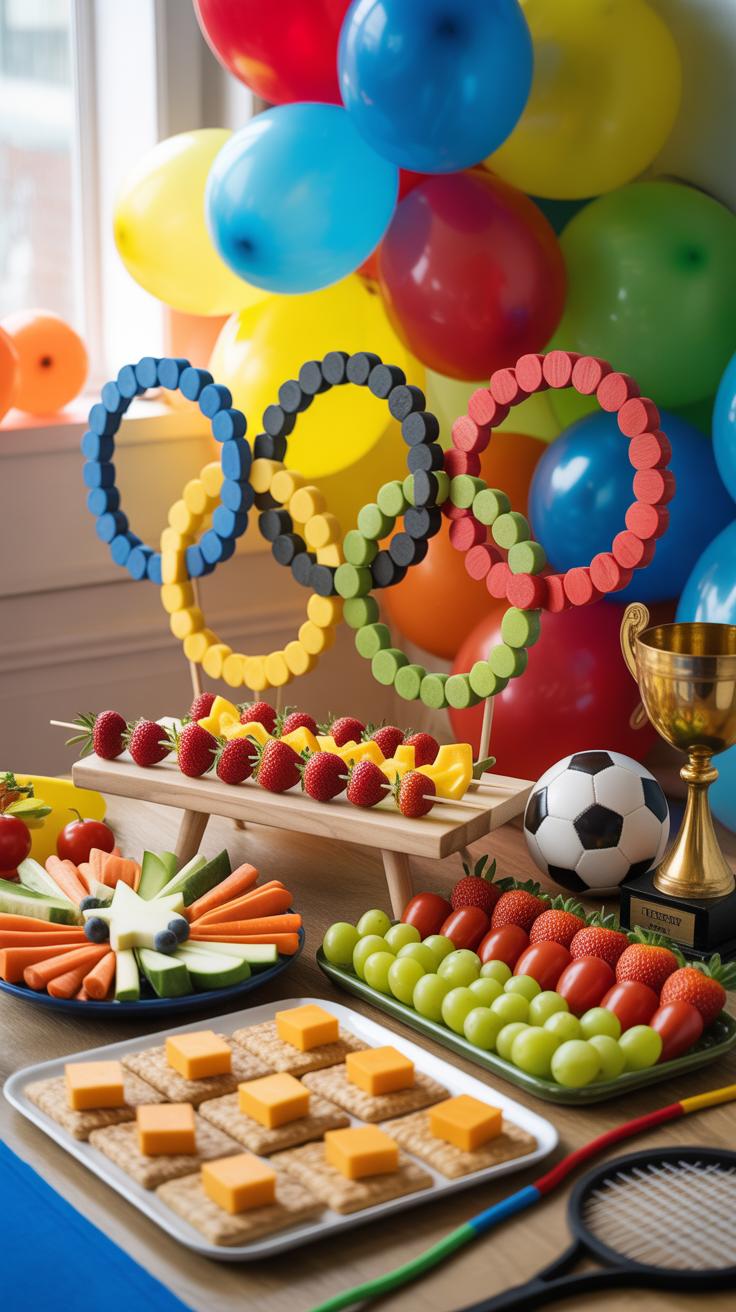
Creating Edible Olympic Rings Using Colorful Fruits And Vegetables
The Olympic rings represent five continents and use specific colors. Blue, black, red, yellow, and green are the standard. You can recreate this iconic logo using round plates or circular bowls. For the blue ring, use blueberries or concord grapes. Black grapes or blackberries serve as the black ring. Red cherries or sliced strawberries provide the red element.
Yellow rings require pineapple chunks or yellow bell pepper strips. Use green grapes or cucumber slices for the final green ring. Arrange these items in two rows. Place three circles on the top and two on the bottom. Ensure the circles overlap slightly to mimic the actual flag design. This layout provides a clear visual theme and offers diverse nutrients to guests.
The spirit of celebration is even sweeter when we nourish the bodies and imaginations of those we love. Let your party table be a vibrant garden of colors that fuels a lifetime of happy memories.
Medal Worthy Snack Platters That Tie Into An Olympic Or Sports Party Theme
Gold, silver, and bronze medals are central to the Olympic tradition. Use yellow, white, and orange foods to represent these achievements. Dried apricots or orange slices work for bronze. Sliced pears or white cheese cubes represent silver. Pineapple or mango chunks serve as the gold. Arrange these on a tiered tray to signify the podium used during medal ceremonies.
Torch snacks provide another tactical thematic element. Use whole wheat wraps or orange bell peppers peaked at the top to look like a flame. Fill these with hummus or lean protein. The vertical shape mimics the Olympic torch carried by athletes. This presentation encourages kids to eat vegetables while maintaining the sports theme. Stick to firm produce to ensure the structures remain upright during the party.
Dairy Based Healthy Snacks That Add Creaminess To The Party Spread
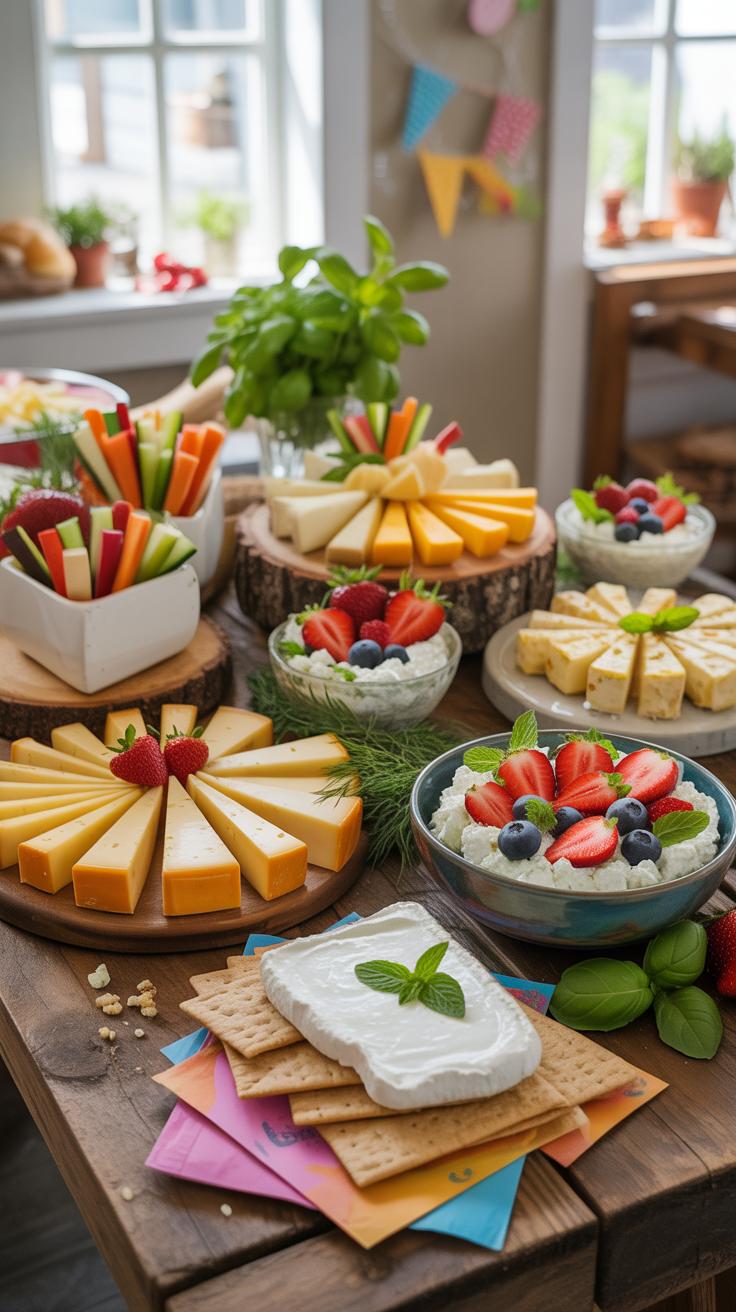
Greek Yogurt Dips And Parfait Cups As A Lighter Alternative To Frosted Treats
Greek yogurt contains more protein than traditional yogurt. This dense texture makes it a functional base for dips and desserts. Use plain Greek yogurt to control sugar intake. Add honey or maple syrup to reach desired sweetness levels without using refined sugars. This approach provides a stable energy source for children. High protein content prevents the blood sugar spikes common with frosting.
Serve yogurt in clear individual cups to manage portions. Layer the yogurt with granola and fresh berries for a visual appeal. This presentation keeps the snack portable and clean. You can also mix yogurt with peanut butter for a fruit dip. This substitution replaces high-fat cream cheese bases. It offers calcium and probiotics. Probiotics support digestive health in active children during long party events.
String Cheese, Babybel, And Cottage Cheese Bites Kids Love To Grab And Go
Portion-controlled cheese options like string cheese and Babybel provide essential lipids and calcium. These snacks are factory-sealed for safety and hygiene. The packaging makes them easy to distribute to large groups of kids. You do not need to prepare these items manually. They stay fresh at room temperature for short periods. This makes them tactical choices for outdoor events where refrigeration is limited.
Cottage cheese serves as a high-protein base for small bites. Press cottage cheese into mini silicone molds with chives or fruit pieces. Chill these bites until they are firm enough to hold their shape. This method introduces different textures to the snack table. Cheese provides a savory counterpoint to sweet party foods. It fills the stomach faster than processed crackers. This reduces overall consumption of junk food.
Allergen Aware Healthy Party Snacks That Keep Every Child Included
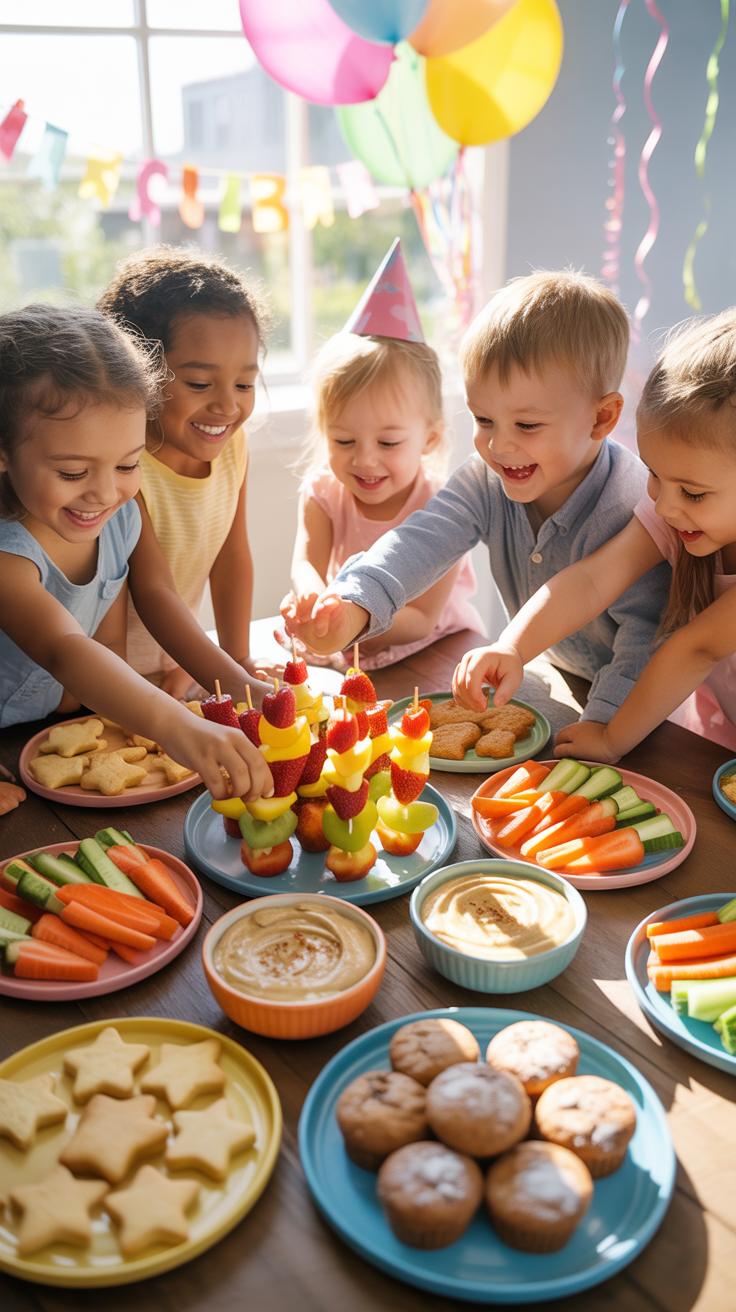
Common Party Food Allergens To Watch For And Easy Swaps To Make
Standard party menus often rely on milk, eggs, peanuts, and wheat. These four ingredients cause most allergic reactions in young children. You must identify these risks before planning your menu. Swapping high-risk items for safe alternatives prevents medical emergencies. Focus on simple whole foods rather than complex processed products. This strategy reduces the chance of hidden cross-contamination during manufacturing or preparation.
- SunButter: Use sunflower seed butter instead of peanut or almond butter. It provides a similar texture and protein profile without the risk of nut allergies. It works well for dipping apple slices or spreading on rice cakes.
- Seed-Based Crackers: Replace wheat crackers with options made from seeds or gluten-free grains like rice. Check labels for shared equipment warnings. These provide the necessary crunch for dips without using common gluten-heavy flour.
- Fruit-Based Sorbets: Swap traditional dairy ice cream for frozen fruit purees or sorbets. This eliminates milk proteins and lactose concerns. It serves as a cold and sweet treat that most children can enjoy safely.
- Chickpea Pasta: Use pasta made from legumes instead of wheat for cold salads. It adds extra fiber and protein to the meal. This choice accommodates guests with celiac disease or gluten sensitivities while maintaining a familiar food shape.
- Coconut Yogurt: Replace dairy-based dips and yogurts with coconut or soy alternatives. These options provide a creamy base for fruit parfaits. Always verify that the brand does not use nut-based thickeners in their specific production process.
Eliminating allergens does not mean sacrificing nutrition or flavor. Fresh vegetables and fruits are naturally free from the most common allergens. Focus your snack strategy on these unprocessed options to ensure safety. Always keep original packaging for any store-bought items. This allows parents to verify every ingredient for themselves. Proper planning ensures that every guest eats the same food safely together.
How To Label Your Snack Table So Parents Feel Confident Letting Kids Choose
Effective labeling requires clear and direct communication of ingredients. Use simple cards placed next to every dish on the table. List every component used in the preparation of the snack. Do not use vague terms like natural flavors. Instead, state the specific source of every ingredient. This transparency allows parents to make quick and safe decisions for their children without stress.
Color-coded systems help identify safe zones for different dietary needs. Assign red for items containing common allergens and green for top-eight free options. Place a master legend at the start of the buffet line. Keep serving utensils separate for each dish to prevent cross-contamination. This physical organization protects children from accidental exposure. Clear boundaries and labels create a professional and safe environment for all guests.
Tips For Presenting Healthy Kids Party Snacks In A Way That Wows The Crowd
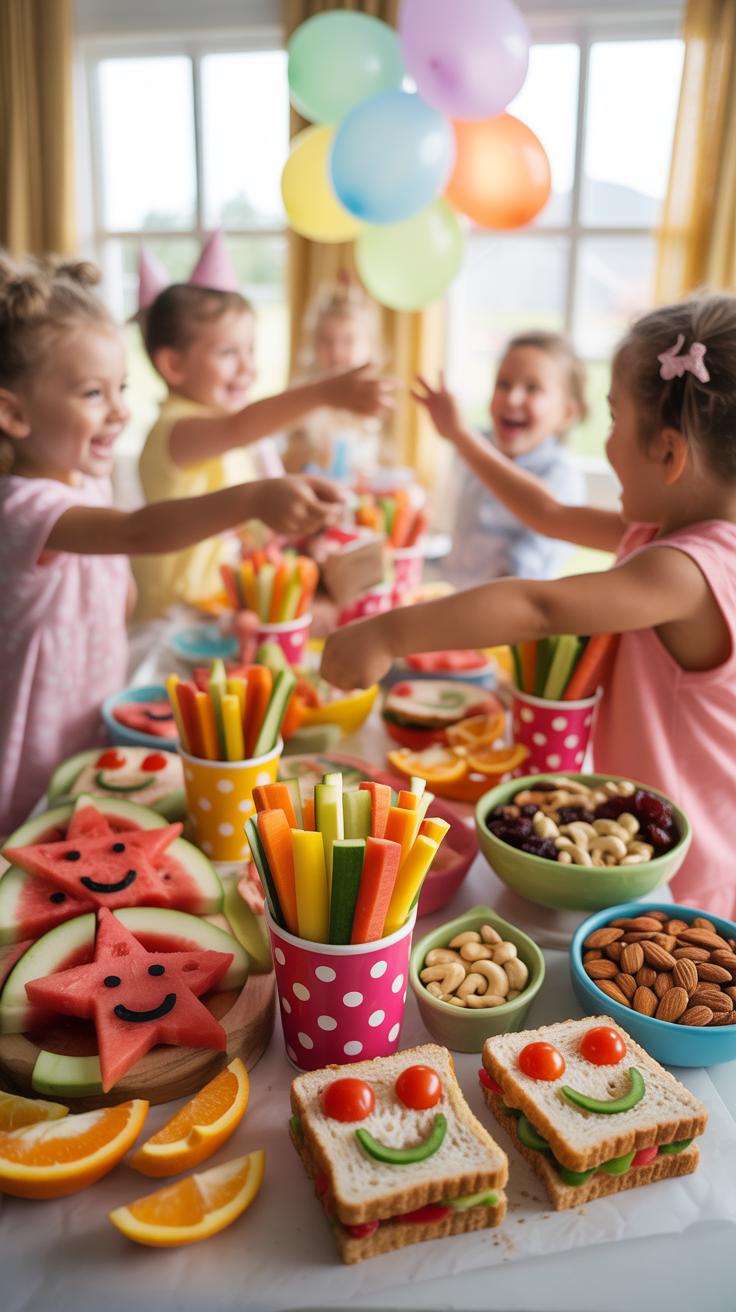
Using Colorful Platters, Tiered Stands, And Fun Picks To Elevate The Snack Table
Visual presentation dictates perceived value and taste for children. Use tiered stands to create vertical interest and maximize horizontal table space. Place dense items at the base and lighter snacks at the top for stability. Food grade bamboo picks allow for easy portion control and keep fingers clean. Plastic free materials reduce waste and align with modern sustainability standards for event planning.
A monochromatic color scheme often fails to stimulate appetite. Arrange produce according to the color wheel to ensure high visual contrast. Use white platters to make the natural pigments of fruits and vegetables stand out. Clear glass or acrylic containers show the texture of layered snacks. Proper spacing between items prevents the spread of moisture and maintains the structural integrity of the food.
Prepping Healthy Birthday Party Snacks Ahead Of Time To Reduce Party Day Stress
Effective prep begins forty eight hours before the event. Wash and dry all produce thoroughly to prevent mold and bacterial growth. Hard vegetables like carrots and celery stay crisp in airtight containers with a wet paper towel. Pre cut cheese and proteins should be stored at four degrees Celsius or lower according to safe food handling guidelines. Organization prevents last minute kitchen chaos.
Assemble non perishable components the night before the party. Place dry snacks in sealed bags to maintain crunch. Use a detailed assembly schedule to track remaining tasks on the morning of the event. Grouping ingredients by recipe saves time and energy during the final plating process. Efficient preparation ensures the host remains available to manage guest needs and maintain the party flow.
Frequently Asked Questions

Why should I consider serving healthy snacks at a child’s birthday party?
Serving nutritious options ensures that all little guests maintain steady energy levels throughout the celebration without the inevitable sugar crash. By prioritizing healthy kids party snacks, you create an inclusive environment for children with dietary restrictions or sensitivities. Plus, colorful fruits and vegetables can be just as visually appealing and exciting as traditional sweets, helping to establish positive eating habits while still keeping the festive atmosphere fun and vibrant.
How can I display healthy food so it looks appealing to young children?
The key to success is creative presentation. Try using fun cookie cutters to shape sandwiches and melons, or arrange vibrant veggie sticks into a “rainbow” platter with a yogurt dip. When serving healthy kids party snacks, using themed picks or colorful silicone muffin liners can make simple items like grapes or cheese cubes feel like a special treat. Making the food interactive and bite-sized encourages kids to explore new flavors enthusiastically.
Can I provide healthy party snacks without overspending on my budget?
Absolutely! Healthy hosting doesn’t have to be expensive if you focus on seasonal produce and pantry staples. Buying whole fruits like apples or bananas in bulk and slicing them at home is much cheaper than purchasing pre-cut platters. Homemade popcorn seasoned with nutritional yeast or cinnamon is a very affordable whole-grain option. By sticking to simple, whole-food ingredients, you can provide a delicious spread that is both nutritiously dense and budget-friendly.