
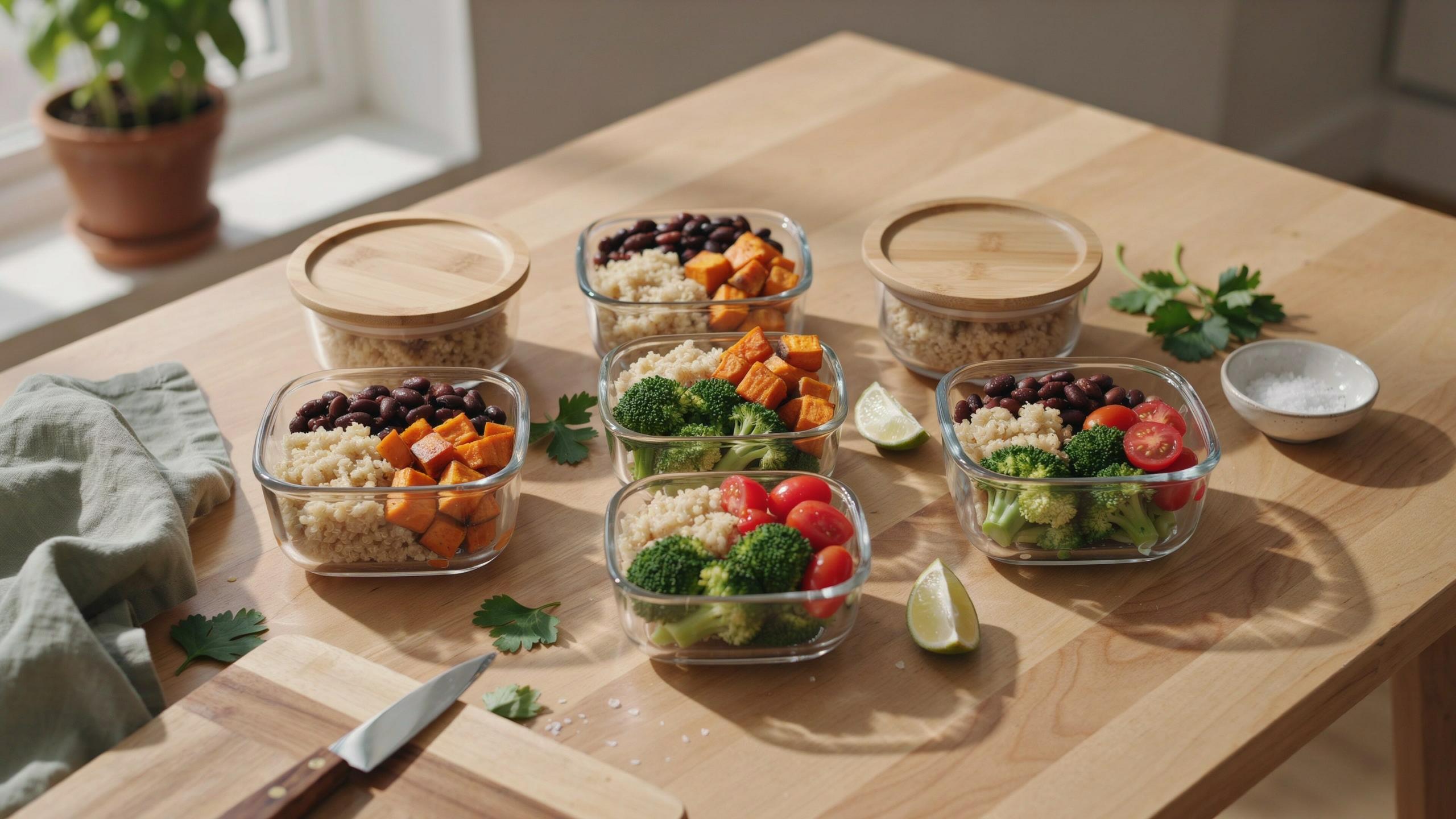
Beyond The Buzz What High Protein Really Means For Quinoa
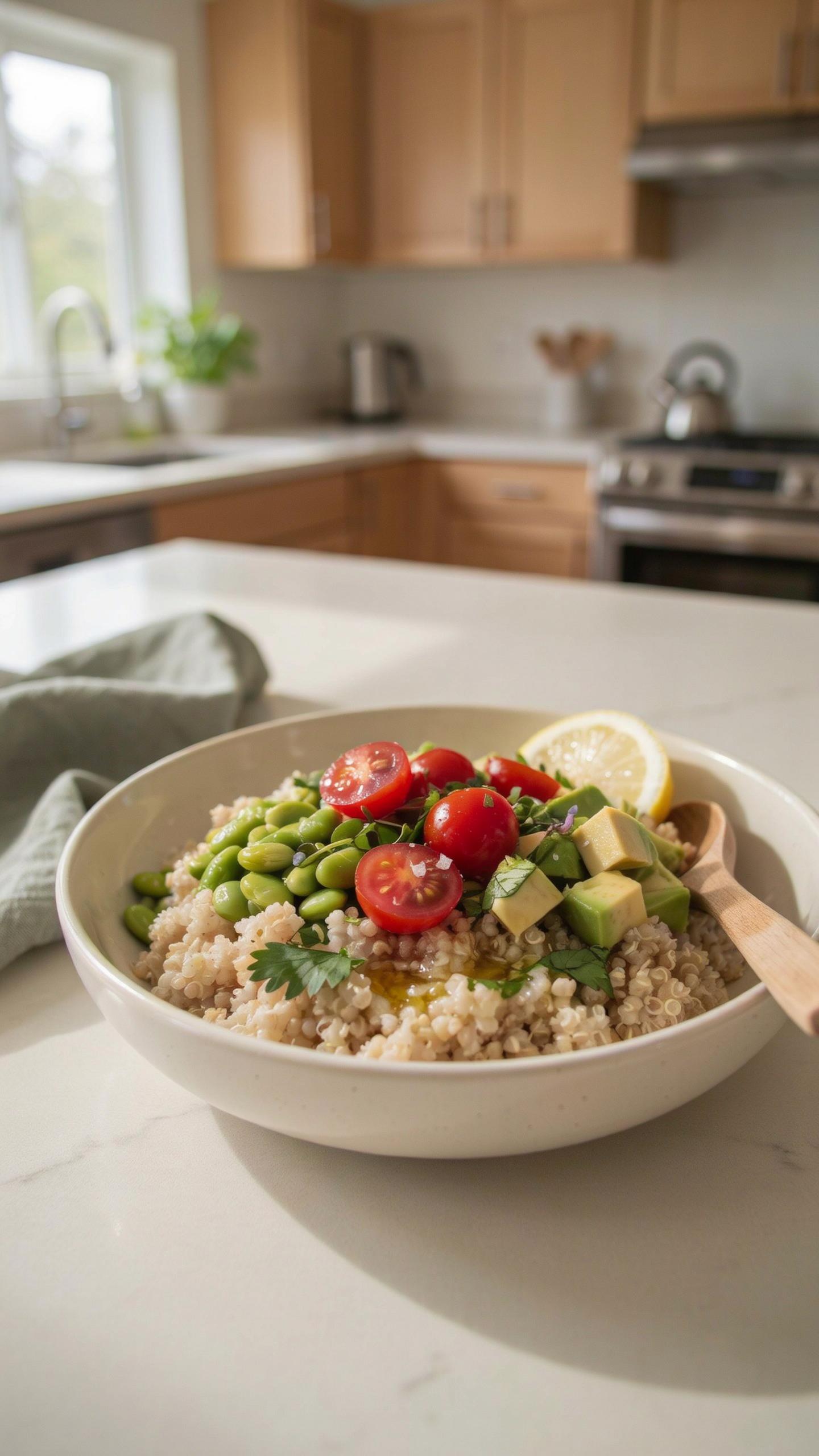
The Nine Essential Amino Acids
You want to believe quinoa is a complete protein because it solves a problem you’re afraid doesn’t have a solution: getting enough protein without animal products. Here’s the mechanism that matters. Biology classifies proteins by their amino acid profiles, and your body needs all nine essential amino acids in usable ratios to synthesize muscle, enzymes, and hormones. Quinoa contains all nine, which most plant proteins don’t. That’s the actual distinction.

One cup of cooked quinoa delivers roughly 8 grams of protein and a balanced amino acid ratio. That’s accurate. But “balanced” doesn’t mean “optimal.” Quinoa’s lysine and leucine content trails both animal protein and legume combinations. For meal prep, this means quinoa works best paired with complementary proteins like beans, nuts, or seeds, not eaten in isolation. Combining quinoa with black beans or pumpkin seeds creates a complete, optimal profile your muscles can actually use.
The Marketing Layer Under “Complete”
The fitness and wellness industry sells “complete protein” like it’s a binary state. It’s not. Amino acid completeness exists on a spectrum, and quinoa sits at the passable end, not the optimal end. Most high protein meal prep guides bury this fact because it doesn’t drive sales of quinoa-only products. The real mechanism: your body doesn’t care if protein completeness comes from one food or five foods eaten in the same meal.
This changes your prep strategy entirely. Stop treating quinoa as a standalone protein source. Measure it as a carbohydrate base that contributes incomplete protein, then intentionally add complementary proteins to close the gap. A meal of one cup cooked quinoa plus half a cup of chickpeas creates a complete amino acid profile superior to either ingredient alone. That’s how you build genuine high protein vegetarian meals, not just meals that sound high protein.
The Kinetic Energy Of Quinoa Maximizing Absorption
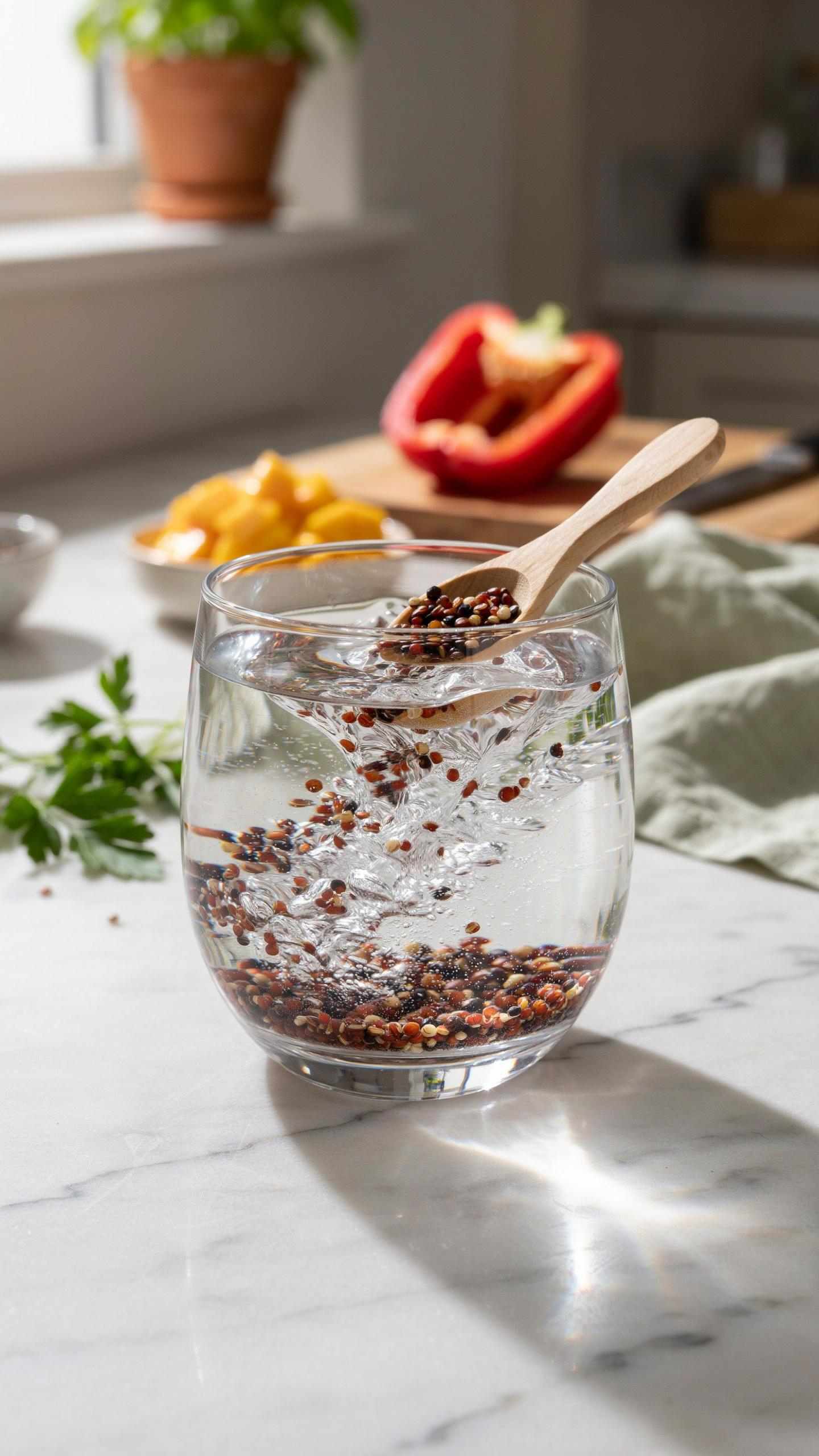
Enzyme Activation For Nutrient Uptake
You want to believe quinoa is a complete protein that just works. It isn’t, not without one step most people skip. Borrowing from biochemistry, enzymes function like catalysts that accelerate reactions, and soaking quinoa acts as your primary catalyst for breaking down antinutrients that block mineral absorption. Raw quinoa contains saponins and phytic acid, compounds that bind to minerals and prevent your gut from accessing them. Soaking for 15 minutes in cool water rinses saponins away while starting enzymatic processes that reduce phytic acid. You skip this and you’re eating the protein while losing the micronutrient payload.
The second mechanism is heat. Cooking quinoa to 185 degrees Fahrenheit denatures proteins into more digestible forms while activating enzymes that remained dormant. This doesn’t mean overcooking it into paste. A 15-minute simmer after soaking gives you the digestion advantage without destroying amino acid chains. The goal is enzyme activation, not destruction. If you’re meal prepping five servings on Sunday, soak all of them first, then cook once. Your body absorbs what you activate before it hits the plate.
Molecular Pairing For Peak Bioavailability
Most protein advice stops at grams per serving. That’s incomplete and wastes your meal prep work. Chemistry teaches us about electron transfer and bonding, and nutrient absorption works similarly: certain molecules bond with minerals to either enhance or block uptake. Vitamin C (ascorbic acid) bonds with iron and non-heme proteins, increasing absorption by up to 300 percent. Quinoa contains iron but also phytic acid that competes for absorption. Adding 30 grams of bell peppers or half a lemon to your quinoa dish shifts the chemistry toward your favor. You’re not adding flavor. You’re engineering bioavailability.
Fat matters equally. Minerals like magnesium and iron require dietary fat for transport across your intestinal wall. A tablespoon of olive oil or two tablespoons of tahini mixed into your prepared quinoa increases mineral uptake significantly. Don’t pair quinoa with only water-based vegetables. You need lipid carriers to complete the absorption pathway. Prep your quinoa with a fat source every single time. Your protein quality depends on it, not just on the amino acid count.
The 3 Tiered Quinoa Protocol Effortless Meal Prep
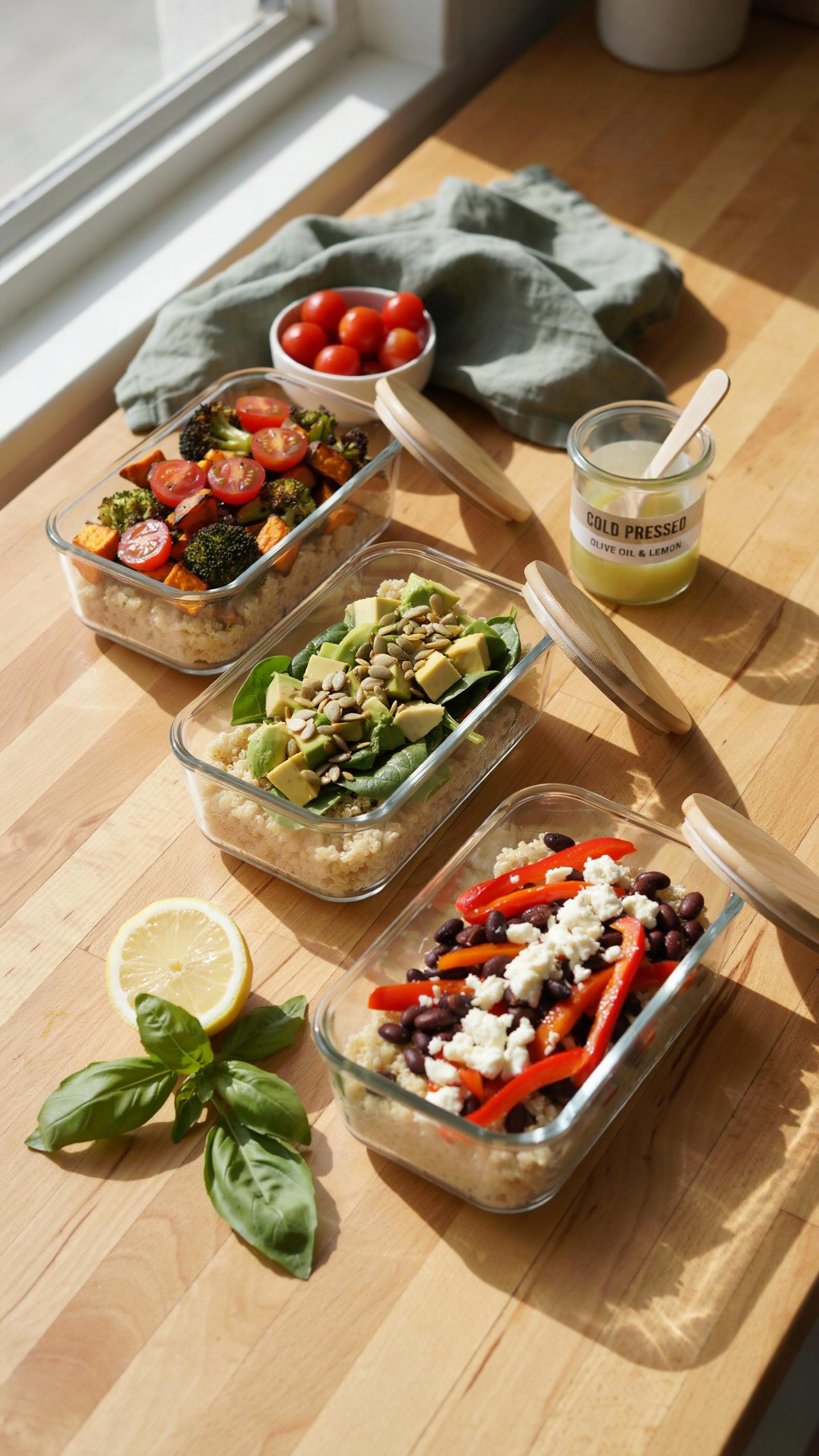
Batch Cooking Base: The Foundational Layer
You want meal prep to feel effortless so you stop thinking about food and start thinking about yourself. The mechanism is simple: cook quinoa once, use it three ways. Quinoa’s complete amino acid profile means it works as your protein anchor, not a side dish. Cook 3 to 4 cups of dry quinoa on Sunday. Let it cool completely. Store it in airtight containers. This single action eliminates the daily decision of “what protein do I eat today” for five to six days.
The base layer stabilizes your entire week because quinoa stores well and doesn’t degrade in texture or nutritional value when refrigerated. A cup of cooked quinoa contains roughly 8 grams of protein and sits around 220 calories. The grain holds moisture without becoming mushy, which matters for reheating and mixing with other ingredients later. This consistency is why batch cooking works: you’re not fighting the ingredient’s behavior. You control the output every single time.
Flavor Layering For Weekly Variety
Most meal prep advice says “add different spices.” That’s incomplete. What actually works is building three separate flavor profiles before you assemble bowls, so your brain perceives novelty even though the base is identical. This is borrowed from combinatorics in mathematics: one base multiplied by multiple variables creates exponential perceived variety without exponential effort.
On day one, toss half your batch with lemon, garlic, and olive oil. On day three, mix a second portion with cumin, lime, and cilantro. On day five, combine the final portion with tahini, tamari, and ginger. Each version tastes like a different meal. You’ve cooked once. You’ve flavored three times. The repetition disappears because your palate encounters something distinct each time you open the container.
Quinoa Dinners From Bland To Breakthrough
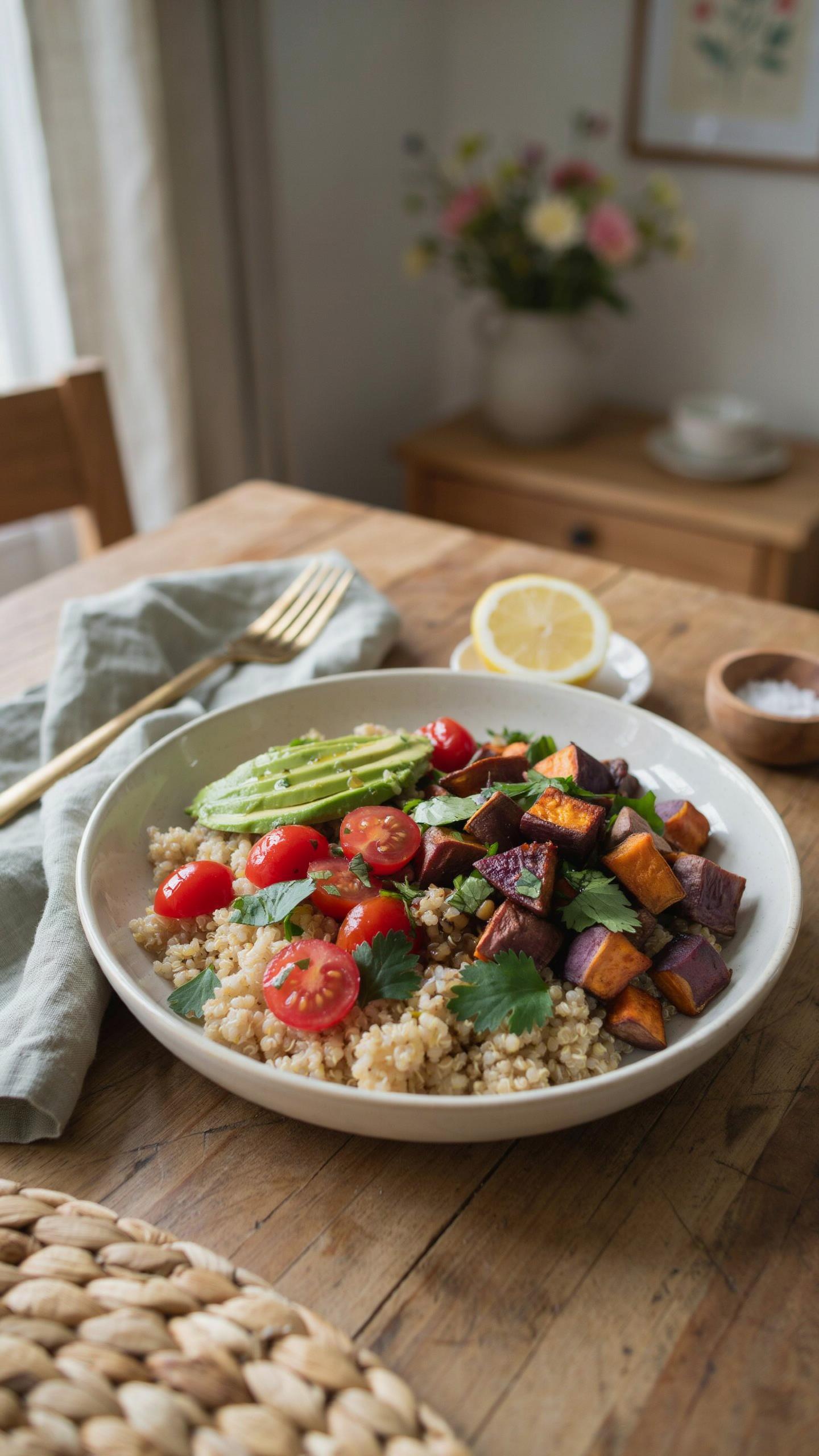
The Umami Blueprint For Vegetarian Meals
You want quinoa dinners to taste like they matter, not like punishment for your dietary choices. The mechanism is umami, borrowed from food chemistry, and it’s the fifth taste that makes your brain register satisfaction. Umami compounds like glutamates and nucleotides trigger satiation signals faster than protein alone. Quinoa is a blank canvas—it contains no umami of its own, which is why most vegetarian quinoa bowls fail. You need to engineer it in.
The fix is pairing quinoa with umami anchors in the same meal. Miso, nutritional yeast, aged cheeses like parmesan, tomato paste, mushrooms, and soy sauce all contain free glutamates that activate umami receptors. When you cook quinoa with vegetable broth instead of water and add one umami element, the entire dish shifts in perceived quality. Your body stops treating dinner like fuel and starts treating it like food worth eating.
One Pan Dynamic: Maximizing Output
Most advice says to cook quinoa separately from everything else. This wastes time and mental overhead. The real leverage is cooking quinoa as the base layer, then building your protein and umami components on top in a single vessel. You control the liquid absorption rate and flavor infusion simultaneously—this is a supply chain principle applied to your stovetop. One pan means fewer dishes, fewer cleanup steps, and more consistency across batches.
Start with dry quinoa in a heavy-bottomed pot. Toast it for two minutes to activate nutty compounds. Add your liquid (broth with miso whisked in works). Once boiling, drop in dense vegetables that need fifteen minutes: mushrooms, carrots, cubed tofu or tempeh. Cover and simmer until the liquid absorbs. Stir in fresh greens and your umami finish in the last minute. This sequence builds flavor density and ensures everything finishes simultaneously with no babysitting required.
Healthy Lunch Redefined The Quinoa Salad As A Strategic Asset
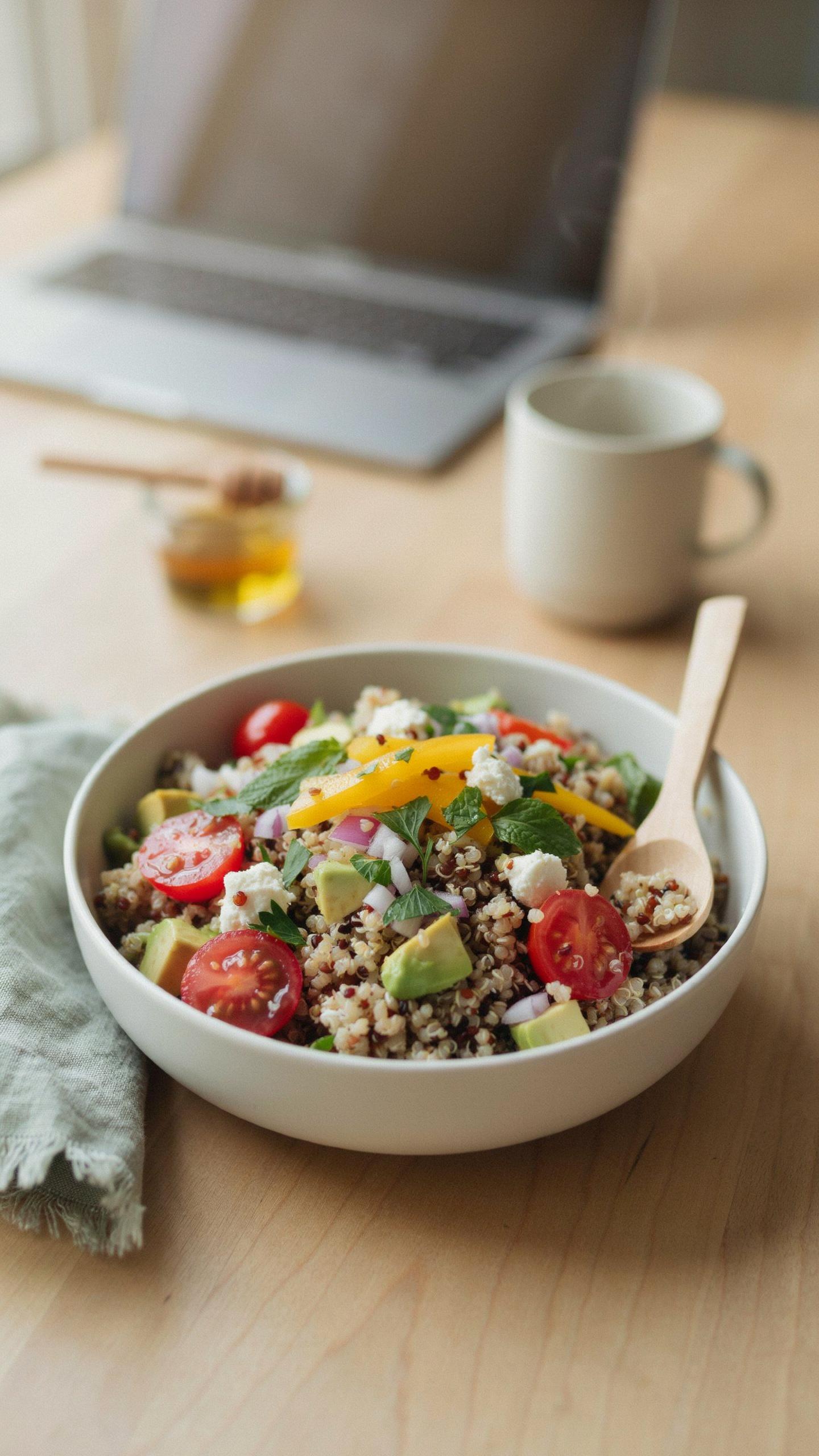
Why Texture Matters More Than You Think
You want to feel full without overeating because you’re tracking protein intake and don’t want to waste calories on volume. The mechanism is textural contrast. Bite physics determines satiety signals before your stomach even registers fullness. Quinoa alone is soft and uniform. Add raw vegetables, nuts, and seeds. Now your jaw works differently. Chewing time increases. Mechanoreceptors in your mouth send satiety cues to your brain earlier.
This isn’t psychological. It’s neurological. Pair your cooked quinoa with raw cucumber, crispy chickpeas or walnuts, and chewy dried cranberries. Each texture demands different bite force. Your body reads this as more food volume than it actually is. The result: you reach fullness on fewer total calories while hitting your protein target. This is why a mushy quinoa bowl fails where a textured one succeeds.
Oil And Acid Do The Heavy Lifting
Generic advice says “dress your salad” like the dressing is seasoning. Wrong. Dressing is a delivery system for nutrient absorption. Fat soluble vitamins like A, D, E, and K require lipids to absorb. Quinoa contains these compounds. Without fat in your dressing, you’re eating the nutrients and excreting them.
The real play: build dressing around olive oil and acid. Use 3 parts oil to 1 part vinegar or lemon juice. The acid breaks down plant cell walls and improves mineral bioavailability. Add a small amount of salt. This combination creates an osmotic gradient that actually draws nutrients into your bloodstream more efficiently than plain quinoa ever could. Make your dressing fresh before eating. Don’t prep it days ahead. Oil oxidizes. Fresh dressing changes your nutrient uptake profile in real time.
Quinoa Healthy Recipes Easy The Minimalists Approach
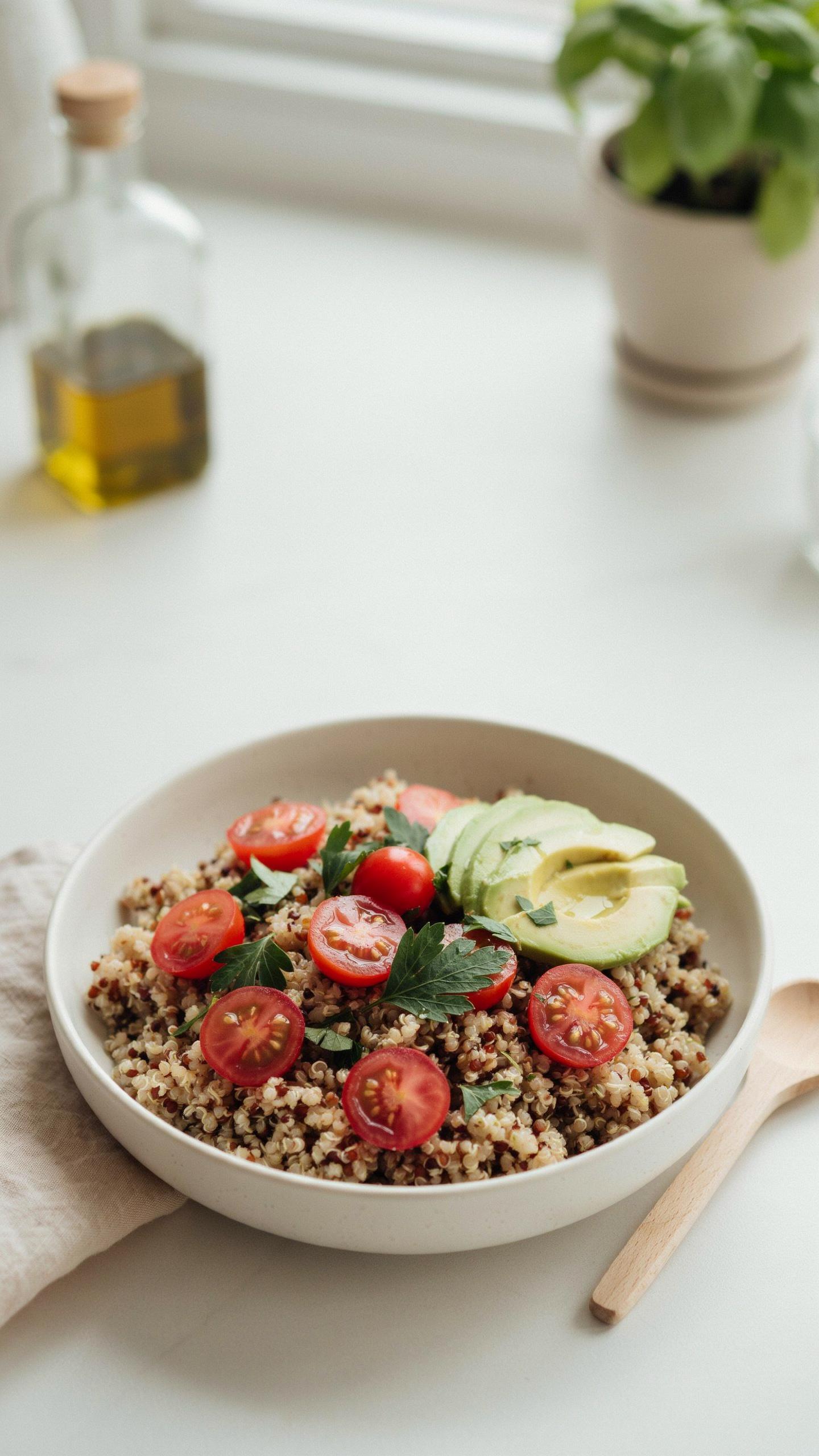
Stock Your Pantry Like You Mean It
You want to feel productive without actually spending time in the kitchen. The real mechanism here is constraint. Limit your ingredient options and you eliminate decision fatigue before it starts. Quinoa meal prep fails not because people lack recipes, but because they buy random ingredients that don’t work together. You need staples that compound: things that pair with quinoa across multiple meals.
Forget the premise that you need a massive spice rack. Buy salt, black pepper, cumin, and garlic powder. Add lime juice and olive oil. That covers ninety percent of edible combinations. Keep canned black beans, lentils, and chickpeas on hand. These proteins stack with quinoa to hit your daily totals without overthinking macros. The constraint forces creativity within working boundaries.
Kitchen Tools That Actually Save Time
This is where most advice collapses into wishful thinking. People buy fancy gadgets and still prep slowly because they don’t understand workflow. Think of your kitchen like a production line from manufacturing. Each tool removes friction from one specific step. A food scale isn’t optional if you’re tracking protein targets. It measures cooked quinoa mass accurately, which directly controls portion size and macros.
- Food Scale: Measures cooked quinoa precisely to portion correctly. Non-negotiable for consistent protein totals across meals. Digital scales cost under thirty dollars and eliminate guesswork entirely.
- Rice Cooker: Cooks quinoa hands-off while you prep vegetables. Set it, walk away, return to finished grain. Frees mental bandwidth for next prep steps.
- Sharp Chef’s Knife: Speeds vegetable prep by forty percent versus dull blades. Consistent cuts mean even cooking and faster plating during the week.
- Glass Storage Containers: Hold prepped meals without absorbing odor or staining. Transparent sides let you see what you have left. Stack efficiently in standard refrigerator space.
- Cutting Board: Use one dedicated surface for vegetables only. Prevents cross-contamination and keeps your workflow linear instead of scattered across the counter.
The real time savings comes from reduction of decision points during prep. You move through steps the same way each session, building speed through repetition. Cook quinoa while you chop vegetables, assemble containers while the scale cools, clean tools between tasks. Batch the same operation across all meals before moving to the next operation.
Deconstructing The Perfect Quinoa Protein Recipes
Ingredient Quality Separates Outcome From Intent
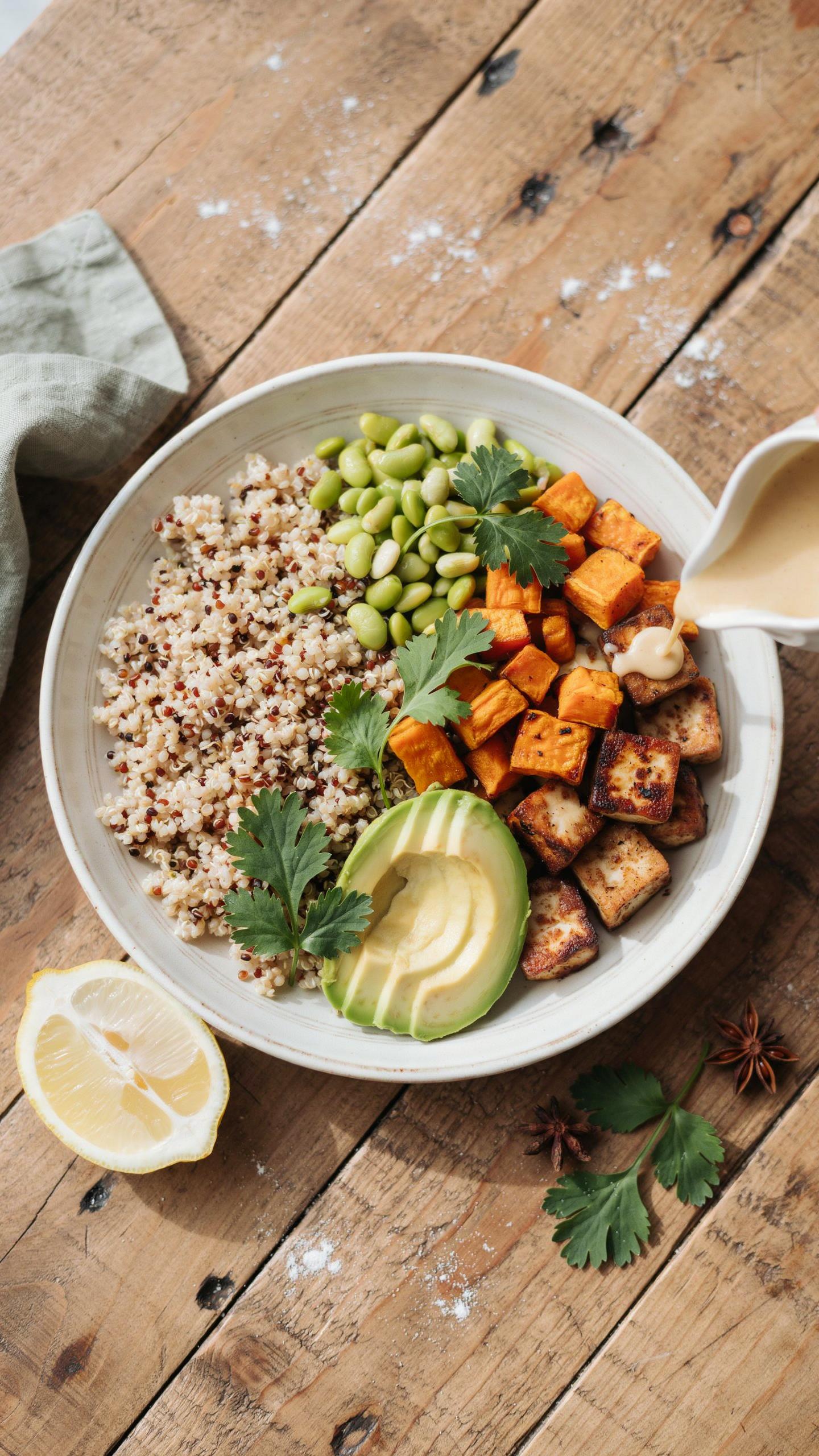
You want the recipe to do the work so you don’t have to think. That’s the real trap. The mechanism is simple: quinoa quality directly determines amino acid completeness and bioavailability. Not all quinoa is equal. Conventional quinoa grown in nutrient-depleted soil produces seeds with lower mineral density and protein concentration. The difference isn’t marketing noise. It’s measurable in amino acid profiles.
Source matters more than method. Fair-trade quinoa from Peru and Bolivia typically comes from higher-altitude, mineral-rich soils where the plant develops denser nutritional content. Store-brand quinoa often comes from lower-altitude regions or industrial monocultures that strip soil nutrients. Rinse your quinoa aggressively before cooking to remove saponins, the natural bitter coating that inhibits mineral absorption. Rinsed quinoa absorbs water more efficiently and delivers better protein utilization. Your meal prep results depend on this step more than any recipe combination.
Protein Needs Aren’t One Variable
Biology uses the concept of dose response: the relationship between stimulus and outcome. Your protein requirement isn’t a fixed number, it’s a dose response curve based on your training volume, recovery capacity, and body composition goals. Most quinoa meal prep guides prescribe the same protein target to everyone, which is incomplete advice. A sedentary person and a strength athlete require different total protein and different amino acid timing windows.
Calculate your actual need: 0.7 to 1.0 grams per pound of body weight if you’re training resistance. Then build your quinoa ratio backward from that target. If you need 150 grams of protein daily and you’re eating two quinoa meals, each meal requires 75 grams total. Quinoa alone provides 8 grams per cooked cup. You’ll need legumes, nuts, or dairy to reach the dose your body actually requires. Don’t memorize recipes. Memorize the math, then modify portions to match your threshold.
The Quinoa Protein Dividend Sustained Energy Not Just Fullness
Why Quinoa Stabilizes Your Blood Sugar Better Than Rice
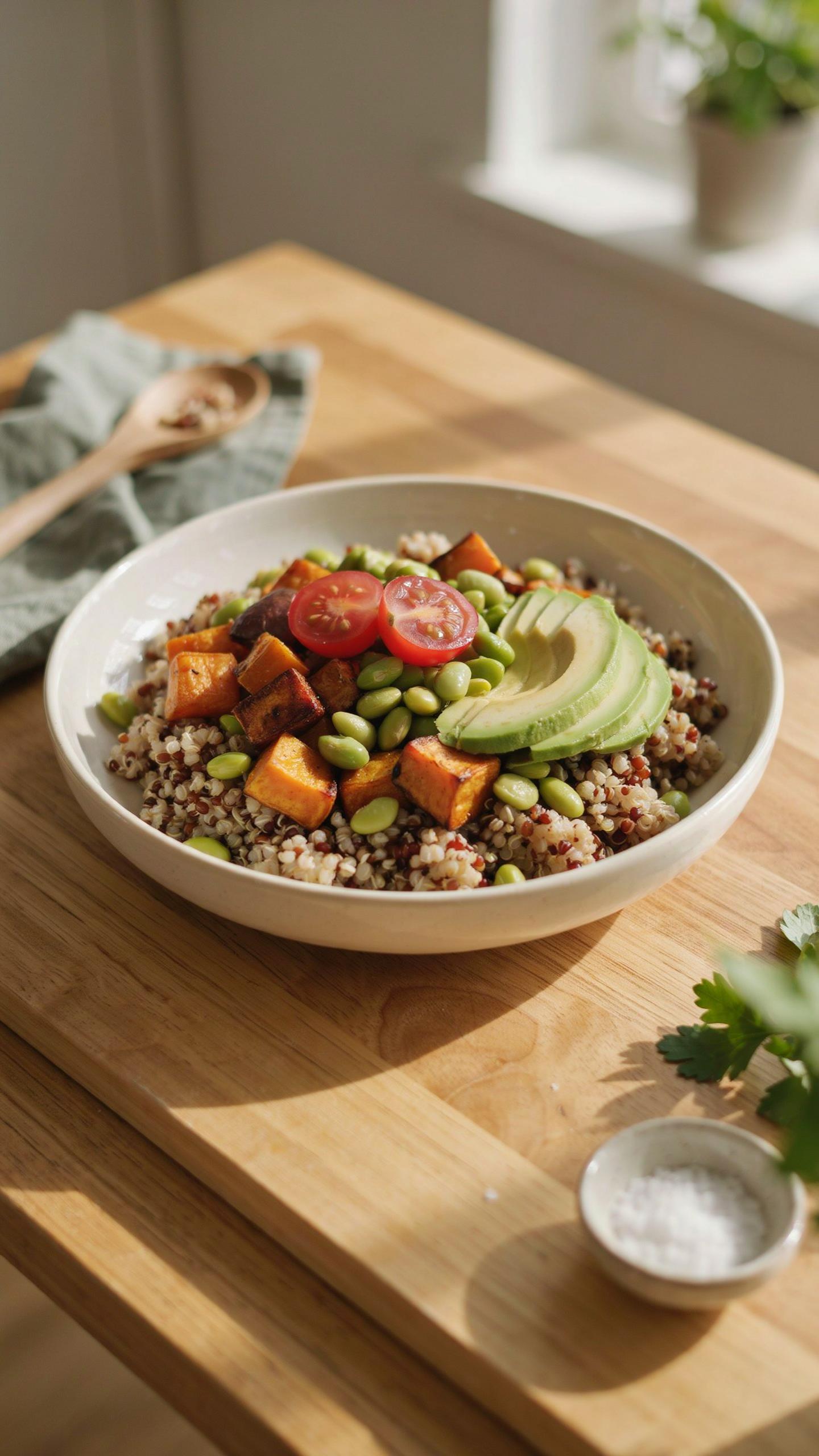
You want sustained focus without the 2pm crash because you know crashes kill productivity. Here’s the mechanism: quinoa contains all nine essential amino acids plus fiber, which slows glucose absorption into your bloodstream. Rice lacks this amino acid profile and fiber density, so it spikes your blood sugar faster and harder. The spike triggers insulin release, then the inevitable crash. Quinoa doesn’t do that.
The practical difference shows up in your work. A quinoa-based meal keeps your blood glucose stable for four to five hours. You don’t need the coffee hit at 3pm. Your decision-making stays sharp because your brain isn’t running on the fumes of a glucose crash. Cook quinoa with a protein source (legumes, tofu, tempeh) and pair it with fat. The combination extends satiety and stabilizes energy further.
Gut Bacteria Thrive On What Quinoa Feeds Them
Nutritional biology recognizes a feedback loop: feed your microbiome the right substrate, and it produces neurotransmitters that regulate your mood and cognition. Quinoa’s fiber and resistant starch act as prebiotic fuel. Your gut bacteria ferment these compounds and produce short-chain fatty acids, mainly butyrate, which crosses the blood-brain barrier. The common advice stops at “fiber is good.” That’s incomplete. The fiber type and fermentation pattern matter. Quinoa’s particular carbohydrate structure favors the bacterial species that produce butyrate most efficiently.
When you meal prep quinoa consistently, you’re not just eating protein. You’re establishing a stable bacterial population that manufactures mood-regulating compounds on demand. Depression and anxiety correlate with dysbiotic gut profiles. A quinoa-based routine shifts your microbiome toward butyrate-producing species. Track this shift by noting changes in your digestion (less bloating, more regularity) and mood stability over three to four weeks of consistent quinoa prep. That’s when the bacterial population stabilizes enough to show metabolic changes.
Your Personal Quinoa Operating System
Audit What You Actually Eat
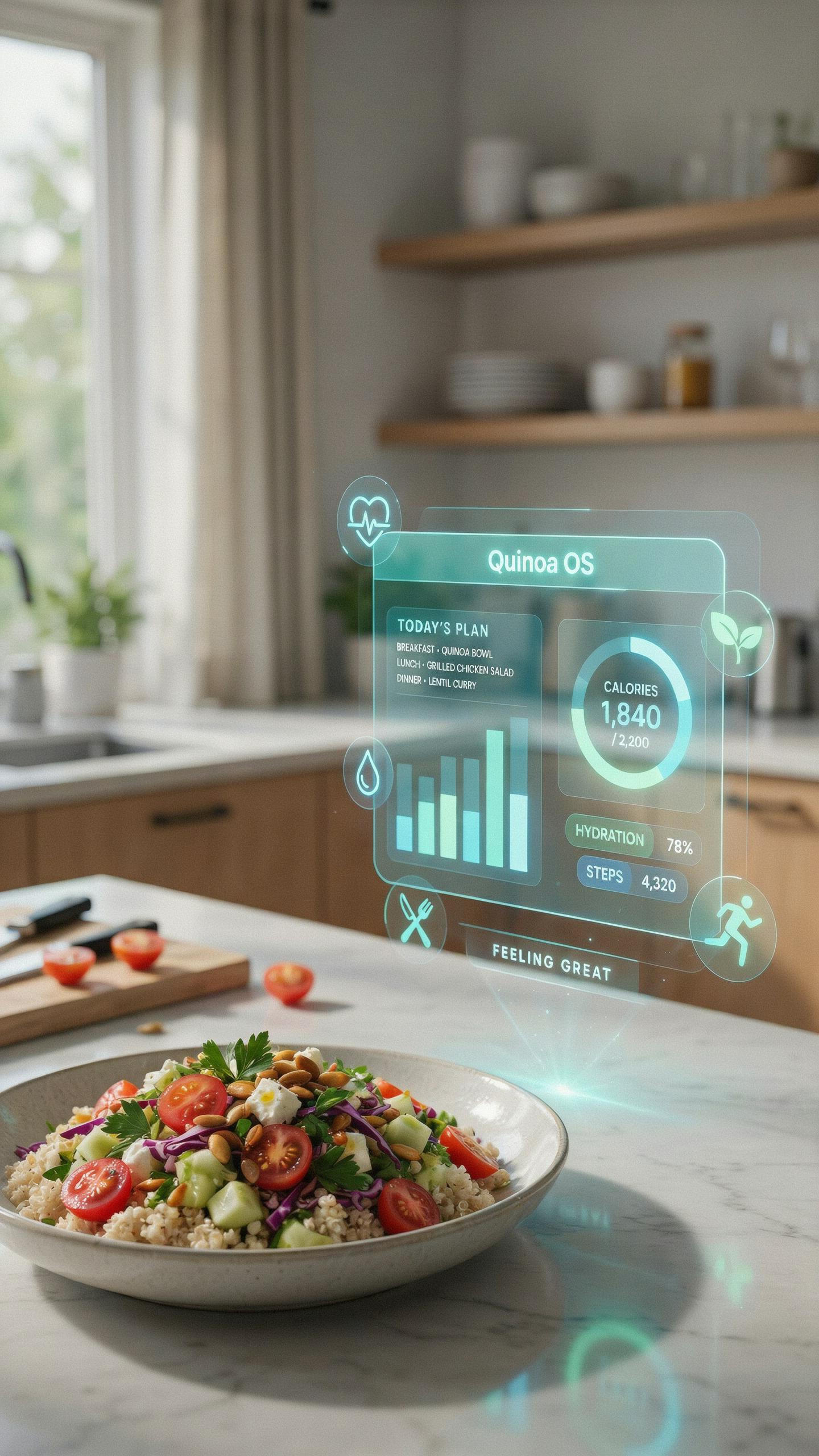
You want permission to believe your system is already working. It’s not. Most people running quinoa meal prep never measure what they’re actually consuming against their stated protein target, so they rationalize partial effort as completion. The mechanism is simple: you can’t optimize what you don’t measure. Track one week of your current quinoa prep routine exactly as eaten. Record portions, cooking method, additions, and the total protein per meal. This isn’t motivation theater. You need baseline data.
What you’ll find matters more than how you feel about finding it. Most vegetarians undershoot protein because cooked quinoa loses volume perception, and sides don’t compensate for what the recipe promised on paper. Measure your typical batch, weigh the cooked output, calculate actual protein per serving, then compare to your target. Write this down. The gap between intention and reality is where your system actually lives.
Small Wins Compound Into Habit Stacking
Biology teaches us that adaptation requires consistent stimulus at the threshold of current capacity. Think of your meal prep as progressive overload: each tweak must be small enough to sustain but significant enough to shift results. Don’t redesign everything. Change one variable per week. Add hemp seeds to this week’s batch. Swap your cooking liquid next week. Pair with a different legume the week after.
The compounding effect matters because you’re not building willpower, you’re building automaticity. After four weeks of single-variable changes, your system has evolved substantially, but the effort never spiked. You prep the same way, just with accumulated refinements. Document what worked. Drop what didn’t. Your operating system becomes a living protocol that evolves because you test it, not because you read about it.
The real obstacle isnt your diet its your adherence to outdated inefficient systems

You don’t need another meal plan. You need to stop cooking like your grandmother and start cooking like you run a business. Quinoa protein meal prep works because it removes decision fatigue. Pick one day. Cook one batch. Eat for five days. Today, buy quinoa and three proteins you actually eat. That’s it. Most people fail not because the diet is hard, but because they make it harder than it needs to be. The difference between consistency and quitting is a Sunday afternoon.