
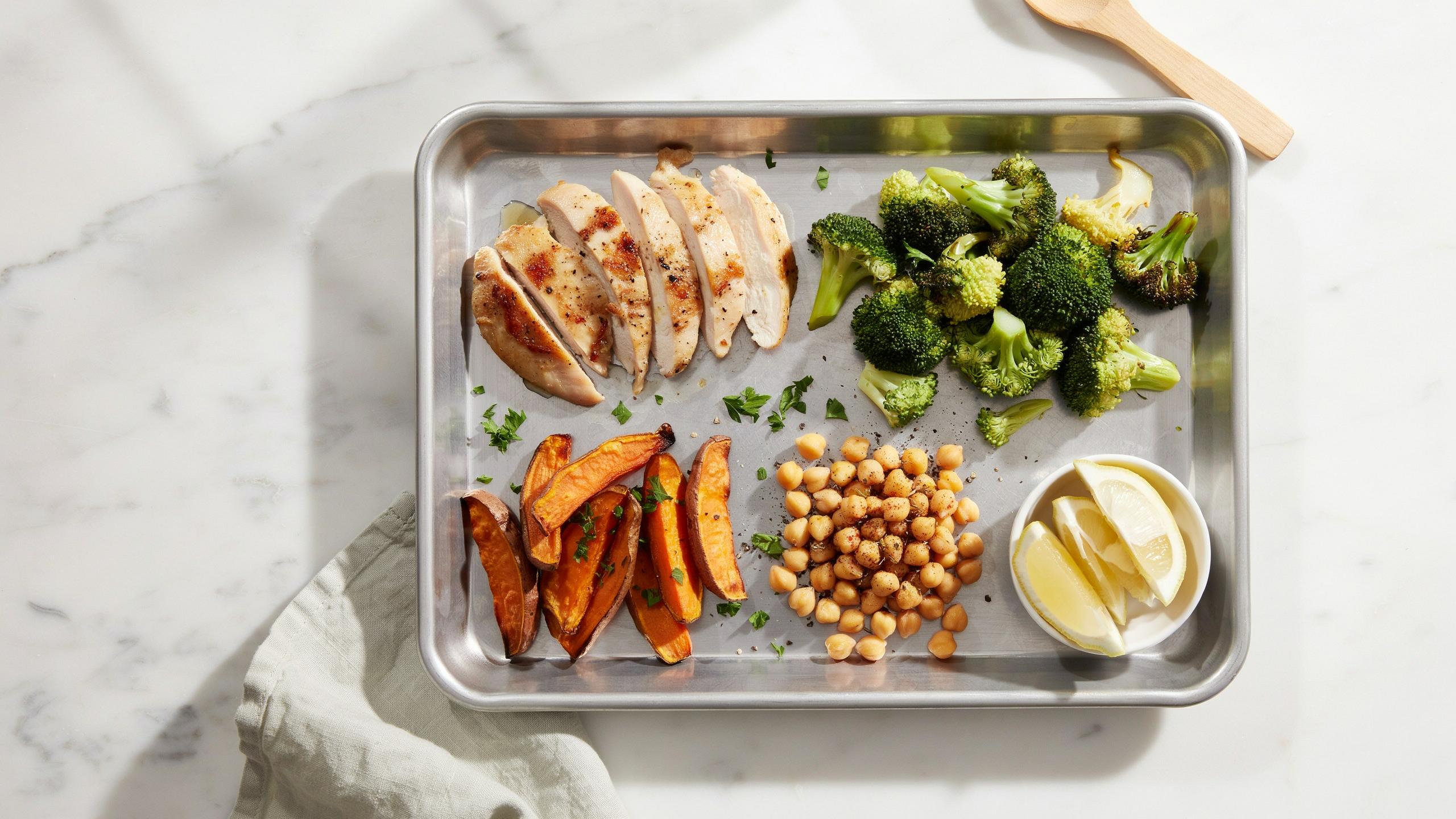
The Minimalists Pan Why Less Is More For Meal Prep Sheet Pans
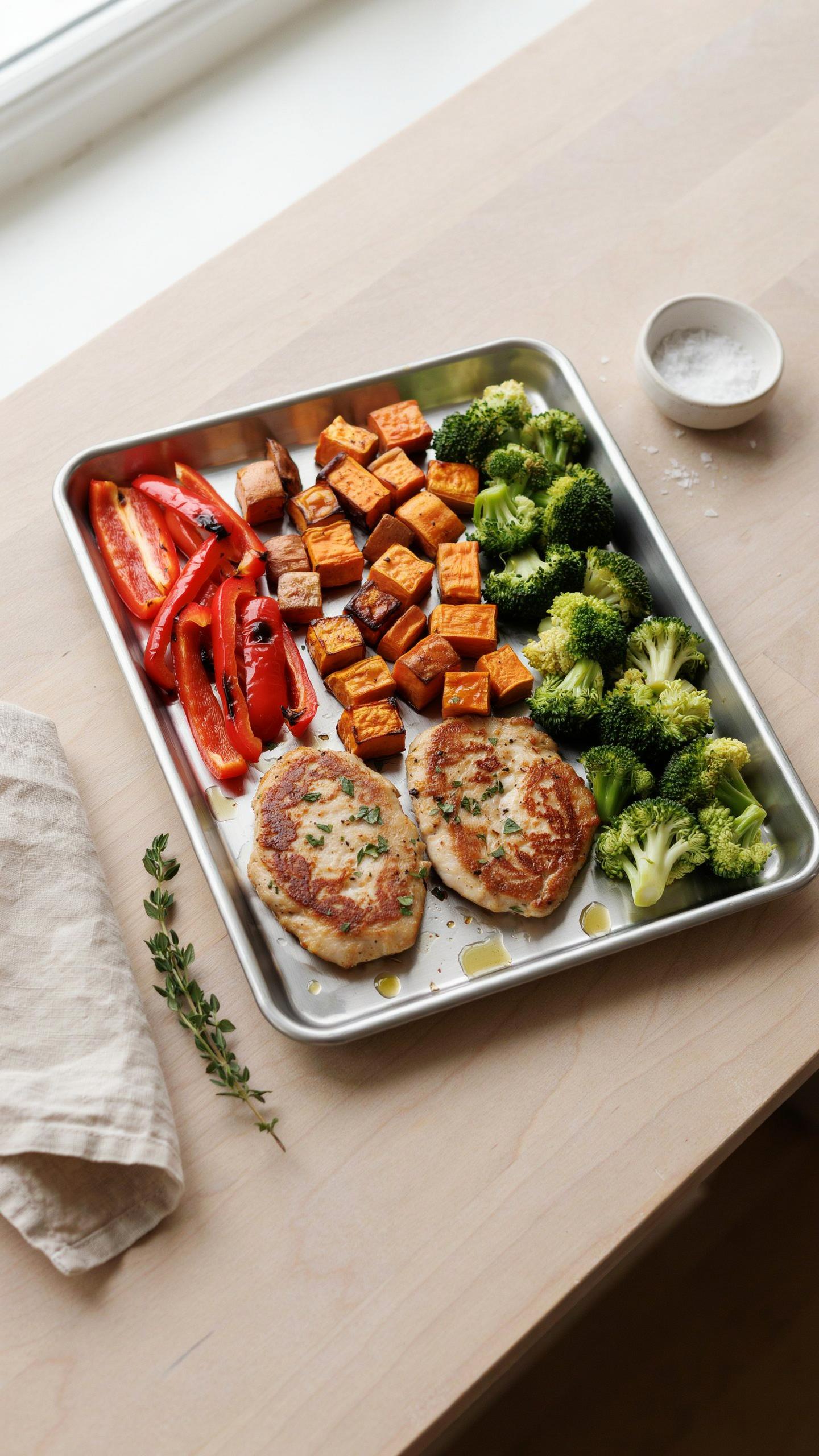
Aluminum Conducts Heat, Not Status
You want to believe the expensive pan matters because it validates your commitment to meal prep. It doesn’t. What matters is thermal conductivity, a physics term that describes how fast heat moves through material. Aluminum’s conductivity is 3x higher than stainless steel. This means your chicken thighs cook at the same temperature across the entire pan surface instead of burning at the edges while the center stays pale. Even heat eliminates the guesswork.

Aluminum sheet pans cost half what stainless alternatives cost and outperform them on the metric that actually determines your results. Commercial kitchens use aluminum because the economics are brutal: waste nothing, fail nothing. The metal naturally darkens over time from oxidation, which some view as a drawback. The oxidation layer actually improves heat absorption. Light-colored pans absorb less radiant heat. Darker surfaces accept more. You get faster, more reliable cooking.
Skip Non Stick, Keep Your Protein
The common advice that non-stick extends pan life is incomplete. Non-stick coatings like polytetrafluoroethylene break down when you exceed 400-500 degrees Fahrenheit. High-heat roasting, which creates the crust on chicken and beef that drives flavor, requires 425-475 degrees. Each time you hit those temperatures, you’re degrading the coating. After 2-3 years of regular meal prep, the surface flakes.

Bare aluminum or stainless steel doesn’t degrade at any temperature you’ll cook at. You season a bare aluminum pan the same way cast iron works: fat accumulates in micro-scratches and creates a naturally non-stick surface. This improves with use instead of declining. To maintain it, use oil or cooking spray before each batch, then wipe the pan clean after cooling. The ten-second wipe becomes your protocol.
Heat Dynamics The Unspoken Truth Of Sheet Pan Cooking
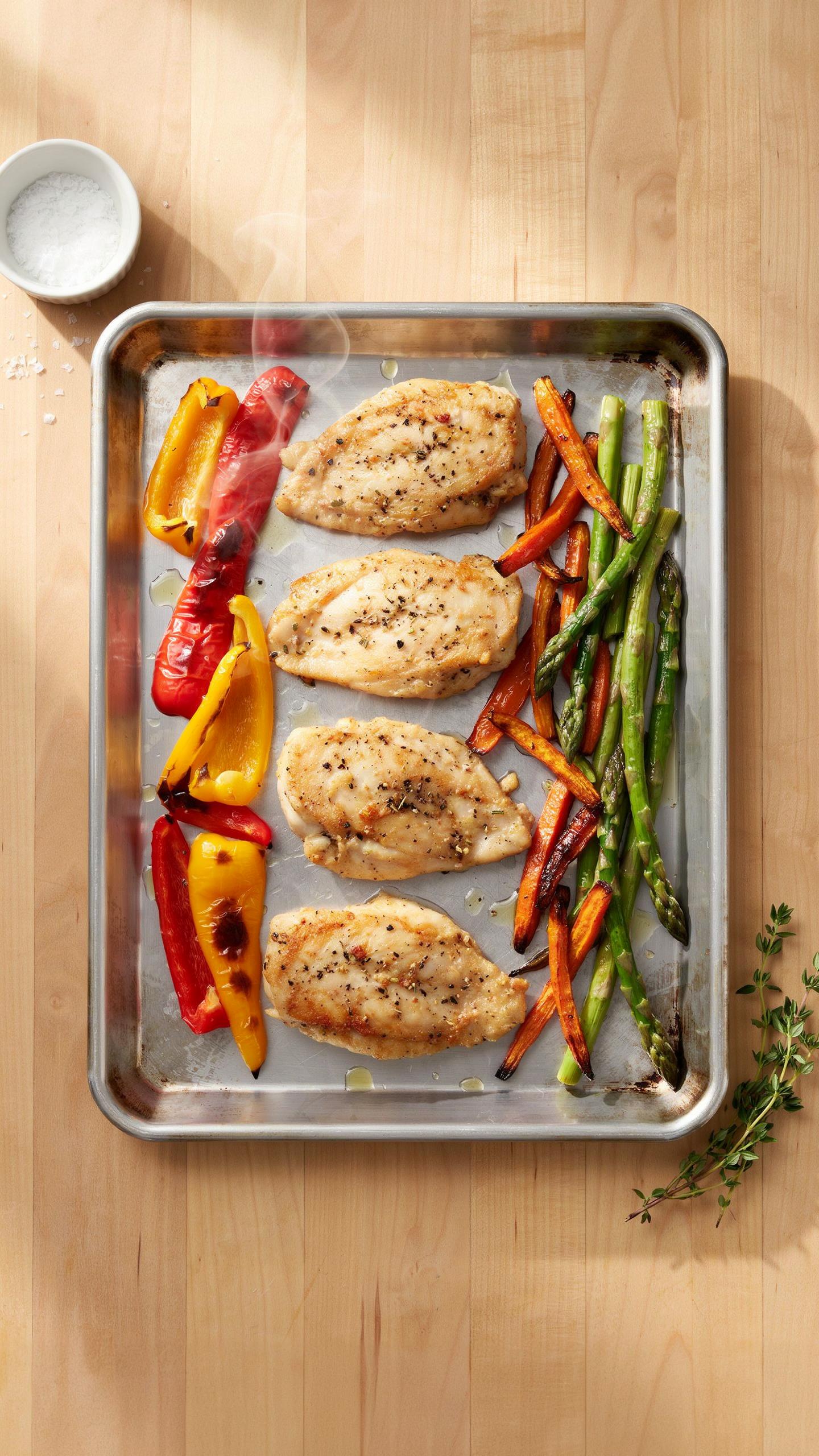
How Pans Actually Transfer Energy
You think you care about even cooking. What you really want is to stop wasting protein and time on unevenly cooked batches. The physics here is simple: conduction moves heat directly through the pan material into your food, while convection circulates hot air around it. Most people obsess over oven temperature and ignore the pan entirely, which means they’re ignoring the primary heat delivery mechanism. Your oven air is just a supporting actor. The pan is the stage where energy transfers to protein.
A sheet pan sitting in a 425-degree oven doesn’t magically cook chicken breast uniformly because the air temperature is right. The pan conducts heat upward into the food on contact, while convection from circulating air adds indirect warmth. The pan’s ability to absorb and hold that thermal energy determines whether your chicken cooks evenly or develops hot spots. This is why a thin, warped pan with low thermal mass fails to deliver consistent results. You’re not just buying a pan. You’re buying a thermal battery.
Material And Thickness Shape Your Results
Aluminum conducts heat roughly three times faster than steel, which means it heats quicker but also cools faster when you pull it from the oven. Steel conducts slower but holds heat longer, creating thermal stability after cooking stops. Gauge, measured in fractions of an inch, directly impacts how quickly and uniformly heat penetrates the pan. A 16-gauge steel pan (about 1/16 inch) warps under high heat. A 14-gauge pan (about 1/16 inch thicker) resists warping and distributes heat more evenly across the surface.
Warping matters because it breaks contact between the pan and your oven rack, creating air gaps that trap heat unevenly. Thicker gauge pans with higher thermal mass eliminate this problem. Aluminum pans in the 3/8 to 1/2 inch thickness range deliver fast, responsive heat transfer without warping, making them ideal for protein that needs browning. The material and thickness you choose determine whether your 30-chicken-breast batch cooks identically or finishes with ten overdone and ten underdone. Pick accordingly.
The One Pan Lie Optimizing For High Protein Sheet Pan Meals
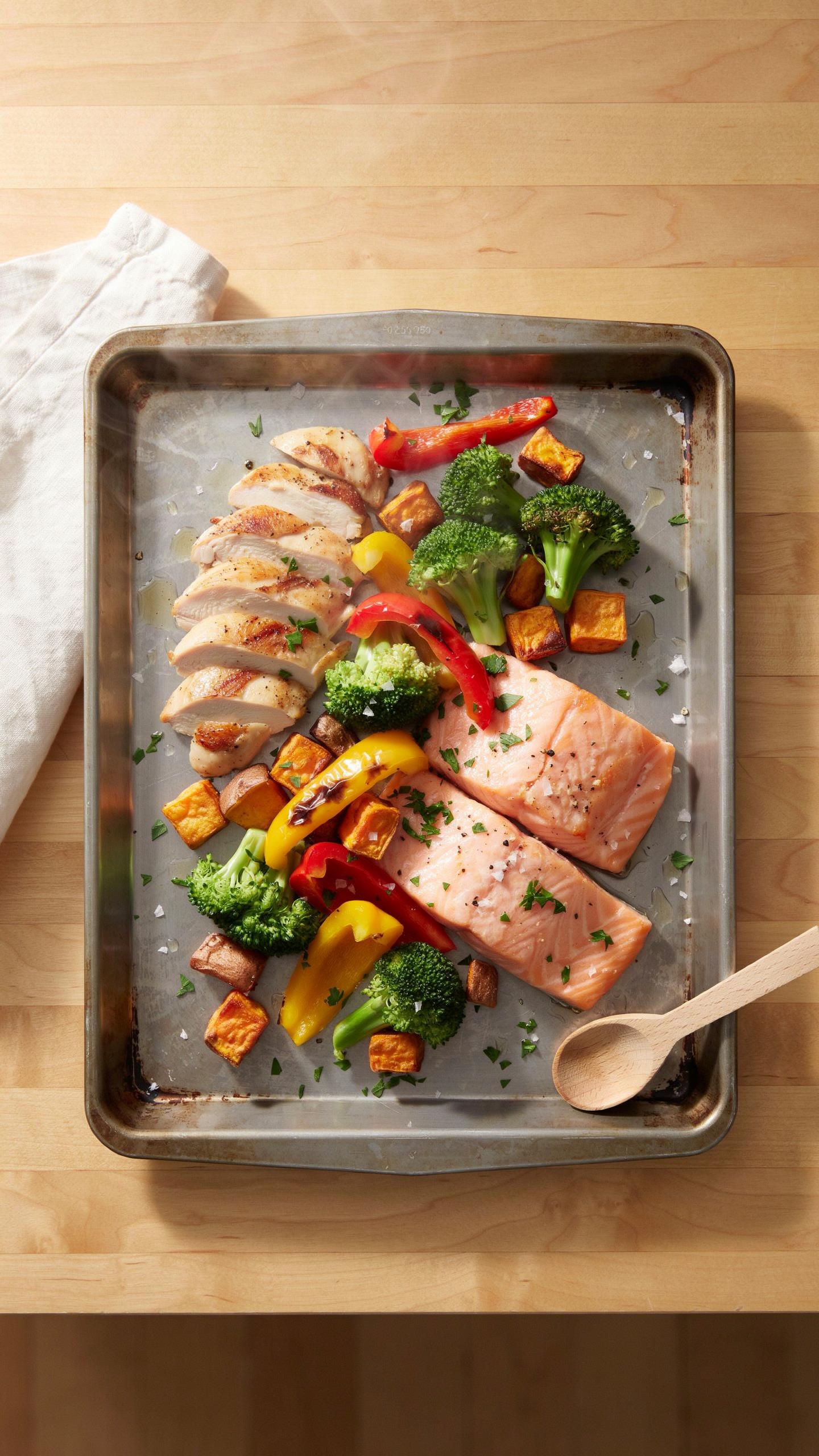
Protein Density Matters Most
You want to believe one sheet pan handles everything because cleanup is a status symbol of efficiency. The real mechanism is thermal mass: protein density determines how heat distributes across the pan. Pack chicken breasts too tight and the center stays cold while edges char. Space matters because air circulation around each piece is what creates even carryover cooking, not just surface browning.
High protein meal prep fails when you treat the pan like a container instead of a heat transfer tool. Chicken thighs, salmon fillets, and ground turkey each have different moisture content and thickness. Thighs need more space than breasts. Salmon needs different positioning than ground beef. The common advice to “just add everything” is incomplete. Protein density means you’re solving for surface area per piece, not volume per pan.
Staggering Cook Times Ensures Precision
Timing is borrowed from industrial production scheduling: you stage tasks by their lead time. In sheet pan cooking, lead time is how long each ingredient takes to reach safe temperature and optimal texture. Vegetables cook faster than dense proteins. Root vegetables cook slower than cruciferous ones. Adding everything simultaneously guarantees something finishes raw while something else dries out.
The protocol is mechanical. Dense proteins go on first. Faster-cooking vegetables add in waves. Calculate backwards from your target finish time, not forwards from when you start. A 425-degree oven with inch-thick chicken breasts needs 18-20 minutes. Broccoli needs 12-14. Brussels sprouts need 16-18. Onions need the full 20. Stagger additions at the 2-minute mark to align finish times across every component on the pan.
The Decisive Edge Protocol From Ingredient To Easy Sheet Pan Dinners
Cut Everything To The Same Size
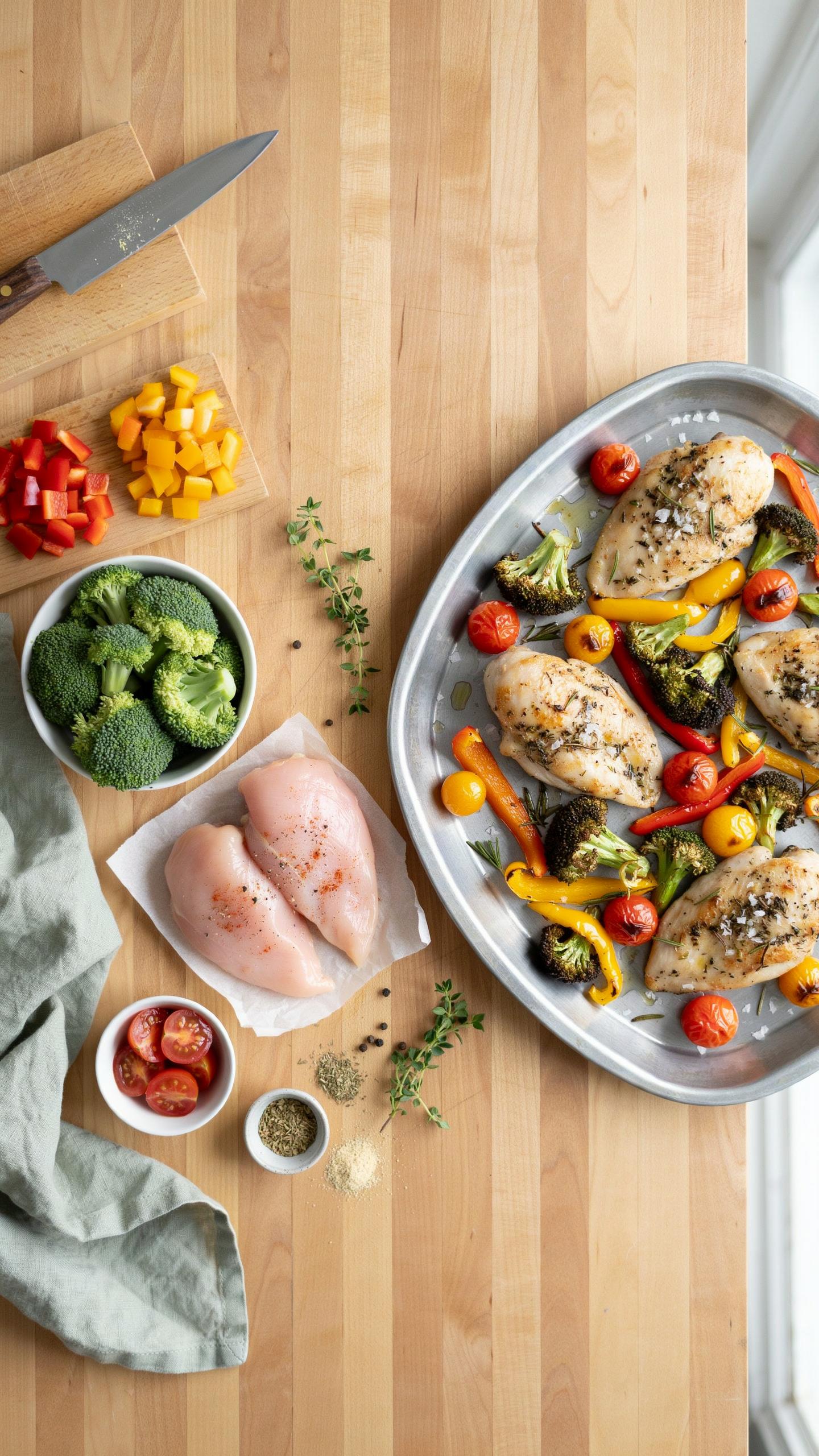
You want to believe a sheet pan does the work for you. It doesn’t. The pan is a stage, and execution happens before anything touches it. Uniform cutting is physics, not preference. Heat moves through food at a predictable rate based on mass and surface area. When chicken breasts vary by half an inch in thickness, the thin pieces dry out while thick ones stay raw inside. One temperature can’t fix what uneven geometry breaks.
The mechanism is straightforward: cut protein and vegetables to matching dimensions so they absorb heat identically. A half-inch cubed sweet potato cooks at the same pace as a half-inch cubed chicken thigh. Your sheet pan does exactly one job well—distributing consistent radiant heat from below. Consistent input size makes that heat reliable. Cut sloppily and you’re fighting the pan instead of using it.
Space Everything For Air Movement
Common advice says “don’t overcrowd the pan.” That’s incomplete. Crowding matters because of convection and the Maillard reaction, which requires direct surface exposure to high heat. Pack your pan tight and you create steam chambers where proteins stew instead of brown. Browning requires air circulation and exposure to dry heat above 300 degrees Fahrenheit.
The real rule: leave a quarter-inch gap between every piece. This isn’t arbitrary spacing. That gap lets hot air from the oven circulate around all sides, letting the surface of each item reach browning temperature. Dense packing traps moisture. Moisture prevents browning. No browning means flavorless protein and dull vegetables. Space your ingredients correctly and you don’t need to babysit the pan or rotate it halfway through.
Beyond Chicken Fajitas Protein Sources For Sheet Pan Suppers
The Protein Rotation That Actually Works
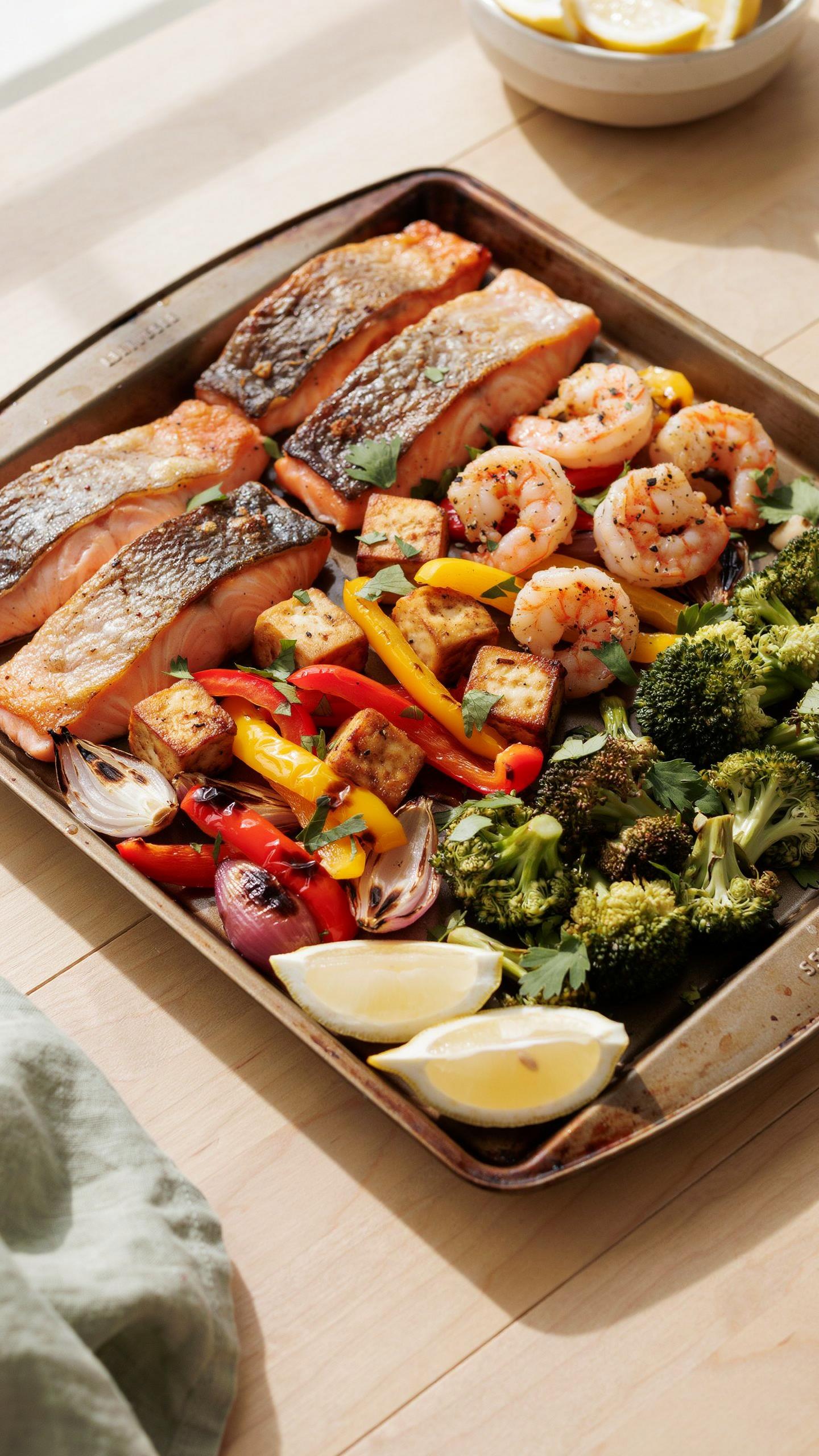
You want variety because monotony kills compliance, and compliance is the only metric that matters. The mechanism is simple: your brain stops registering repetition as food. It becomes wallpaper. Sheet pans work across protein categories because the cooking environment stays constant while the protein changes, meaning you’re not learning new timing or temperature rules each time.
- Beef chuck or sirloin: Cut into half-inch pieces, it cooks evenly at 425°F in 18-22 minutes. Higher fat content self-bastes, reducing dryness risk that plagues lean cuts on high-heat pans.
- Salmon fillets: Skin-on salmon doesn’t stick to parchment and reaches target doneness (145°F internal) in 12-15 minutes. The fat layer acts as insulation, forgiving slight timing variance.
- Chicken thighs: Thighs hold moisture better than breasts on sheet pans due to higher intramuscular fat. Cook at 400°F for 22-28 minutes depending on thickness, checking internal temp at 20 minutes.
- Extra-firm tofu: Press for 30 minutes to remove surface moisture, then cube and toss in cornstarch before panning. High-heat roasting at 450°F for 25-30 minutes creates textural contrast that builds compliance.
- Pork tenderloin: Leanest pork cut that still performs on sheet pans. Roast at 400°F until 145°F internal temp, about 20-25 minutes. Slice after resting for 5 minutes to retain juices.
The protein you choose dictates thickness, surface area, and cook time. Thicker cuts need lower heat or longer duration. Thinner cuts need higher heat or they dry before browning. The sheet pan’s thermal mass absorbs initial temperature drop when cold protein hits it, so you’re always fighting physics. Account for this by starting at temperature and not opening the oven before minute 15.
Flavor Without The Slip Up
Common advice says marinades add moisture. That’s incomplete. What marinades actually do, borrowed from chemistry, is break down protein surface tension so salt penetrates the interior instead of staying on top. This is diffusion, and diffusion requires time. A 30-minute marinade on a sheet pan meal is a compromise between convenience and actual seasoning depth.
Dry rubs work faster because they bypass diffusion entirely. Salt and spice sit on the surface and caramelize during roasting, creating flavor through Maillard reaction instead of osmotic pressure. The tradeoff is that rubs don’t retain moisture like marinades do, so you pair them with fattier cuts or oil-based coatings. Apply rubs 10-15 minutes before panning so salt has time to begin penetration without drawing surface moisture that would prevent browning. For marinades, 30-45 minutes is your window. Longer creates mushy exterior texture, shorter leaves the center bland.
The Thermodynamics Of Roast Mastering Sheet Pan Recipes
Where The Crust Forms
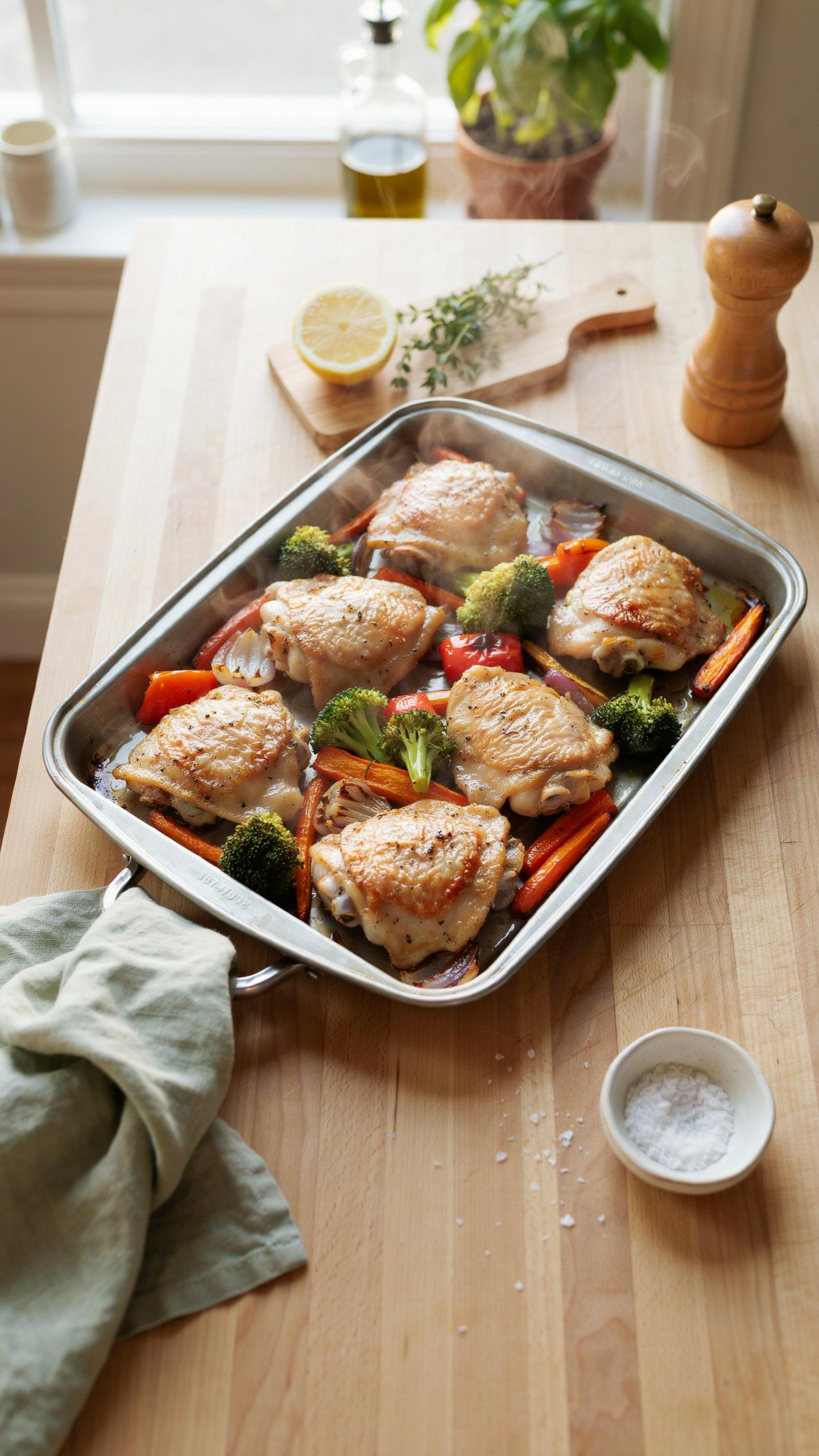
You want the crust because it signals doneness and makes the food taste better, but you’re really after the chemical transformation that proves you’re not just reheating protein. The Maillard reaction is the mechanism: amino acids and reducing sugars hit heat above 300 degrees Fahrenheit and bond into new flavor compounds that don’t exist in raw food. This only happens on the pan’s surface. Boiling or steaming never reaches this temperature, so they never build this depth.
Sheet pans excel here because their flat geometry maximizes surface area exposure to direct heat. Most home cooks set the oven to 375 and wonder why their chicken thighs taste flat. The pan temperature matters more than air temperature. Preheat your sheet pan for five minutes at 425 before loading protein. The pan transfers radiant heat directly into the bottom, triggering the reaction faster and deeper than air circulation alone can achieve.
Mass Holds The Heat
Borrowing from physics, thermal mass is the property that determines how much energy a material stores and releases. Your sheet pan’s thermal mass is its capacity to absorb oven heat and maintain that temperature when you introduce cold protein. A thin aluminum pan loses temperature immediately when you set down cold chicken. A heavier steel or commercial aluminum pan holds steady, keeping consistent surface contact heat throughout the roast.
This is why restaurant sheet pans are thicker and heavier. The mass stabilizes cooking. When thermal mass drops, hot spots form, edges burn, centers undercook. Thicker pans cost more because they perform better. Buy steel or commercial-gauge aluminum at minimum 18 gauge thickness. Light flimsy pans sabotage your entire prep system. The pan dictates whether your batch is consistent or lottery.
Cleaning Protocol Extending The Life Of Your Meal Prep Sheet Pans
Deglaze While The Pan Is Hot
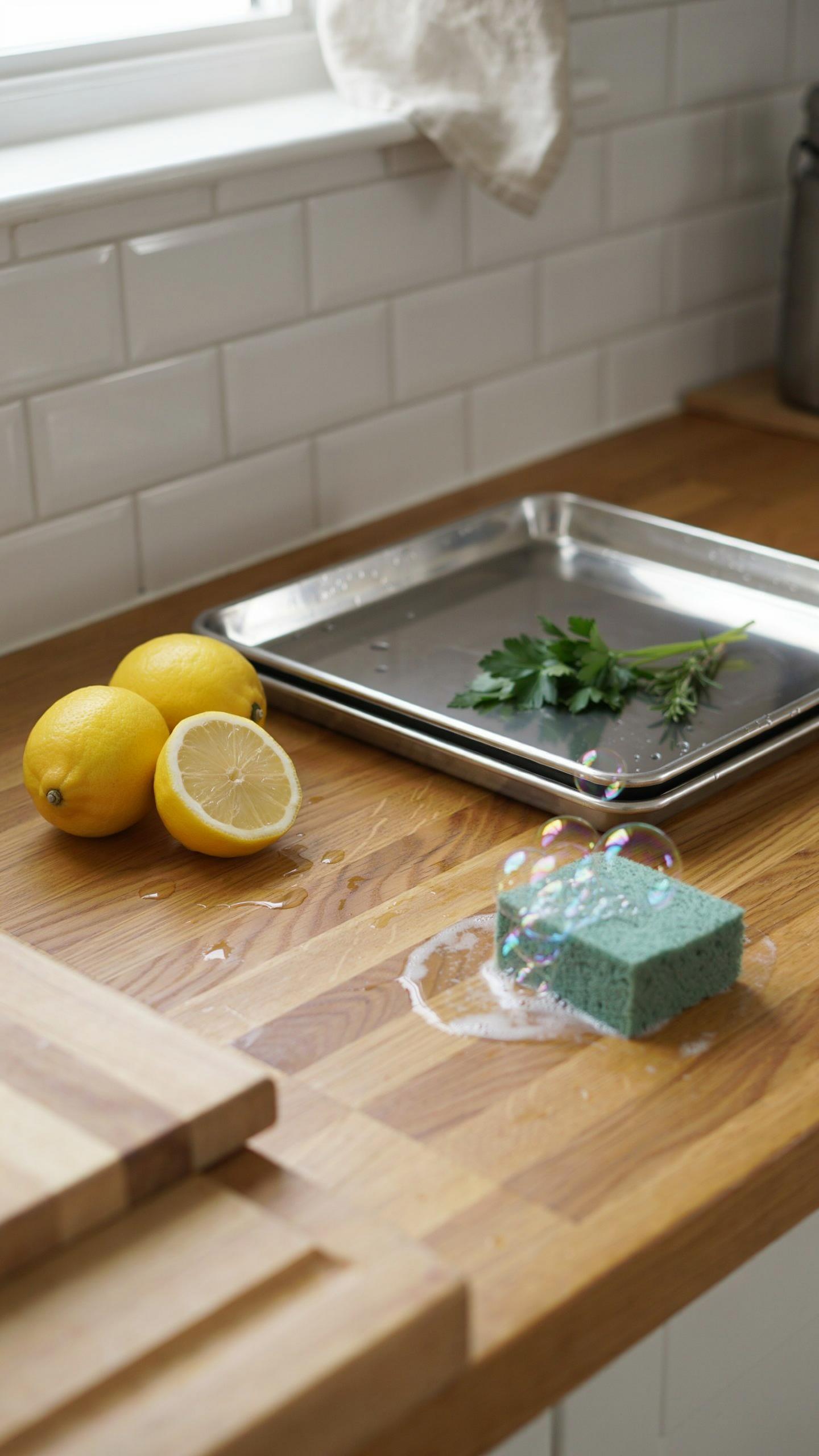
You want your pans to last because replacing them is friction you don’t need, but the real reason you care is that most people trash expensive sheet pans through one stupid habit: letting food cement onto the surface. The mechanism is simple chemistry. Hot metal loosens molecular bonds in cooked-on protein and fat. Cold metal locks them in place. Deglaze the moment the pan comes out of the oven while it’s still above 140 degrees Fahrenheit. Pour hot water directly onto the surface and scrub with a soft brush or cloth. This breaks the bond before it hardens.
Most advice stops at “rinse it,” which is incomplete. After deglazing, wash with warm soapy water and dry immediately with a towel. Aluminum sheet pans oxidize when moisture sits on them too long, creating discoloration and eventual pitting. Steel pans rust under the same conditions. The 60-second window between washing and drying is non-negotiable. Skip this step once a week and you’ll watch your pans degrade in months instead of years.
Store Flat, Never Stacked Vertically
Warping isn’t random damage. It’s a material response to uneven weight distribution, the same principle engineers use in load-bearing design. Sheet pans warp when stacked vertically because gravity applies concentrated pressure on the edges and corners while the center hangs unsupported. Store them flat in a cabinet or drawer. If you must stack them, use thin plastic or wood separators between each pan to distribute pressure evenly across the entire surface.
High-quality commercial pans resist warping better than consumer-grade versions, but no sheet pan survives being propped upright in a cabinet indefinitely. Heat cycles make aluminum and steel expand and contract. Vertical storage accelerates this process because gravity pulls differently on a warped edge than it does on a flat one. Keep pans horizontal, stored in cool, dry conditions away from direct heat sources. Inspect for warping every three months by placing the pan on a flat surface and checking for gaps underneath.
Strategic Batching High Protein Sheet Pan Meals For The Week
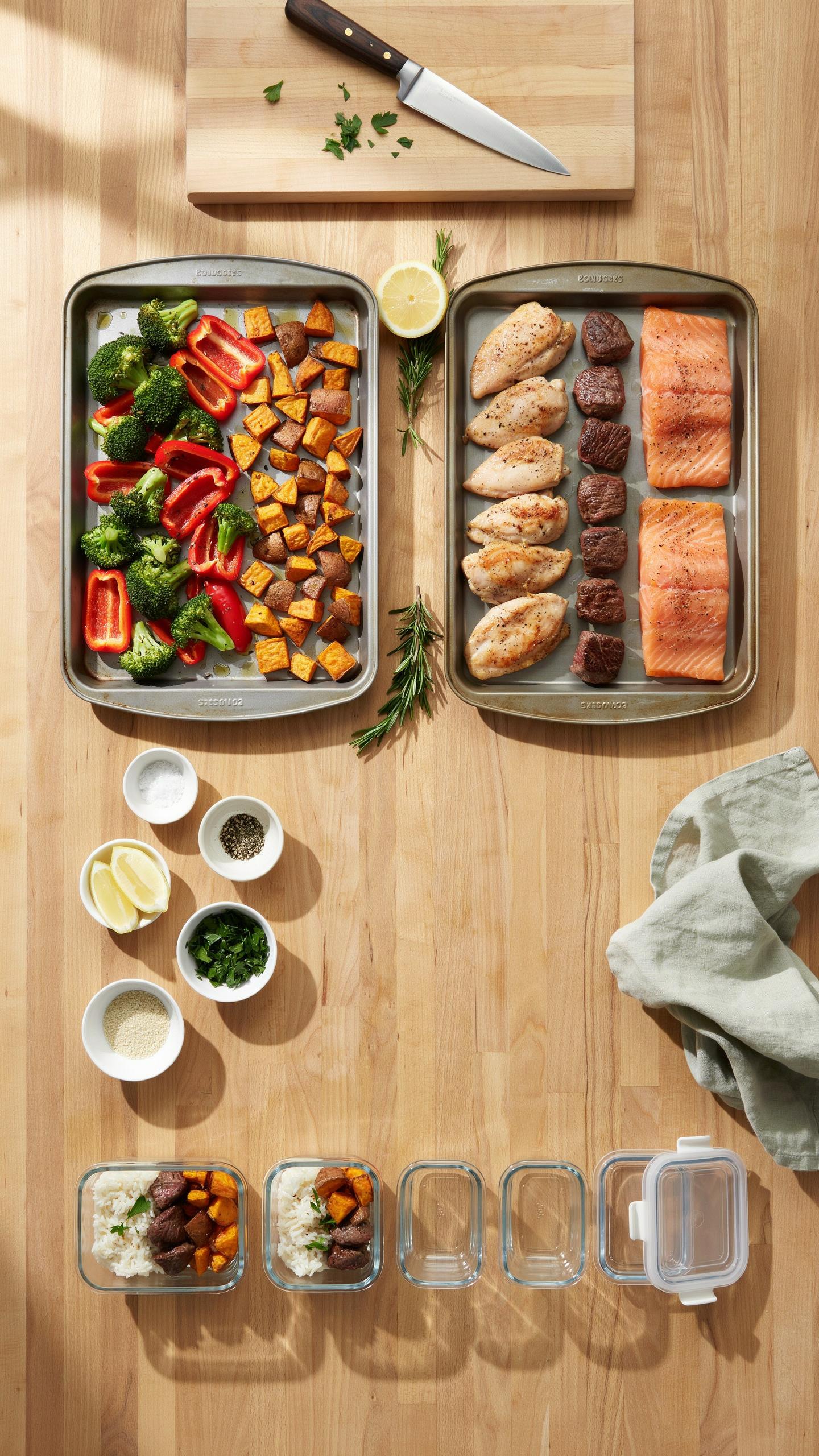
Weighing What Goes Into Your Body
You care about this because you want proof that you’re actually eating enough protein, not guessing and hoping it sticks. The mechanism is simple: macros don’t exist until you measure them. A sheet pan with chicken, rice, and broccoli looks identical whether it’s 35 grams of protein or 55 grams per portion. Weight your cooked protein on a digital scale to the gram. Then divide by servings. This is how you move from approximation to accountability.
Most people eyeball portions and wonder why results don’t match their effort. The sheet pan’s flat surface actually works for you here because everything cooks uniformly, so density stays consistent across portions. Weigh your protein source raw or cooked, but stay consistent with one method each week. Record the total grams and divide by your number of servings. This creates the baseline you build meal timing around, not the other way around.
Cooling Before Storage
Food safety doctrine from microbiology is straightforward: bacteria enter the danger zone between 40 and 140 degrees Fahrenheit. Your sheet pan of hot chicken and vegetables enters this zone the moment it leaves the oven. Leaving it on the counter for two hours before refrigerating is a bacteria incubator, not a cooling strategy. Cool to room temperature in 30 to 45 minutes on the counter, then move it directly into the refrigerator.
The secondary layer most people skip is this: cooling while still on the sheet pan traps steam and compromises texture by the third day. Transfer portions into airtight containers after the initial cool-down. This stops the continued moisture release that turns crispy edges into soggy fiber. Your sheet pan meals stay palatable through Wednesday because you interrupt the degradation cycle at the right moment.
The real obstacle isnt finding the perfect pan its mastering the few variables that actually matter

Most people buy the wrong pan, then blame themselves for failing. Stop. Pick any decent half-sheet pan with raised edges and commit to it for thirty days. Track what actually works: oven temperature consistency, spacing between proteins, and cook time. One variable changes everything. Buy your pan today, not next week. Indecision costs more calories than any poor choice ever will.