The Illusion Of Eyeballing Why Your High Protein Goals Fail

Your Brain Cannot Measure Mass
You want to believe you can eyeball portion sizes because admitting you can’t feels like failure. But here’s the mechanism: your visual cortex evolved to detect predators and food sources, not quantify grams of chicken breast. Neuroscience calls this the Weber-Fechner law—your brain perceives relative differences, not absolute values. A scale measures mass directly. Your eyes measure shape, color, and density as proxies, which fail consistently when protein sources vary in moisture content, preparation method, or how they’re plated.

The gap between what you think you’re eating and what you’re actually eating compounds daily. You estimate 150 grams of ground beef but serve 120. You underestimate rice by 30 grams per meal. Over a week, you’ve missed 300-400 calories of total intake—enough to stall progress entirely. Your protein target becomes a guess wrapped in confidence. A scale removes the variable. It turns meal prep from estimation into data entry.
The Math Of Protein Approximation Failures
The common advice says “just learn what portions look like.” It’s incomplete. A 6-ounce chicken breast is not a fixed visual—it changes shape when cooked, when sliced, when it cools. Ground turkey at 150 grams looks dramatically different depending on how densely you pack it into a container. Without a scale, you’re running calculations on corrupted input. The cost is predictable: you miss your protein target by 10-20 percent on most days, which means your body builds muscle slower than your plan assumed.

A scale forces precision into your protocol. You weigh raw chicken before cooking to eliminate the water loss variable. You measure cooked portions when protein targets depend on final intake. You track what you actually ate, not what seemed reasonable. This generates the only feedback loop that works: real data instead of feeling. Place your scale on a stable surface, zero it with the container on top, then add protein until the display matches your target. That number becomes non-negotiable.
The Precision Feedback Loop How A Digital Food Scale Optimizes Protein Intake
Input Becomes Measurable Output
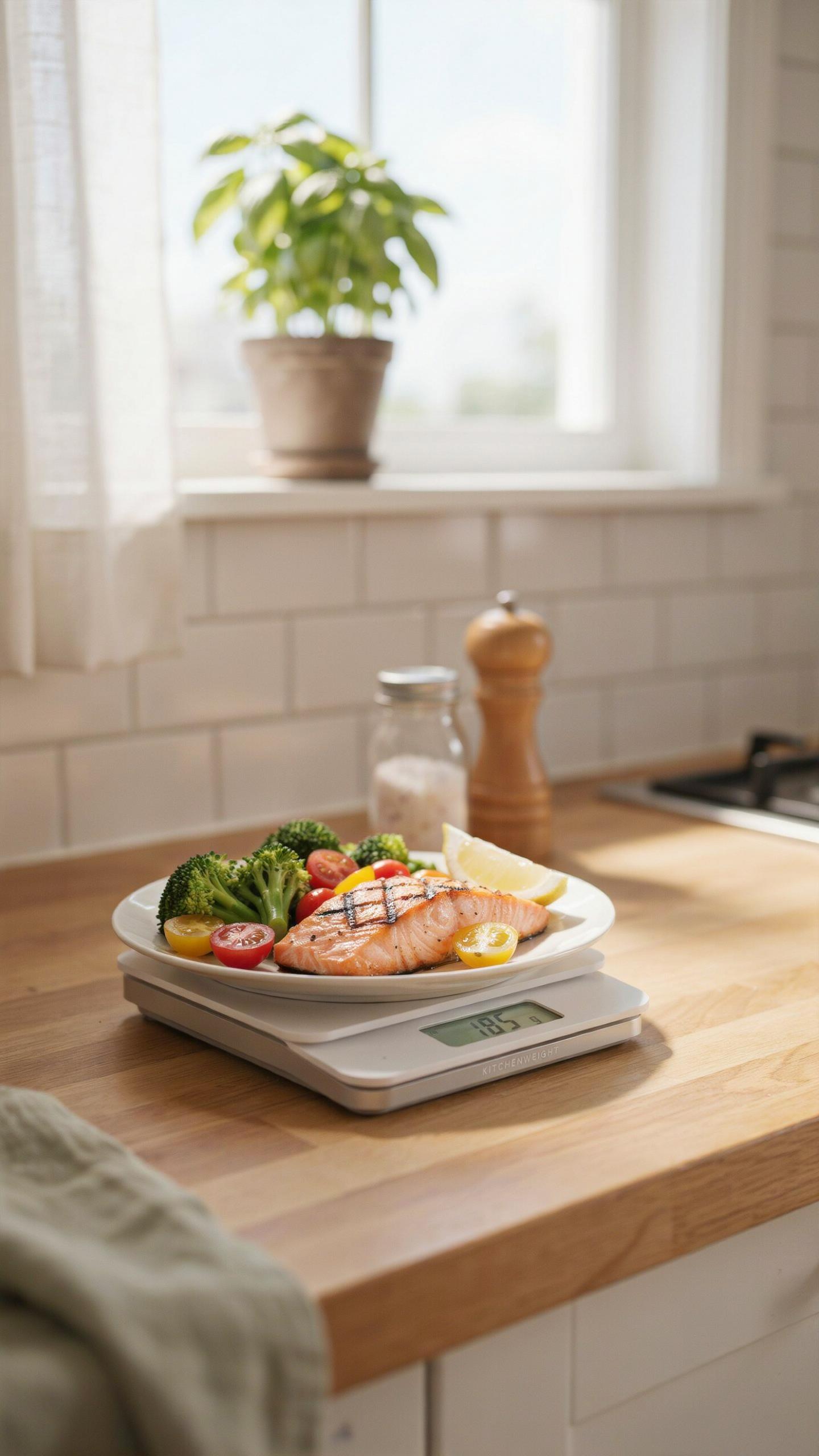
You want to believe your protein intake matches your goals without actually checking. A digital food scale forces the gap between assumption and reality into the open. This is borrowed from control systems engineering: feedback is the mechanism that closes the loop between intended input and actual result. Without measurement, you’re guessing. With a scale, every meal becomes data.
Most people estimate protein by volume or eyesight. They’re wrong consistently, and they never know by how much. A scale removes estimation entirely. You place chicken, fish, or powder on the platform, read grams, and know the exact protein content because you’ve cross-referenced the nutrition label. The feedback isn’t delayed or abstract. It happens at the moment of preparation, when you still control the next decision.
Refinement Through Repeated Measurement
Iteration requires two things: a baseline and the ability to detect change. Most meal prep advice stops at “track your macros.” That’s incomplete. A scale lets you track with precision, which means you spot patterns other people miss. Eating 145g of protein one day and 98g the next produces different results. A scale reveals this variance. You adjust portions, not just calories.
After two weeks of scaled meals, you build a library. Chicken breast at 180g delivers roughly 43g protein. Greek yogurt at 150g delivers roughly 20g. Ground beef at 100g delivers roughly 21g. You stop relying on apps and start relying on your own data. You know exactly which portions hit your target because you’ve measured them repeatedly. The protocol is simple: weigh, record, adjust the next day if the total missed your goal.
Calorie Budgeting Beyond Guesswork The Digital Kitchen Scale Advantage
Where Your Estimation Breaks Down
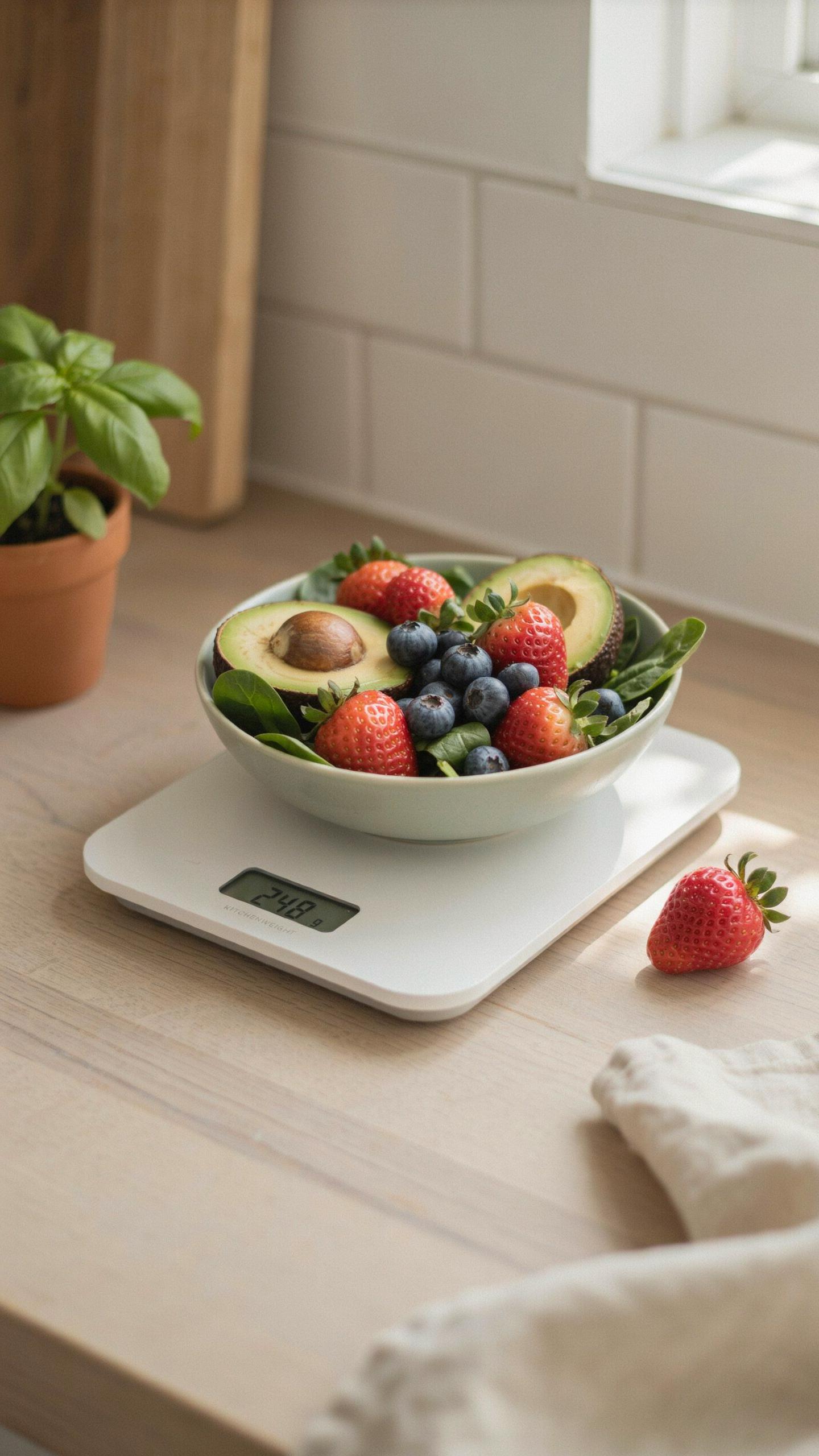
You think you know portion sizes. You don’t. Most people underestimate calories by 20-40% through visual approximation alone, which means your “disciplined” meal prep is actually caloric creep in slow motion. A food scale removes this blind spot by forcing precision where your brain defaults to comfortable lies. The mechanism is simple: weight is objective. Your eyes are not.
When you measure by hand, you’re making a prediction without data. A chicken breast “about this big” varies by 40-80 grams depending on the cut and your mood that day. That’s the difference between 200 and 280 calories. A digital scale gives you the actual number every time, which means your deficit or surplus stays consistent instead of drifting into maintenance or overeating without explanation. Consistency compounds. Guessing does not.
Macros Lock In When Grams Get Precise
Protein targets require precision, not approximation. If you’re chasing 160 grams of protein daily and your chicken portions swing between 150 and 230 grams, your actual intake swings between 31 and 48 grams per meal. Over a week, that’s 119 extra grams of protein some days, 119 fewer on others. You can’t build a reliable system on that variance.
A scale converts your macro goals into a protocol you can repeat. You weigh 180 grams of chicken. You know it contains 43 grams of protein. You log it. You repeat. Carbs and fat follow the same logic. The result isn’t motivation or discipline. It’s repeatability. Once you’ve done it ten times with actual numbers, your brain builds an intuition that actually works. Guesswork masquerading as intuition is how people spin their wheels for months.
The Scarcity Mindset Protocol Maximizing Protein Yield With Your Weight Scale
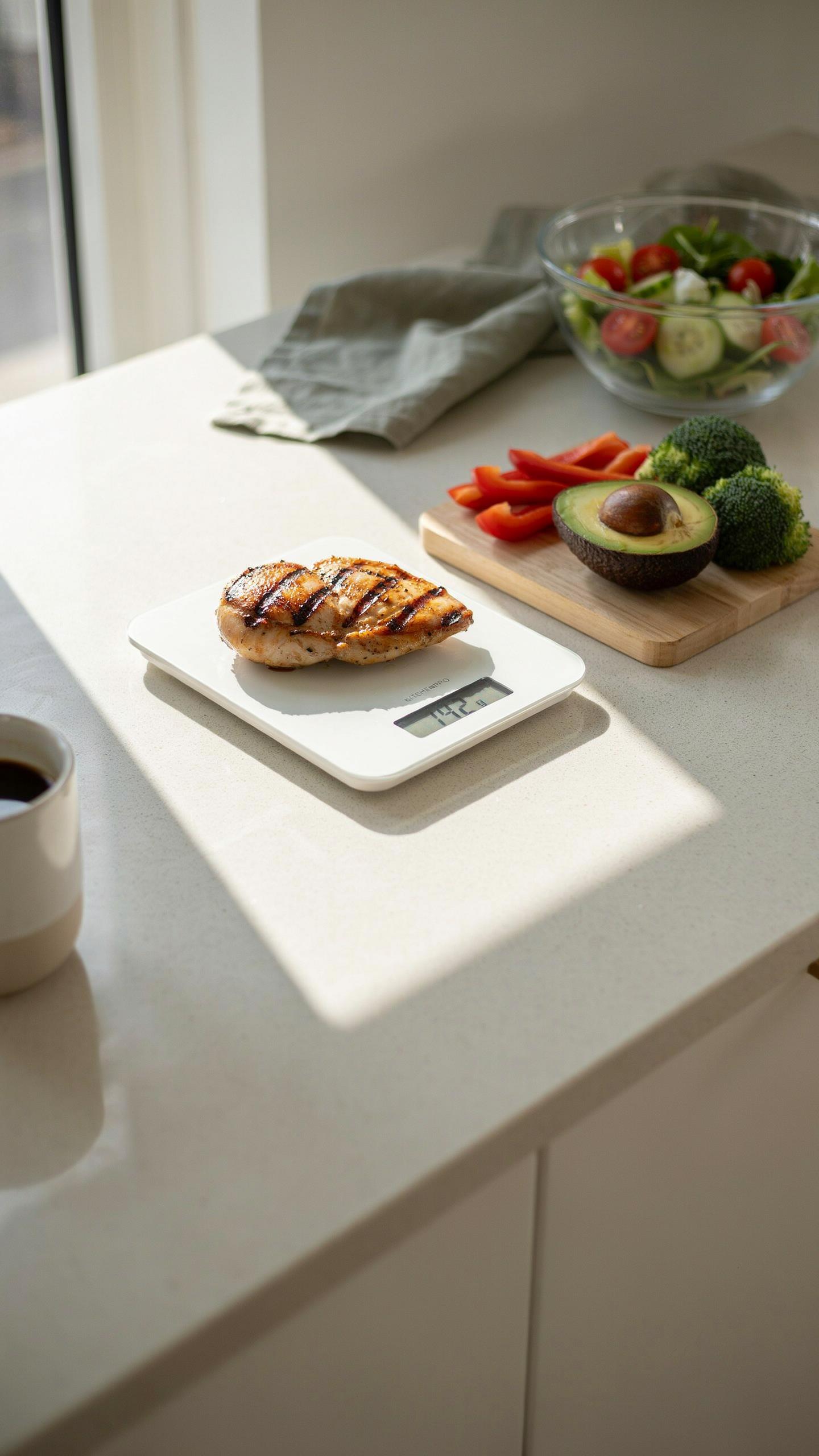
Protein Sources As Finite Resources
You want to feel like you’re optimizing something without actually changing your behavior. Here’s the mechanism: a scale forces you to see protein quantity as a constraint, not a feeling. Economics treats scarcity as the driver of all allocation decisions. Your scale becomes that constraint detector. Without it, you estimate portions and leave protein on the table because you can’t see what you’re actually consuming versus what you need.
Most people say “just eat more protein.” That’s lazy. A scale shows you’re eating 18 grams when you thought it was 30. You see the gap. Once visible, the gap becomes real—and you have to decide: add more chicken, or accept the shortfall. That visibility changes everything because you can’t lie to a number.
Where Each Gram Counts Most
A scale allocates your protein budget to meals where it creates the most output per unit input. First, identify which meals drive your training recovery or satiety goals. Then weigh your portions against those specific targets, not some generic daily number.
- Post-workout meal: Prioritize measured protein here first—your body is primed to use it, so underfeeding this meal wastes opportunity cost.
- Breakfast: Track this second because morning protein intake predicts total daily consumption and hunger control through mid-day.
- Snacks between meals: Scale these last—they’re often where unmeasured protein leaks happen, and precision here recovers 10-15 grams daily.
- Dinner: Weigh this once your other meals are locked, since dinner portions often expand to fill remaining appetite rather than hitting targets.
- Travel or unpredictable meals: Pre-weigh and log these before you leave, so you know your deficit in advance and can adjust elsewhere.
Once you know where each gram lands, you stop guessing. You measure, log the weight, and move the next day’s portion up or down by exact amounts. No surplus protein wasted on meals that don’t need it. No deficit meals dragging down your week.
Deconstructing Recipes The Kitchen Scale As An Analytical Tool
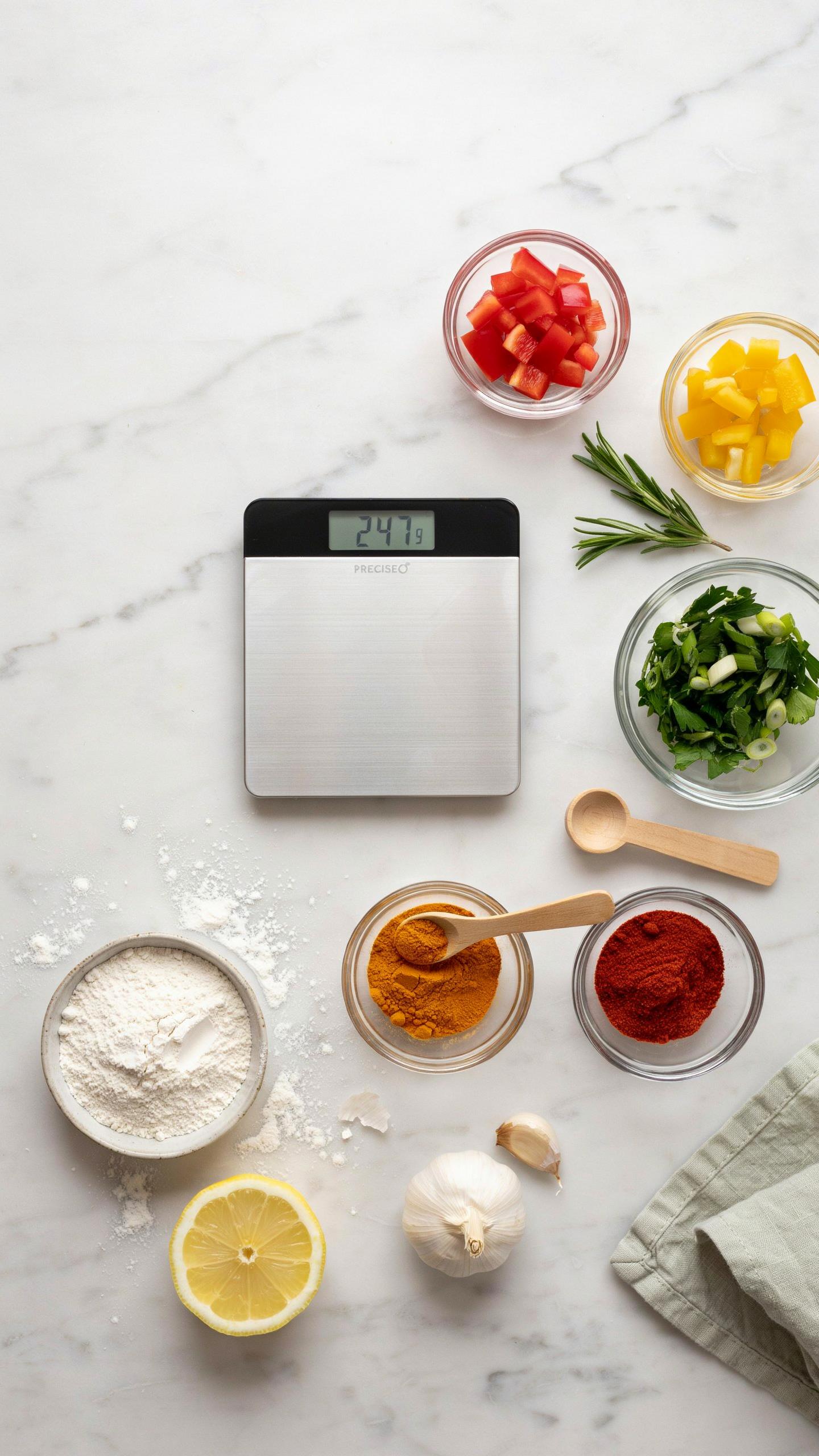
Reverse Engineering Nutritional Data From Meals
You want to know if what you’re eating actually matches what you think you’re eating, because the gap between intention and reality is where your progress dies. A scale exposes that gap by forcing measurement into the equation instead of letting you estimate portion sizes like a guess.
Most people treat recipe nutrition labels as gospel. They’re not. Label data comes from averaged batches, not your specific ingredients or cooking method. A scale lets you measure your actual input, then cross-reference it against the nutrition database. Weigh each ingredient going into the pan, log the totals, divide by servings. The number you get is yours, not some manufacturer’s approximation that doesn’t account for the brand of chicken you bought or how much oil actually stuck to the pan.
Ingredient Density And Protein Per Gram Understanding
Biology teaches us that density varies by composition. Apply that principle directly to meal prep: two foods can weigh the same but deliver different protein because their molecular structure differs. A scale without this knowledge is just a tool giving you numbers you can’t interpret.
Chicken breast has roughly 0.31 grams of protein per gram of weight. Greek yogurt sits around 0.10 grams per gram because water makes up most of its mass. Peanut butter delivers 0.25 grams per gram, but half that weight is fat. Understanding these ratios means you stop chasing portion sizes and start chasing protein density. Weigh your ingredients, know their protein yield, adjust quantities before cooking to hit your target instead of gambling on taste and hoping the macros landed somewhere close.
The Behavioral Economics Of Accurate Tracking A Digital Scale Perspective

Your Brain Lies About Portions
You want to believe you’re disciplined enough to eyeball protein amounts, but you’re not—and that’s not a character flaw, it’s how human perception works. Behavioral economics calls this “anchoring bias”: your brain locks onto the first estimate you make and rarely adjusts it downward. A digital scale breaks the anchor by replacing estimation with data. When you measure 150 grams of chicken breast instead of guessing, you remove the mechanism that lets self-deception operate.
The common advice here is backward. People say scales “help you stay accountable,” framing measurement as punishment. The real mechanism is simpler: a scale eliminates the mental work of guessing, which is where bias lives. Your brain can’t negotiate with a number on a display. You either hit your target or you don’t, and that clarity cuts through the rationalization that normally derails protein goals.
Measurement Removes The Negotiation
Objective data defeats the stories you tell yourself about portions. When you know exactly how much protein you’re eating, your brain stops running the loop of “I probably had enough” or “that was definitely more than last time.” The scale makes the outcome visible before emotion can reframe it. Visibility collapses the space where excuses breed.
This is where habit formation accelerates. After two weeks of consistent measurement, your hand develops a feel for what 120 grams looks like on a plate. Your eyes start to calibrate. But you only build that real calibration if the scale has shown you the truth first. Without measurement, you’re training your instinct against phantom data. The protocol: weigh every protein source for the first 30 days, then spot-check weekly to verify your eye hasn’t drifted.
Beyond The Meal Scaling For Consistent Healthy Meal Prep
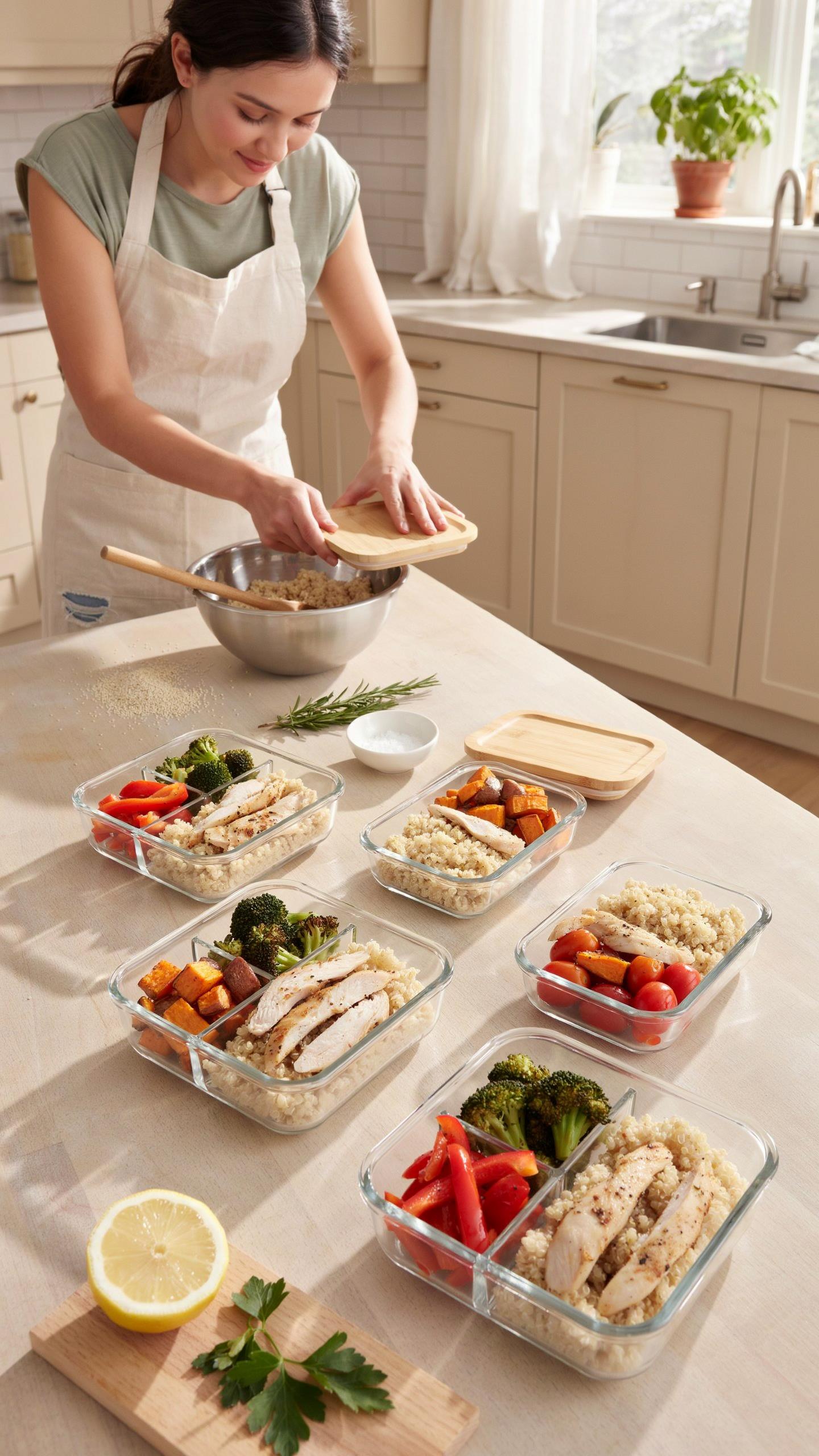
When Recipes Actually Repeat
You want to feel like you have control, like your meal prep is predictable and won’t fall apart halfway through the week. That’s the real reason you care about this. But here’s what nobody says plainly: without a scale, you’re not replicating a recipe. You’re guessing and adjusting. Systems thinking calls this “input variance,” and your kitchen is drowning in it. Every time you eyeball a portion, you introduce drift. A scale eliminates drift. The same 180 grams of chicken breast cooked the same way produces the same macros, same texture, same result. You stop troubleshooting and start producing.
When you batch cook the same meal four times in one session, a scale is the only tool that catches the small mistakes before they multiply. Measure the dry rice before cooking. Measure the cooked output. Note the weight difference. Next batch, you know exactly how much raw ingredient you need. You stop losing track of ratios mid-prep. The scale becomes your verification tool, not just your measurement tool. Consistency isn’t about willpower. It’s about removing decision points from the process.
When Ingredients Don’t Match Your Plan
Most advice tells you to scale recipes by multiplying everything by four. That’s lazy and it fails. Scaling isn’t linear. Some ingredients perform differently at higher volumes. Seasoning concentrates at scale. Oils behave differently. Proteins cook unevenly if you’re stacking them too high in the pan. A scale forces you to think in actual grams instead of cup-guesses, which means you spot these problems before they wreck your batch. You adjust the salt down by 5 grams. You split the chicken into two batches instead of one. You actually get the result you designed.
Start with a single recipe at your target batch size. Weigh every input and every output. Note what changes. Build a deviation log: if you wanted 400 grams of cooked chicken and got 420, that’s the real ratio you need for your prep. The next time you batch the same recipe, you use that ratio, not the original one. The scale isn’t a novelty. It’s your protocol documentation tool, and it turns guesswork into replicable process.
The Minimum Effective Dose Of Protein Refined With Your Food Scale
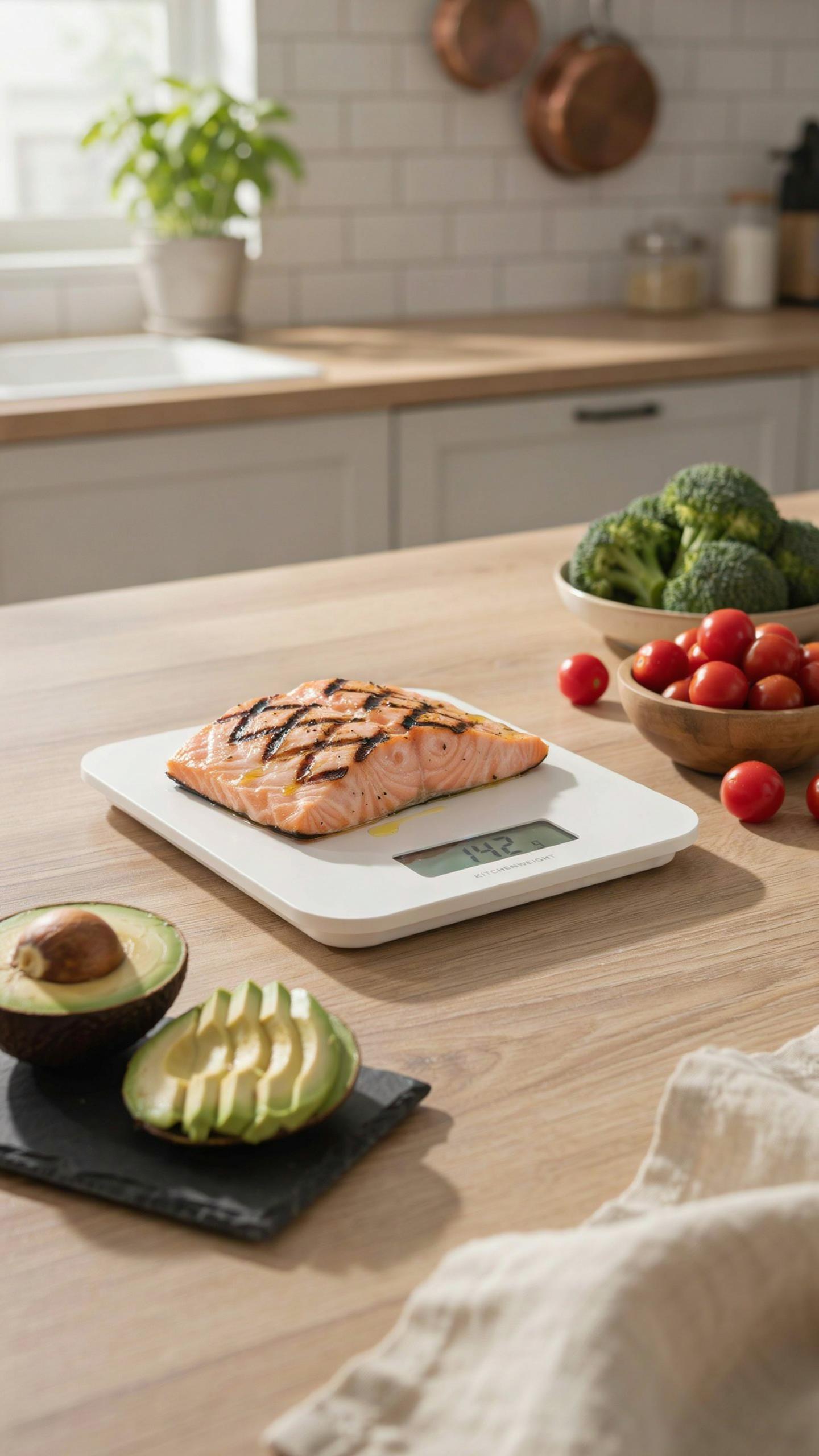
What Your Protein Target Actually Means
You want the number that makes you look better without guessing. Here’s the mechanism: protein requirement sits on a dose-response curve borrowed from pharmacology, where efficacy plateaus past a certain intake. Your scale converts abstract “grams per kilogram” into visible portions you can replicate. Most people cite 0.7 to 1 gram per pound of bodyweight as standard guidance, but this range exists because individual absorption, training stimulus, and body composition goals create variance. A scale removes the variance by making intake measurable and repeatable.
The number itself matters less than consistency. Someone at 180 pounds hitting 140 grams daily through measured portions builds more muscle than someone at 160 pounds rotating between 120 and 180 grams unpredictably. Your scale enforces the behavioral ceiling: you stop guessing, start logging what actually went into your container, and recognize patterns in what produces results for your body. This is why meal preppers with scales progress faster than those eyeballing portions.
What Overconsumption And Underconsumption Actually Cost
The consensus says more protein is always better, but excess protein past your threshold converts to calories you don’t need, adding fat gain that contradicts your original goal. Economics calls this diminishing returns; nutrition just calls it expensive waste. A scale exposes this directly. When you weigh chicken breast, you see that jumping from 150 to 220 grams adds roughly 280 calories. That difference compounds across a week, month, or year.
Underconsumption costs differently. You leave adaptation on the table. Muscle protein synthesis requires sufficient stimulus and amino acid availability; dropping below your threshold halts progress despite training hard. Your scale prevents both errors by making the boundary visible. Weigh your protein source once per meal for two weeks, log the grams, track your results. That data tells you whether your current intake is the lever producing change or whether you’re spinning wheels.
Integrating The Digital Food Scale Your New Operational Standard For Tracking Calories

The Weighing Ritual That Actually Sticks
You want to believe tracking works because it makes you feel in control. The real mechanism is friction reduction. Systems theory calls this “activation energy” — the effort required to start a process. A scale cuts activation energy by removing guesswork. You weigh, you log, you move forward. No estimation tax. No mental gymnastics about whether that chicken breast was four ounces or six. The scale kills the conversation between you and the excuse.
The workflow that sticks is the one you automate into context. Place the scale on your prep counter before you start cooking. Keep your logging app or notebook within arm’s reach. Weigh each component as it’s prepared, not after everything’s plated. This sequencing matters because context switches destroy compliance. You prep, weigh, log in one motion. Breaking this chain — prepping everything, then remembering to weigh later — is where most people fail.
The Data Collection That Survives Contact
The common advice here is wrong: “Just be consistent.” Consistency without structure is wishful thinking. You need a protocol, not motivation. Write down the scale reading immediately. Use the same scale for every session. Standardize your containers so you’re not accounting for different weights of plates or bags. These aren’t tips. They’re the difference between data you can trust and data that’s just noise.
Your logging becomes a feedback loop only if you trust the inputs. A food scale eliminates the primary source of tracking failure: uncertainty about portion size. When you stop guessing, you stop second-guessing your numbers. This builds a reliable dataset. After two weeks of actual measurements, you can start recognizing portions by sight because you’ve trained against real data, not assumptions. That recognition is what makes scale-free days possible later. Until then, the scale is your reference standard.
The real obstacle isn’t knowing what to eat; it’s confronting the data that reveals what you actually eat.
Most people fail at protein goals because they guess. A meal prep scale strips the guesswork and forces honesty. You can’t lie to a number. Buy a cheap digital scale today, weigh your chicken at dinner, and watch what happens when assumption meets reality. The gap between what you thought you ate and what you actually ate is where your results live.