
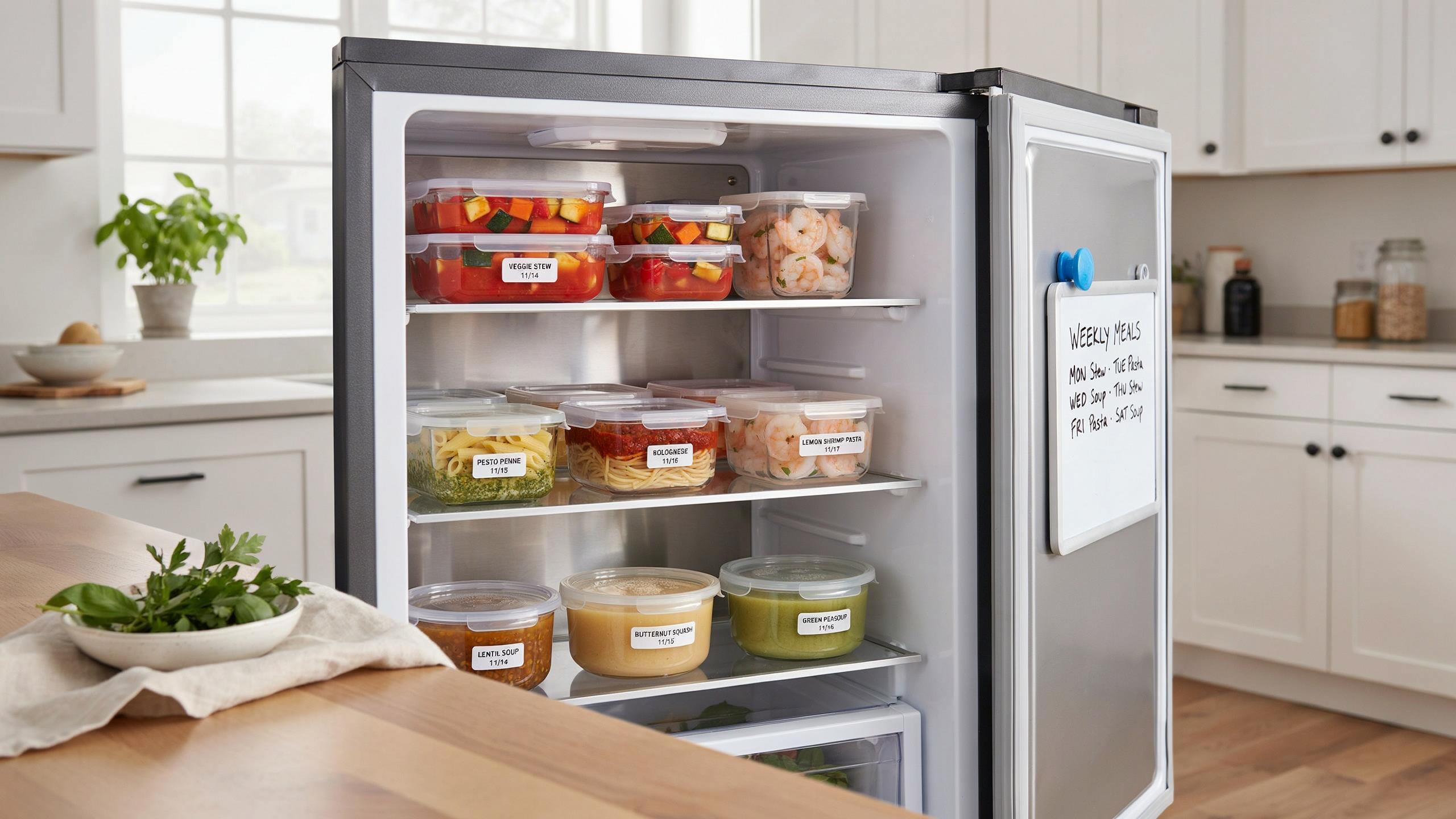
The Myth Of The Perfect Freezer Why Your Meal Prep Labels Fail
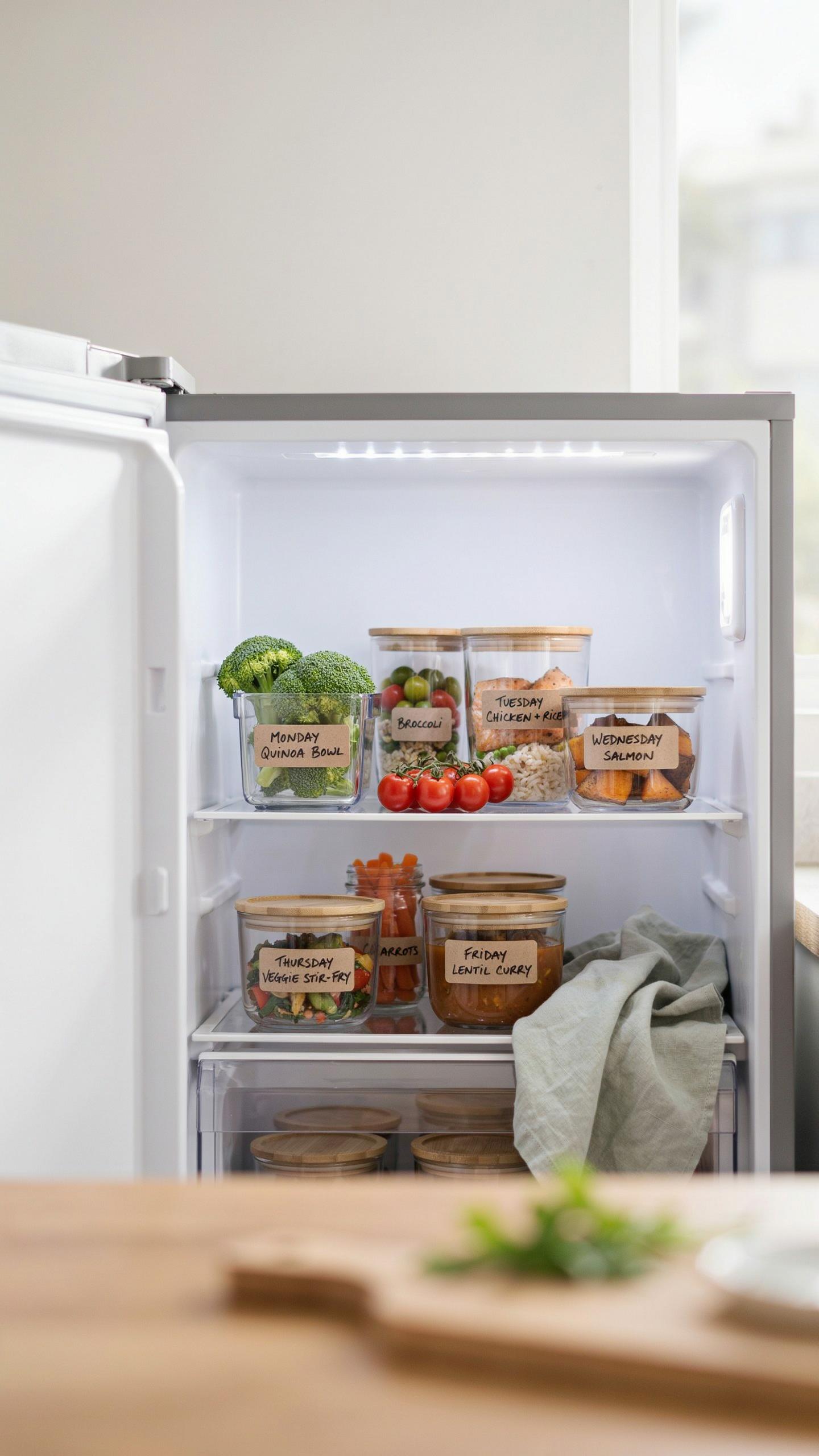
You’re Labeling The Wrong Information
You want to believe a good label system will fix your freezer chaos and make you look organized. Here’s what actually happens: most people label what they already know and skip what they need to know. The real mechanism is information decay. Your brain forgets details the moment you seal a container. A label that doesn’t account for this gap becomes decoration. You write “chicken” when what matters is whether that chicken was cooked three weeks ago or five days ago. The date is the only label data that degrades in real time. Everything else on your label is static noise unless it answers one question: is this still good?

The standard advice about labeling is incomplete. People say “write the date and contents.” That covers identity but ignores the actual failure point: you can’t see through the container from across the room. Freezer burn develops regardless of what your label says. Flavor compounds break down on their own timeline. Write dates in marker large enough to read without moving the container. Use day and month only, not the year. Your freezer stays between zero and ten degrees. At that temperature, most prepped proteins last four to six weeks before quality drops. A label that doesn’t include a consumption window is a label you’ll ignore.
The Arithmetic Of Forgotten Food
Freezer waste isn’t random. It follows the economics of visibility. Every meal you can’t immediately identify requires a decision cost. You pause. You squint. You pull it out to read the label. Most people abort and grab something easier. This friction doesn’t feel like loss until you defrost three-month-old containers and throw them away. The cost compounds because you made the meal once already. You paid for ingredients. You spent time prepping. You paid to store it. The label failure means you absorb all those costs twice. Once to make it. Once to discard it.

The hidden cost scales with freezer size. A small freezer forces visibility. You can see everything. A large freezer or deep freeze creates a false sense of space. You believe you have room for more than you actually use. Labels that don’t create urgency enable this self-deception. Mark your labels with a “use by” date, not just a prep date. Subtract four weeks from the prep date and write that number. Train yourself to rotate containers so older items face forward. This is the only protocol that stops waste before it starts.
Beyond Aesthetic What Smart Food Prep Labels Actually Do
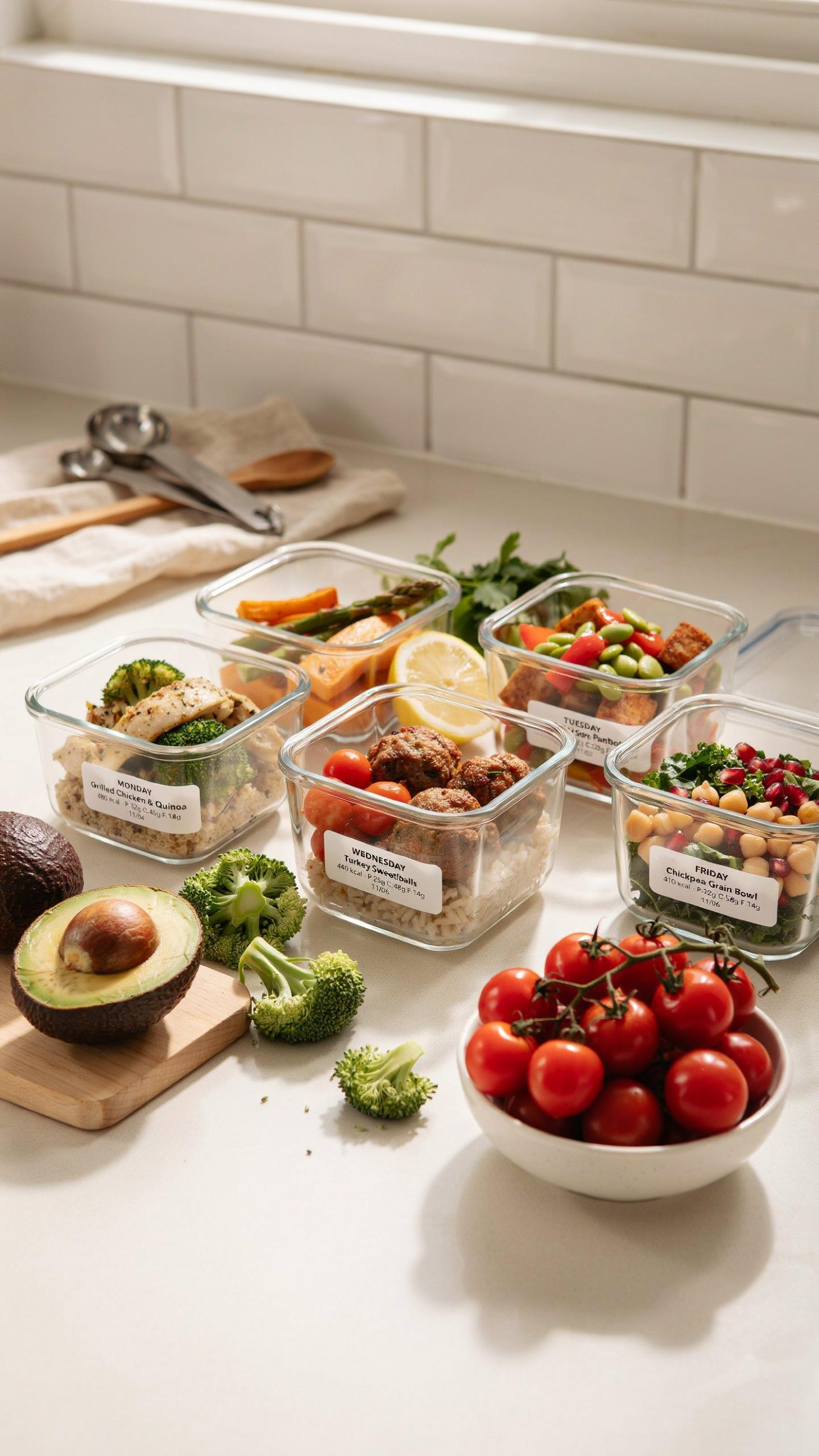
Labels Eliminate The Freezer Stare
You want labels to make your freezer look intentional. That’s not the real mechanism. A label solves a cognitive economics problem. Every unlabeled container forces a decision in the moment you’re hungry, tired, or both. That decision costs mental energy. Clear labels transfer the decision work backward to prep day when you’re calm and purposeful. You decide the meal’s identity once, not repeatedly. The label captures that decision and holds it.
When you can’t see what’s inside, you open containers. Opening containers means thawing. Thawing means commitment or waste. A label tells you the contents, cooking method, and intended use without touching the container. You scan. You choose. You execute. The friction between hunger and eating collapses. Your actual behavior changes because the information architecture changed, not because your willpower improved.
Read The Container Before You Open It
Neuroscience borrows the term “attentional bottleneck” from engineering. Your brain can only process one thing at full depth at a time. Labels move the bottleneck earlier. Instead of standing in front of an open freezer trying to remember what chicken thighs you prepped two weeks ago, you read the label first. The information exists outside your working memory. You reference it instead of retrieving it.
Most prep systems fail here. People label containers “chicken” or “prep date.” That’s incomplete data. A useful label tells you the protein, the cooking method, the sides included, and the reheat time. You decide in three seconds whether this meal matches your hunger, your schedule, and your current macro targets. This specificity makes the label actionable instead of decorative. The label must answer the question you actually ask when hungry.
The Chronos Protocol Time Based Food Labelling Template
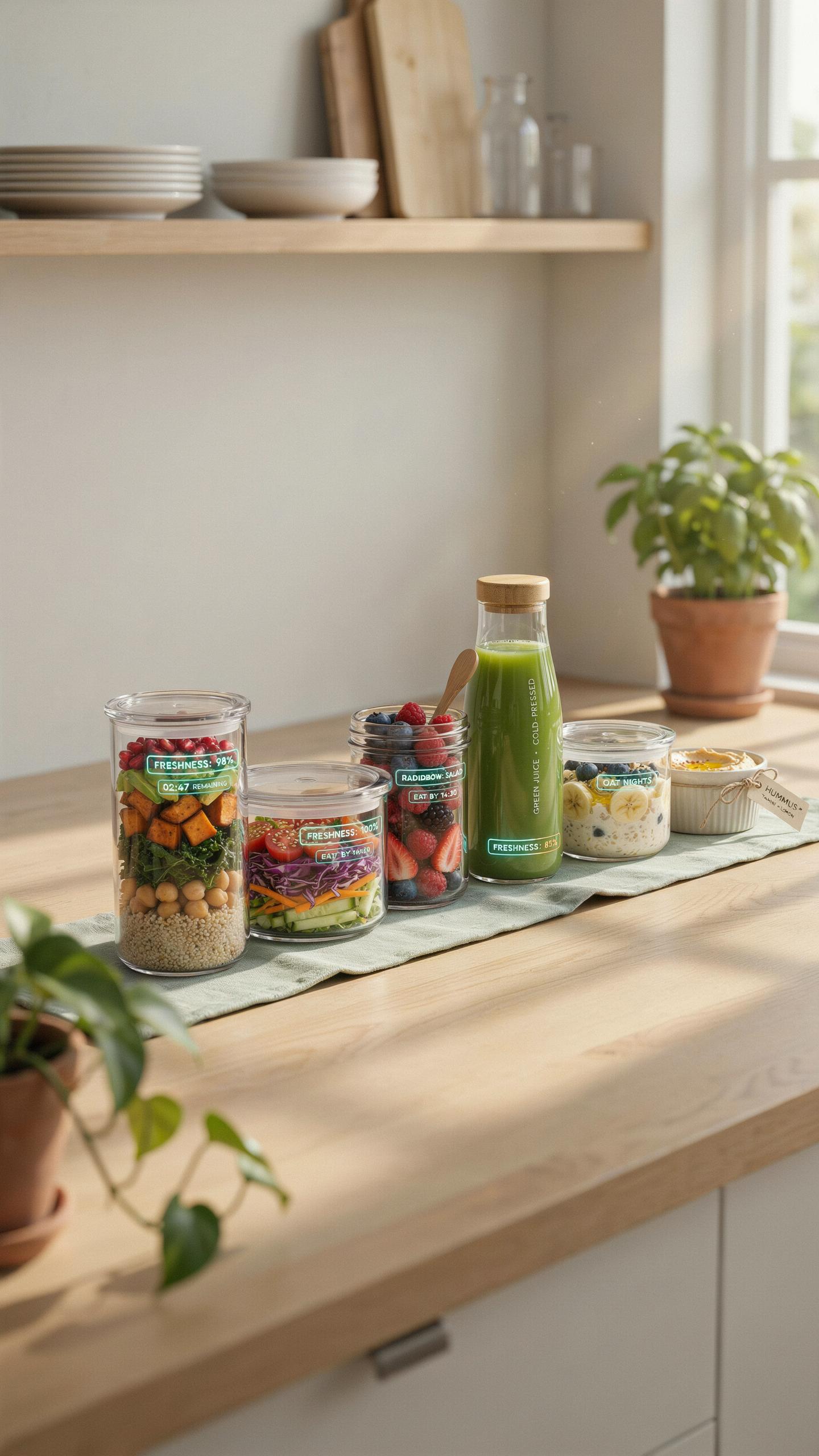
How Long Food Actually Stays Good Frozen
You want the label system to do the thinking for you so you never throw away money on guesswork. Here’s the mechanism: freezing halts bacterial growth by dropping temperature below their reproduction threshold, but enzyme activity and oxidation still degrade quality over time. A proper label captures the window where food tastes and performs as intended, not just when it’s technically safe to eat.
Different proteins and prepared dishes have hard limits. Raw ground beef holds 3 to 4 months. Cooked chicken breast degrades faster at 3 to 4 months due to moisture loss. Soups and stews last 2 to 3 months because liquid freezes unevenly and separates. Vegetables vary by type: blanched broccoli holds 10 to 12 months, but cooked vegetables drop to 2 to 3 months. Your label needs these specific windows, not a generic “6 months” that wastes half your inventory before peak quality drops off.
The Date Code That Actually Works
Most advice here is garbage. People slap “Freeze Date” labels and call it strategy, then forget what happened three weeks in. The real mechanism comes from inventory management: you need to know both when something entered the freezer and when it expires, then rotate based on the shorter window. This removes the mental load entirely.
Use two dates on every label: prep date and use by date. Write prep date as MM/DD so you track what you made. Write use by date as MM/DD and calculate it from the category’s optimal window, not when you feel like using it. Your label becomes a compliance checkpoint, not a suggestion. Organize your freezer vertically with use by dates visible front facing, oldest expiration dates at eye level. Pull from that section first. This system eliminates the decision tax on every meal and prevents the freezer graveyard where forgotten containers fossilize for months.
Ingredient Integrity More Than Just A Name

What Actually Goes Into Your Container
You want people to see your meal prep and think you have your life together. Here’s the mechanism: a label without ingredient specificity is a label that doesn’t work. Food safety depends on information density, not enthusiasm. When you list ingredients on a meal prep label, you’re creating a document that prevents two failures: forgotten allergens and cross-contamination guesses. The difference between “chicken rice” and “grilled chicken breast, jasmine rice, peanut oil, garlic” is the difference between a label and a liability.
Your label needs to capture what actually cooked in that container. Include the protein source and cut, the carbohydrate base, cooking fats or oils, and any seasonings or sauces. This matters because someone reheating your prep needs to know if they’re handling a peanut oil product before they serve it to a guest with a tree nut allergy. The label becomes a record of exactly what transformation happened to the raw ingredients. Write ingredients as they appear in the final product, not as they were bought.
Kitchen Barriers That Labels Actually Enforce
Cross-contamination prevention borrows its logic from microbiology: containment. In biology, compartmentalization stops spread. Your label system does the same thing by making contamination vectors visible before they happen. Most meal prep advice ignores this: people think labels are for memory, not for contamination control. They’re wrong. A label that specifies “prepared on dedicated cutting board” or “contains shellfish” is an active barrier, not a passive note.
The mechanics are straightforward. If you prep fish on Tuesday and chicken on Wednesday, your label needs to state which protein you’re handling so storage order stays logical. Stack contamination risk containers below ready-to-eat items. Your label tells you what demands this positioning. When someone else opens your freezer, the label prevents them from placing a raw prep item over a cooked one. The label is the rule enforcement. Write storage instructions directly on the label: “Keep below line items” or “Top shelf only.” This turns paper into protocol.
The Meal Matrix Method Structuring Your Meal Prep Containers
Sort By Cooking Method, Not Meal Type
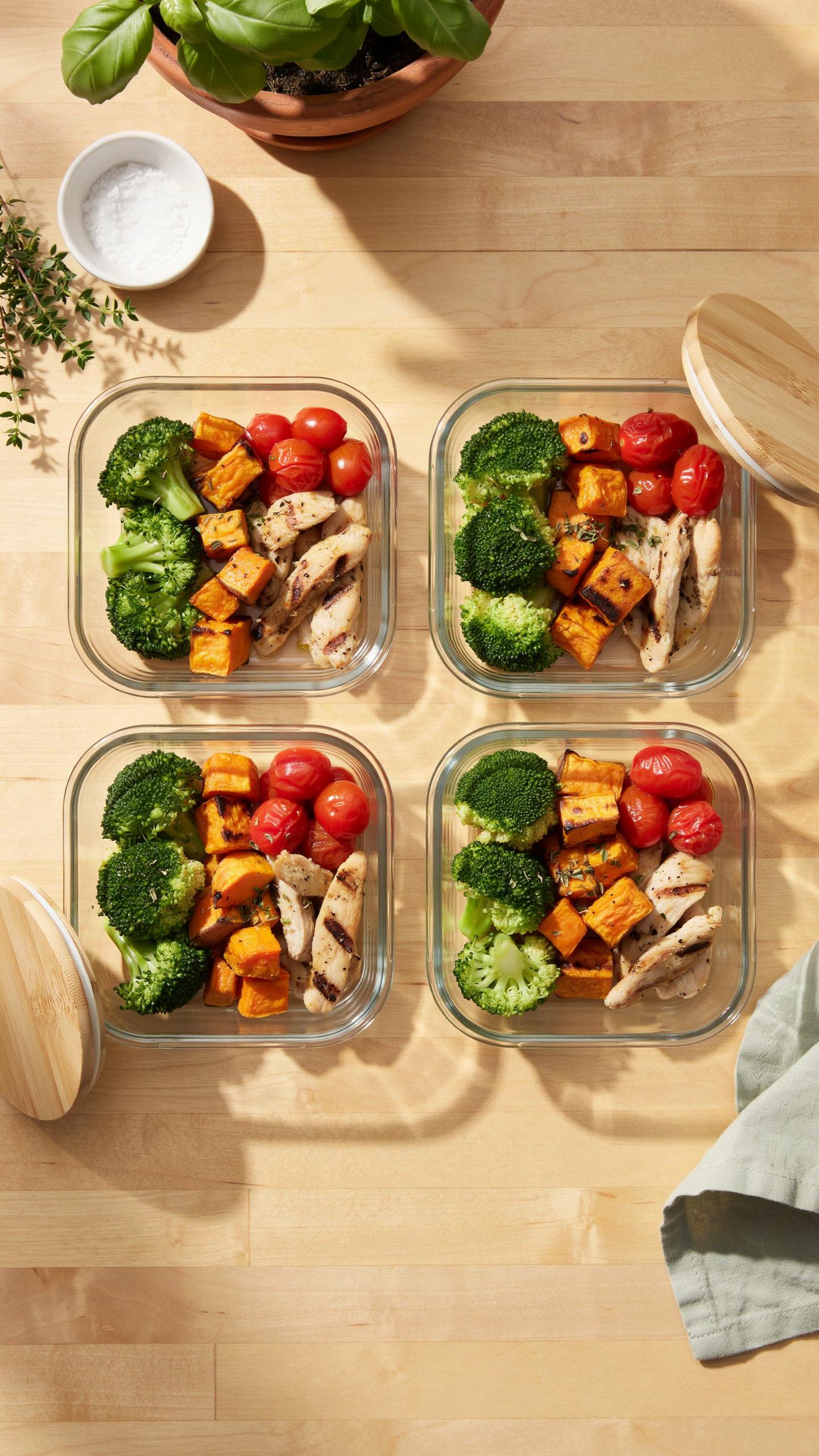
You want your freezer to feel controlled because chaos signals you’re not on top of your life. The real mechanism is this: cooking method determines thaw time and reheating protocol, not meal category. Borrowed from industrial process engineering, we call this “throughput optimization.” Your label must signal the constraint that matters most—how the food moves from frozen to plate—not whether it’s “lunch” or “dinner.”
Most meal prep guides categorize by meal type. That’s incomplete. A grilled chicken breast and a braised chicken thigh need different label information because their reheating paths diverge. One dries out in a microwave; one benefits from it. Your label system should flag cooking method first: grilled, braised, steamed, baked, fried, raw-assembled. This single distinction cuts your decision friction in half.
Color Blocking For Split Second Recognition
Print labels with solid background colors tied to cooking method, not aesthetics. Your brain processes color faster than text when you’re tired or in a hurry. Use high contrast: matte black backgrounds for grilled items, dark blue for braised, white for raw-assembled. The color becomes the primary signal; text becomes backup confirmation.
Consistency matters more than beauty here. Pick five colors maximum and hold them across every label you print. When you open the freezer at 6 PM and need dinner in thirty minutes, your eye lands on the color before your brain reads a word. This is visual triage. Your label’s job is to eliminate the pause between opening and grabbing.
Cybernetic Feedback Adapting Your Meal Prep Label Design
What Your Labels Actually Tell You
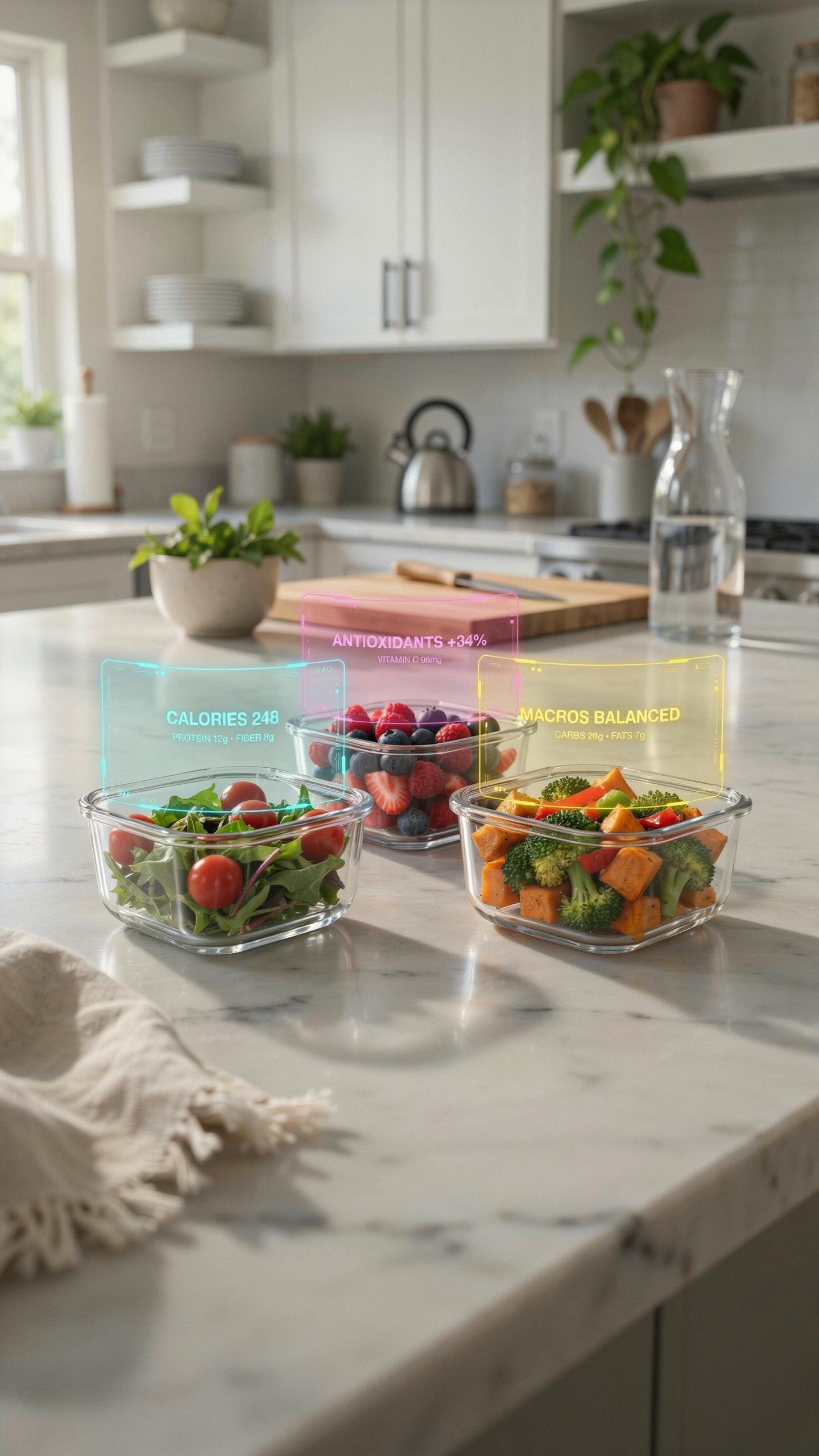
You want your freezer to look controlled because chaos feels like failure. Here’s what matters: cybernetics teaches us that feedback loops are how systems self-correct. Your meal prep labels function as a feedback mechanism. Every time you grab a container, miss a label date, or forget what’s inside, your labeling system sends you data about what breaks down in practice. Most people ignore this signal entirely.
Track three data points for thirty days: which labels you read before grabbing food, which containers you skip because the label is illegible or missing, and which meals actually get eaten versus freezer-burned. This isn’t about perfectionism. It’s about seeing which label placement, font size, and information density your hands and eyes actually respond to under real conditions, not hypothetical ones. The gap between what you designed and what you use reveals everything.
Measuring What Changes Over Time
Everyone says “update your labels as needed,” which is useless advice because it doesn’t specify what to measure. Cybernetic systems depend on iterative loops with defined variables. Track label readability by noting how many times per week you open a container before committing to eating it. Count labeling errors: dates written illegibly, missing protein amounts, confused container contents. Record thaw time—if a meal sits in the fridge too long because the label didn’t sell you on it, your label failed.
After two weeks, you’ll see patterns. Maybe your labels need larger date text. Maybe you’re writing too much information and people skip reading entirely. Maybe container placement matters more than label design. Change one variable at a time, then measure the result for another two weeks. This isn’t guessing or tweaking for aesthetics. You’re running an experiment on your own behavior, which is the only feedback loop that matters for a system you actually use every day.
Optimizing For Speed The Essential Food Prep Labels
What Actually Goes On The Label
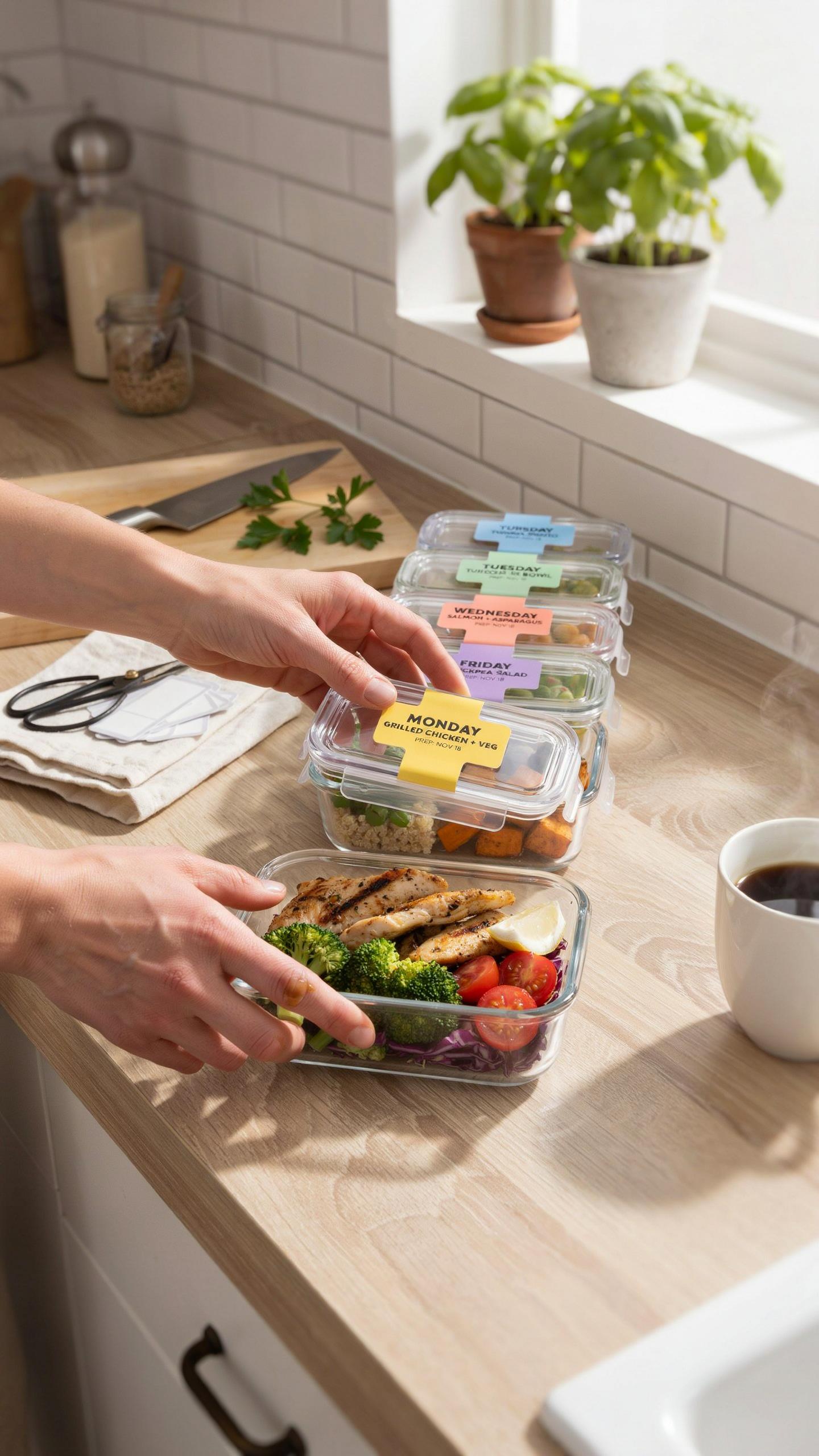
You want labels that work fast because you’re tired of standing in front of your freezer trying to decode what you made three weeks ago. The real mechanism is cognitive load reduction: your brain processes visual information faster than text, so every piece of data you add beyond what’s necessary slows down retrieval. Most people label like they’re writing a nutrition facts panel. Stop. A meal prep label needs exactly four data points: what the food is, when you made it, portion size, and reheating instructions. Nothing else survives contact with reality.
The two-second rule applies here: if you cannot read and act on a label in two seconds, you’ve added friction to a system designed to remove it. Use a 12-point font minimum on a white or clear background. Dark ink wins every time. Skip the decorative borders, the inspirational quotes, the color coding that made sense when you designed it but confuses you on day eight. Your label competes for attention against hunger, fatigue, and the convenience of ordering takeout. Make it win by cutting everything that doesn’t accelerate your next decision.
Location Creates The Retrieval Pattern
Think about this as inventory management borrowed from warehouse logistics: throughput depends on stock location clarity, not on how well you labeled the item. Your label placement determines whether you grab the right container in darkness or spend two minutes rotating boxes. Place labels on the front and top of every container, using the same spot every time. This builds a pattern your hand learns before your eyes focus. The top label answers “what is this,” and the front label answers “when did I make it” from across the freezer.
Use a permanent marker or a label maker that adheres in cold temperatures, because frost buildup will peel off cheap stickers. The adhesive matters more than people admit. Position the date label at eye level so you can scan expiration order without pulling containers out. This single protocol change cuts your freezer scan time from thirty seconds to five. You stop hunting and start executing.
Beyond Home Lessons From Meal Prep Services

What Commercial Kitchens Know About Labels
You want to look like you have your life together. That’s the real reason you’re reading this. Here’s what actually matters: commercial meal prep services don’t label containers for aesthetics. They label for speed and liability. The mechanism is friction reduction. A label system that takes ten seconds per container scales. One that takes thirty seconds becomes a cost center and gets abandoned. Professional operations use a two-tier labeling hierarchy: critical information (allergens, expiration) in a fixed position, secondary data (macros, reheating instructions) optional. This mirrors information architecture from user interface design. You apply the same principle: essential data in one consistent spot, everything else subordinate or absent.
- Fixed Position Top Right: Allergens and expiration date occupy the same corner across all containers. Staff finds them without scanning the entire label. This prevents errors during bulk distribution.
- Thermal-Resistant Materials: Commercial kitchens use synthetic label stock rated for freezer and microwave temperatures. Paper labels degrade in humidity and freeze-thaw cycles. Polypropylene or polyester labels survive repeated exposure without smudging or peeling.
- Large Font, High Contrast: Black text on white or yellow background eliminates squinting in cold storage. 14-point font minimum for critical data. Legibility prevents misidentification when containers are stacked or partially frosted.
- Minimal Text Density: Cramming twelve data points onto one label creates cognitive overload. Professional services list only: item name, date prepared, expiration date, reheating method. Nothing else makes the cut.
- Date Format Standardization: YYYY-MM-DD format prevents ambiguity across regions. MM-DD-YYYY creates confusion when someone interprets 03-12 as March 12 versus December 3. One format system eliminates this friction.
Commercial operations print labels in batches using inkjet or thermal transfer printers. Volume justifies the equipment investment. At-home prep doesn’t require that infrastructure, but it does require consistency. You need the same data in the same location on every label. Your brain recognizes patterns faster than it reads text. A label system works because it becomes invisible through repetition.
Labeling Across Different Diets In One Kitchen
Most home labelers treat dietary accommodations as annotation. Wrong approach. When multiple diets share freezer space, the label must distinguish intent, not just content. Someone eating keto needs to know macros instantly. Someone managing sodium requires that data front-and-center. Someone with allergies needs allergen status before anything else. You can’t solve this with one label format. You use color coding as a sorting mechanism. This borrows from inventory management systems in manufacturing: color tags separate product streams without requiring full label reading. A red sticker says “high sodium.” Blue says “keto approved.” Green says “vegetarian.” The color tells you whether to grab it before you read a single word.
Texture-based differentiation works similarly. Raised lettering or embossed sections create tactile information. Someone reaching into a freezer can feel the difference without looking. Matte versus glossy finishes, though harder to execute at home, create visual separation. The real scalability comes from deciding which dietary factors matter most in your household, then building label hierarchy around those factors. You don’t label for all possible information. You label for the decisions someone makes when opening your freezer.
The Future Proof Freezer Dynamic Meal Prep Labels
Syncing Labels With Your Digital System
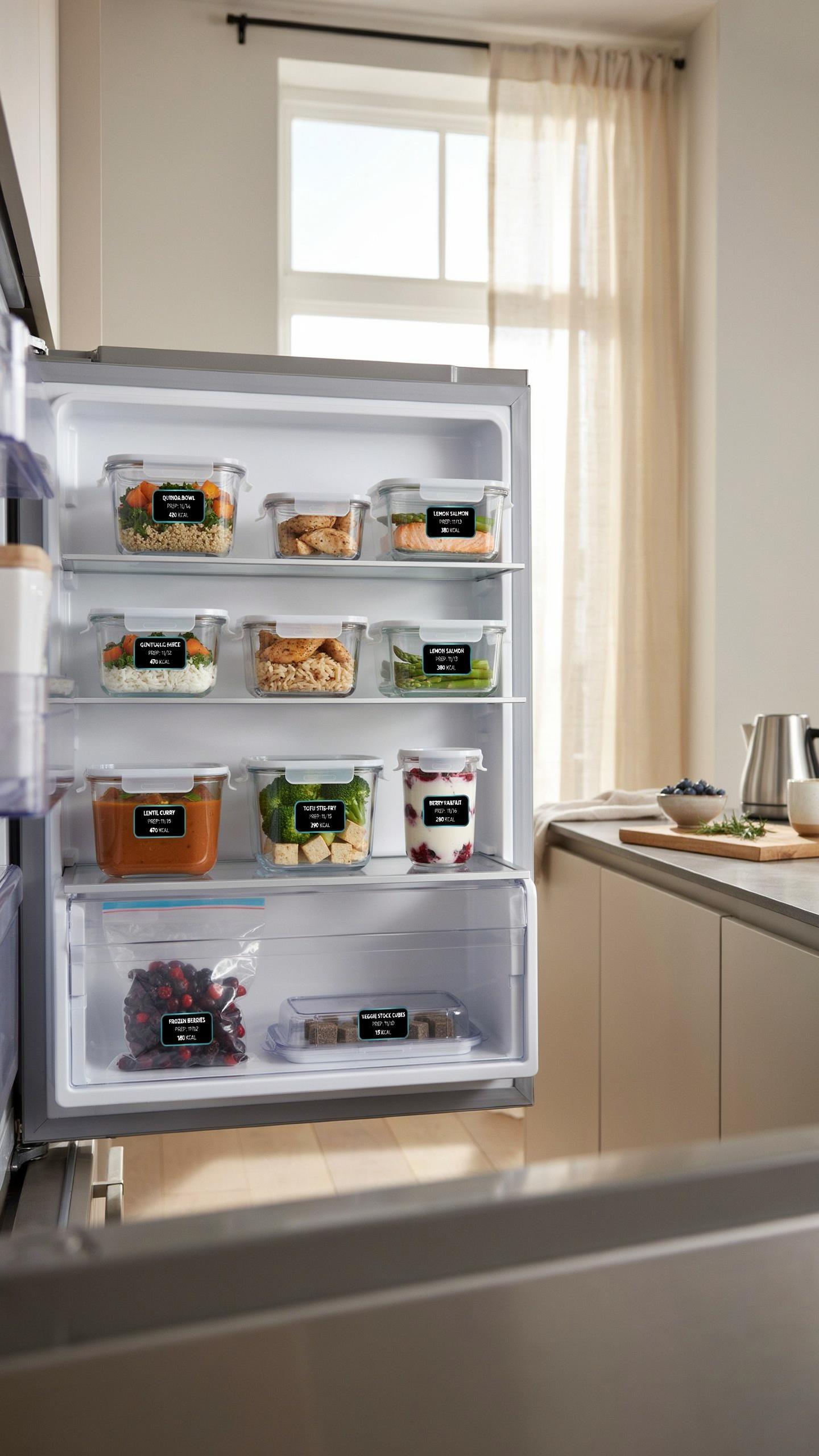
You want your freezer to feel effortless, but the real motive is control—knowing exactly what you have without opening doors or guessing dates. The mechanism is simple: your label becomes a data entry point, not a dead end. Borrowing from inventory management systems, treat each label as a stock keeping unit. When you write prep date and contents, you’re creating a single source of truth that flows into an app or spreadsheet. The label itself does the capture work.
Most people skip this step because it feels redundant. Write it down, then write it again in an app? That’s not how this works. Your label data enters a system once, then that system tracks consumption patterns, expiration windows, and what actually gets eaten versus what gets freezer burned. Google Sheets, Notion, or even a basic notes app function identically here—the tool matters less than the protocol. When you finish labeling a batch, photograph it or type the info immediately. Friction kills systems faster than complexity.
Rotating Stock Before It Spoils
The common advice about FIFO rotation is incomplete because it ignores why people fail at it—they can’t see the old containers under the new ones. Borrowing from supply chain logistics, implement a “visibility rotation” where your label location itself signals priority. Label the top of containers when you want first access. Label the front when the item is older. Label the side when it’s mid-rotation. Your freezer layout becomes the rotation system. No special tool required.
The actual mechanism is behavioral, not organizational. You cannot rotate what you cannot see. Rearrange your freezer monthly so older items face forward at eye level. When you prep new batches, place them behind existing stock, not on top. Date labels in a consistent corner position so scanning for the oldest item takes three seconds, not thirty. This single protocol—visible dating plus positional rotation—eliminates the guesswork that causes waste and defeats meal prep discipline.
Your Labeling Arsenal Tools For Unconscious Automation
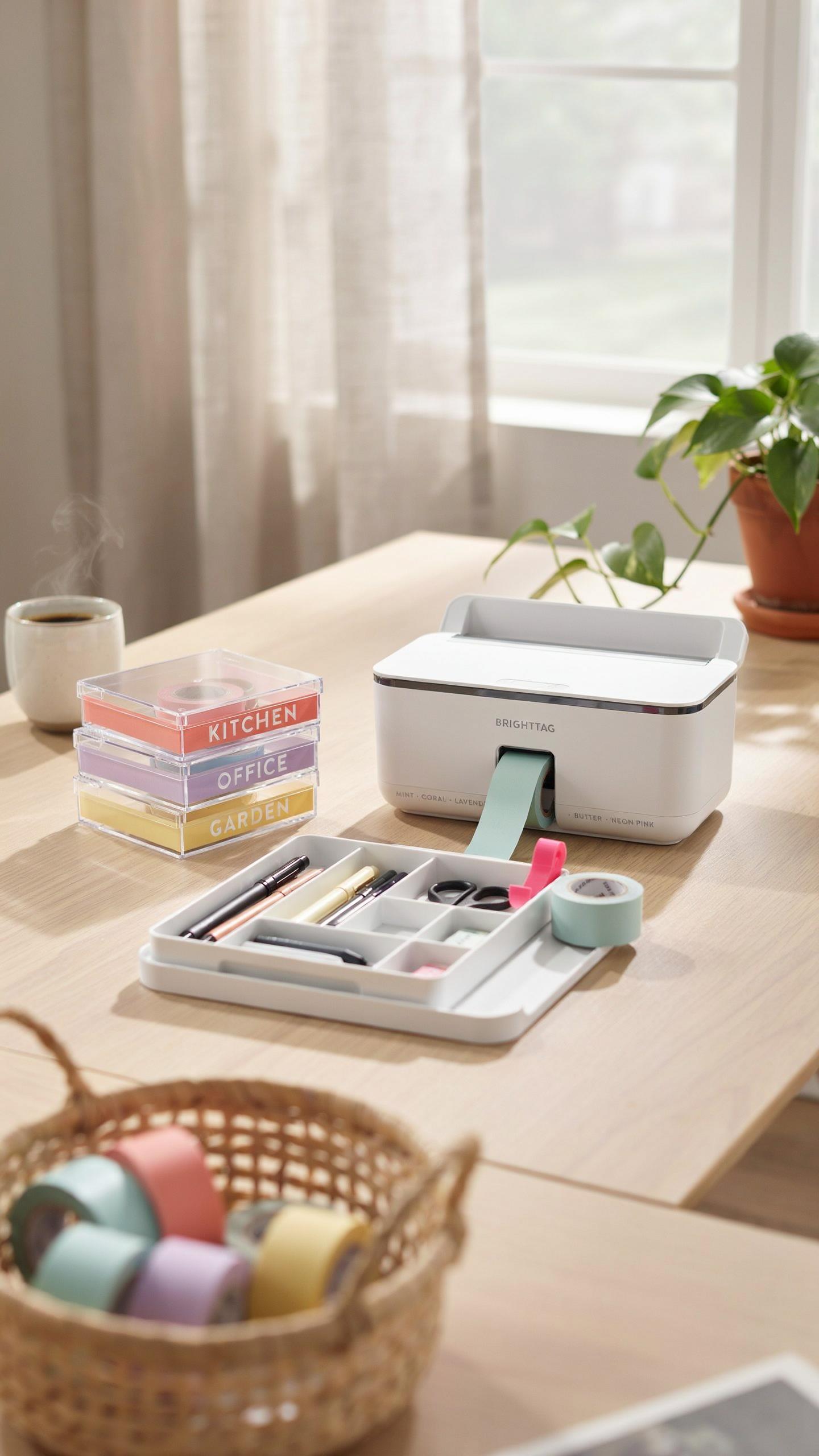
Label Types And Application Methods
You want labels so you don’t have to think. That’s the real reason you’re reading this. The mechanism is simple: friction kills consistency. When grabbing a container takes zero cognitive load, you actually use what you prepped.
- Thermal transfer labels: Industrial-grade adhesive survives freezer temperature cycles without peeling. Print text directly onto label stock. Most reliable for long-term storage beyond three months.
- Masking tape and permanent marker: Cheapest option. Works for one to two weeks. Marker fades under fluorescent light and freezer exposure, so refresh before readability drops.
- Adhesive label sheets: Standard office stock printed from your computer. Adequate for up to six weeks. Freezer moisture eventually causes edge curl and separation from container walls.
- Color-coded dot stickers with handwritten notes: Fast to apply. Works best as a secondary system paired with detailed labels. Color signals meal type or prep date at a glance without reading.
- Waterproof label tape (P-touch style): Laminated plastic shell resists moisture and temperature swings. Higher upfront cost but survives full freezer lifecycle. Ideal if you batch prep monthly.
Application method determines durability. Clean container surface with a dry cloth before labeling. Moisture under labels creates adhesion failure within days. Smooth the label firmly from center outward to eliminate air pockets. On curved containers, use shorter label widths to prevent peeling at edges. The label placement matters: middle of the largest flat surface stays readable and doesn’t interfere with stacking.
Integrating Labels Into Your Workflow
Labels stop being useful the moment they become extra steps in your process. That’s the mistake everyone makes. The real system works backward from your freezer scan, not forward from your prep table.
Design your label template before you cook. Include prep date, contents, reheating instructions, and expiration date in a fixed order every time. Your brain learns the position of each data point and scans faster each week. Print labels in batches on the day before you prep, not during cooking. Stacking time while labels cool is friction that kills momentum. Keep printed label sheets in your kitchen drawer, not stored elsewhere. When you finish a container, immediately affix the label while you remember exactly what went into it. Memory degrades within hours. The label lives on the container from that moment through storage, reheating, and consumption. This creates one continuous chain of information instead of scattered notes you’ll lose.
The real obstacle isnt your freezer its your indecision Conquer that and the labels become a weapon not a chore
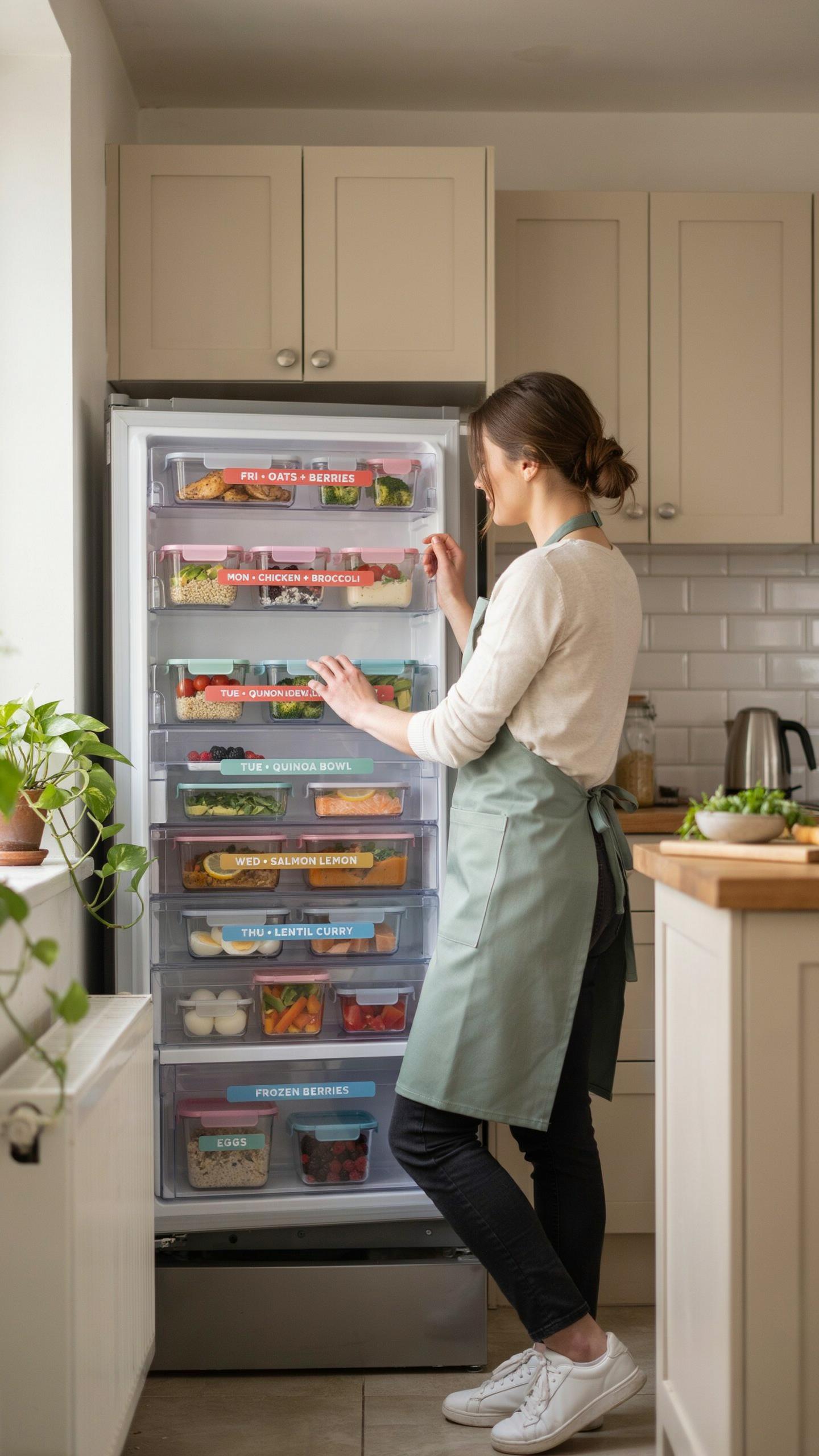
Most people fail at meal prep because they never commit to a system. They buy labels, use them randomly, then quit. The real move is deciding today what you’ll eat for the next two weeks, printing those labels, and sticking them on containers before you freeze anything. Indecision kills consistency. Labels just make the decision visible. Print your labels right now, not tomorrow. Your future self won’t recognize yesterday’s chicken without them.