
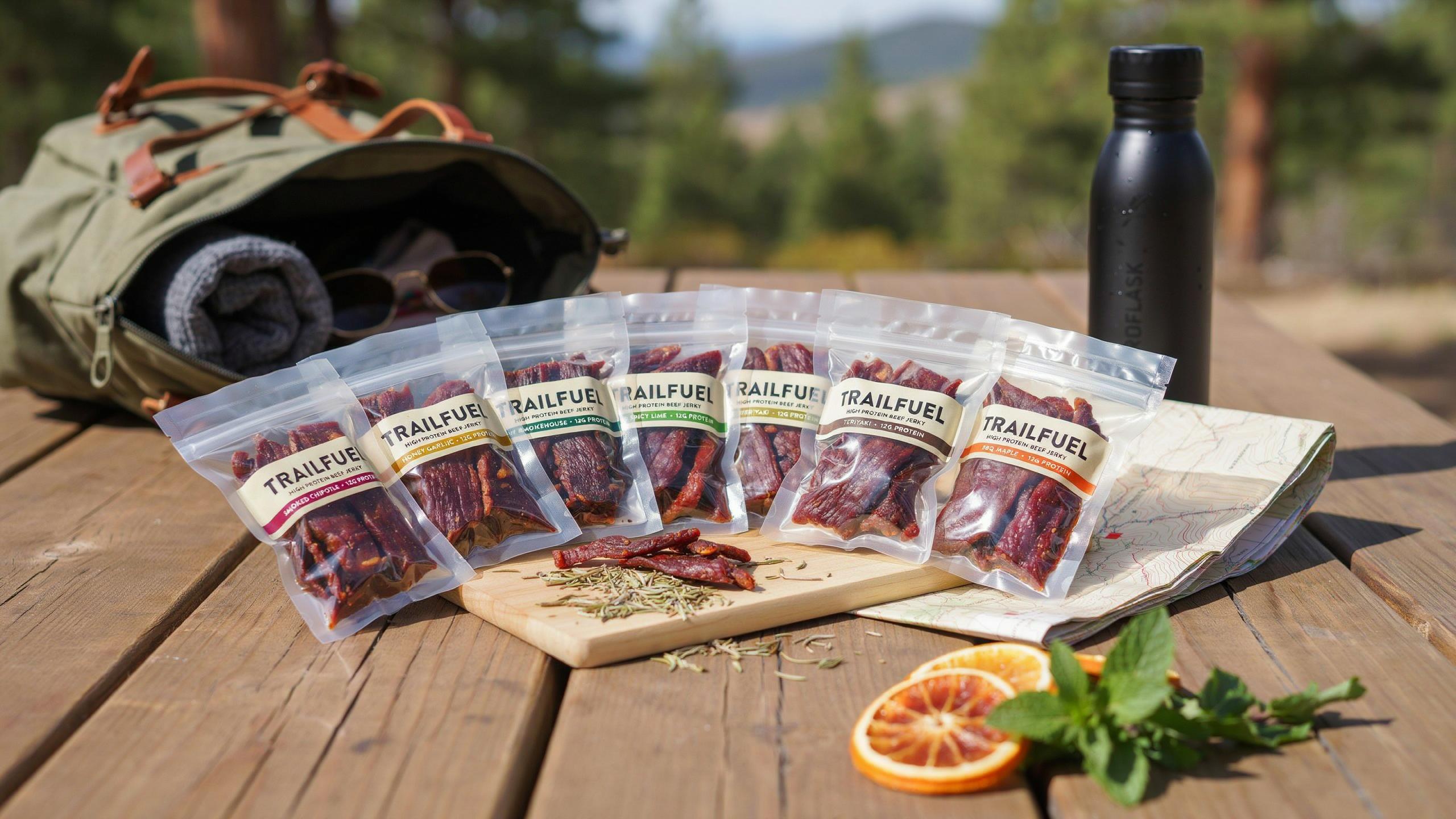
The Protein Paradox Why Most High Protein Snacks Fail You

What The Label Won’t Tell You
You want to believe the number on the package because it justifies the purchase. Here’s what actually matters: the protein your body absorbs is not the same as the protein listed on nutrition facts. Marketing teams know this gap exists and exploit it. The real mechanism is bioavailability, a term borrowed from pharmacology that measures how much of an ingested substance your body can actually use. With jerky, you’re not absorbing 100 percent of declared protein.

Beef jerky typically delivers 60 to 80 percent bioavailability depending on moisture content, salt concentration, and processing method. Low moisture jerky concentrates protein density but can reduce digestibility if it’s too dense to break down efficiently in the stomach. High salt content preserves the product but can interfere with protein hydration and amino acid availability. Most manufacturers optimize for shelf stability over absorption, which means your gut works harder to extract less usable protein than the label suggests. Choose jerky made with moderate salt and residual moisture around 15 to 20 percent for optimal absorption rates.
The Amino Acid Hierarchy Problem
Not all protein sources trigger the same metabolic response in your body. Plant-based jerky alternatives contain complete amino acid profiles on paper but often suffer from lower digestibility scores compared to animal protein. This is not opinion, it’s enzyme kinetics: your body breaks down collagen-based animal proteins faster and more completely than plant proteins with higher antinutrient loads. Beef jerky contains leucine and creatine naturally, two compounds your muscles recognize and utilize immediately. Plant-based jerky requires your digestive system to work around fiber, tannins, and phytic acid before amino acids become bioavailable.

When prepping jerky snack packs for travel, prioritize beef or elk over plant-based if your goal is protein efficiency per ounce carried. If you mix sources, pair plant-based jerky with a separate vitamin C source (dried orange, tomato powder) to increase iron absorption from plant proteins. The specific mechanism: ascorbic acid lowers pH in your stomach and converts ferric iron to ferrous iron, which your intestines absorb more effectively. This single protocol shift changes plant-based jerky from a weak protein source into a functional one.
The Jerky Imperative Why Real Meat Crushes Gimmicks
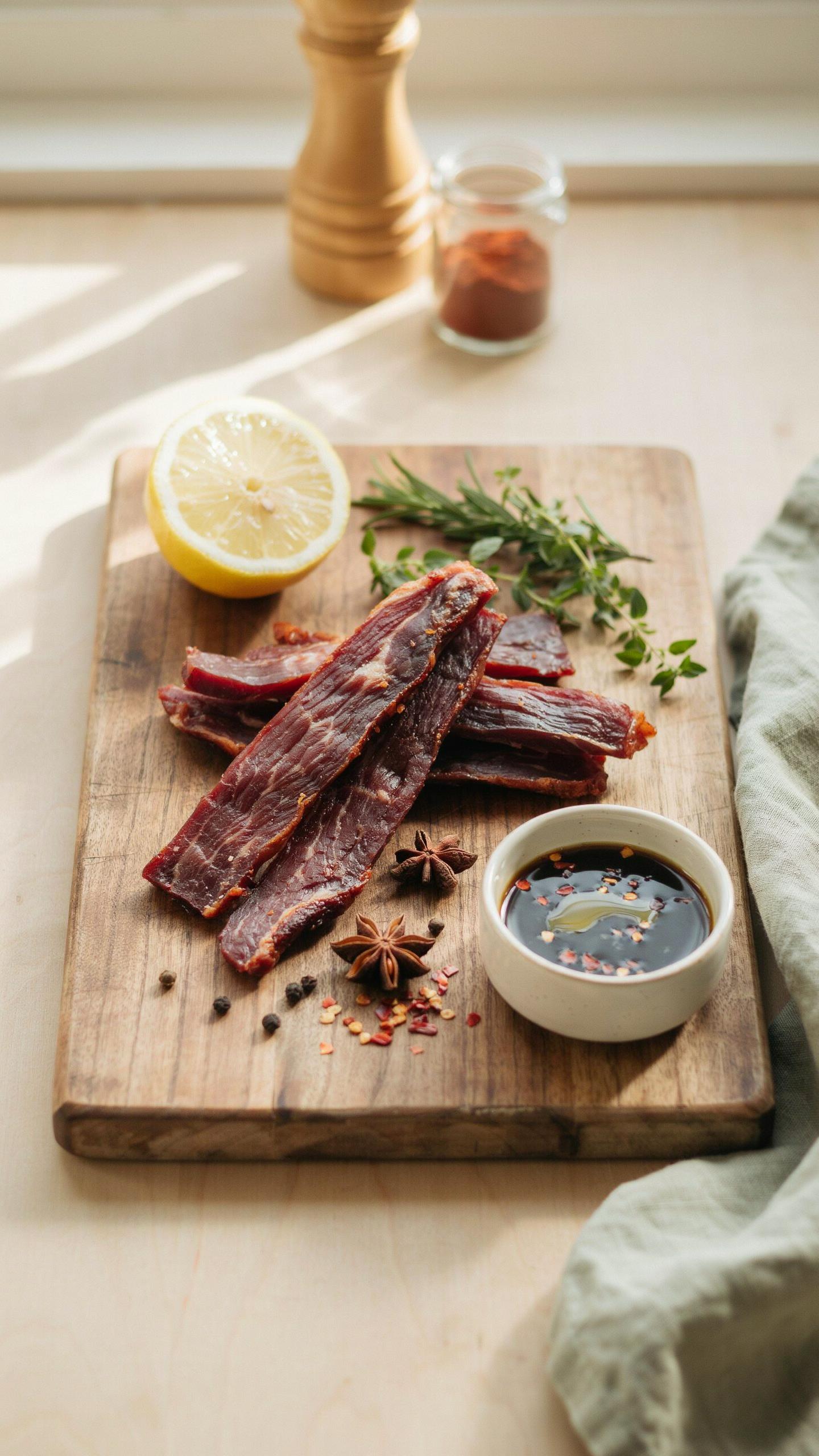
Your Body Only Uses What It Can Break Down
You want to believe protein powder counts as food. It doesn’t, not in the way that matters. Your digestive system is a filter, not a storage unit. Bioavailability in nutritional science means the percentage of a nutrient your body actually absorbs and uses. Jerky made from whole muscle meat has bioavailability north of 90 percent because your stomach recognizes it as meat, breaks it down efficiently, and extracts the amino acids. Your body stops guessing and starts working.
Powders and protein bars sit in a middle ground. They’re engineered to taste acceptable, but that engineering creates complexity your gut doesn’t handle as cleanly. Jerky skips the process. Beef jerky is muscle tissue stripped of water and preserved. Your body knows exactly what to do with it. When you prep jerky snack packs for travel, you’re not just packing calories. You’re choosing a protein source your digestive system won’t waste energy fighting.
Strip The Fillers Or Waste Your Money
Most commercial jerky is not what you think it is. The common advice says “just read the label.” That’s incomplete. Fillers hide in plain sight because food law allows it. Soy protein concentrate, corn syrup solids, and modified food starch pump up weight and lower cost while doing nothing for your muscle recovery. You pay for grams that don’t count.
Real jerky prep means starting with meat that’s at least 90 percent lean, seasoning it with salt and spices, then drying it. That’s the whole formula. When you make jerky packs yourself or source from producers who list only meat and salt on the ingredient statement, every gram of protein converts to usable amino acids. The mechanism is brutal and simple: fewer ingredients mean your body wastes no energy processing garbage.
The Dehydrator Doctrine Unlocking Superior Jerky
Heat Without The Burn
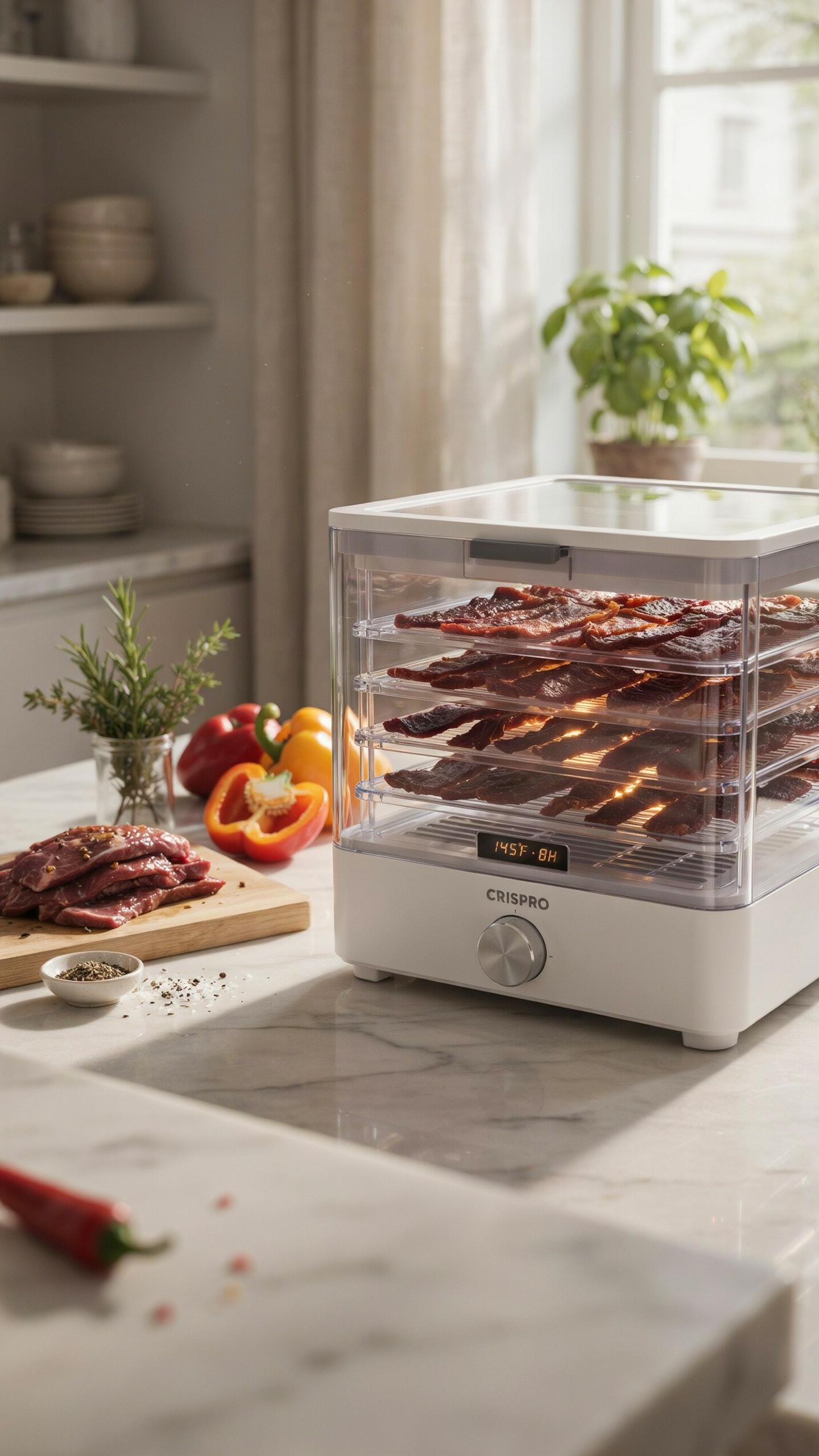
You want your jerky to look like you know what you’re doing. That’s the real reason you care about this section. Temperature control is biology, not guesswork. Dehydrators work like osmotic pressure in reverse—you’re removing water faster than bacteria can multiply. Too hot and you denature the protein you’re paying for. Too cold and moisture stays trapped, inviting mold.
Most people treat dehydrator temperature like a suggestion. They’re wrong. Run your dehydrator between 160 and 170 degrees Fahrenheit for lean beef jerky. At this range, you kill surface pathogens while proteins stay intact. Lower temperatures demand longer times and higher spoilage risk. Higher temperatures cook the exterior before the interior dries, leaving pockets of moisture where nothing good happens. Dial it precisely and check it with a separate thermometer because built-in gauges lie.
The Water Equation
Moisture removal isn’t about how dry something feels. It’s about water activity—the amount of water available for microbial growth. Jerky needs to reach a water activity below 0.85 to stay shelf-stable without refrigeration for weeks. Most home dehydrators take eight to twelve hours to get there, depending on meat thickness and starting moisture content.
The mechanism is straightforward: thinner cuts dry faster and more evenly. Cut your beef to a quarter-inch thickness maximum. Trim visible fat before dehydrating because fat goes rancid and shortens shelf life dramatically. Pack jerky in airtight containers or vacuum-sealed bags once it cools completely. Bend a piece—it should crack slightly but not shatter. That texture means the water activity has dropped enough to kill spoilage risk without turning your protein into sawdust.
The Teriyaki Beef Jerky Blueprint Flavor Not Fluff
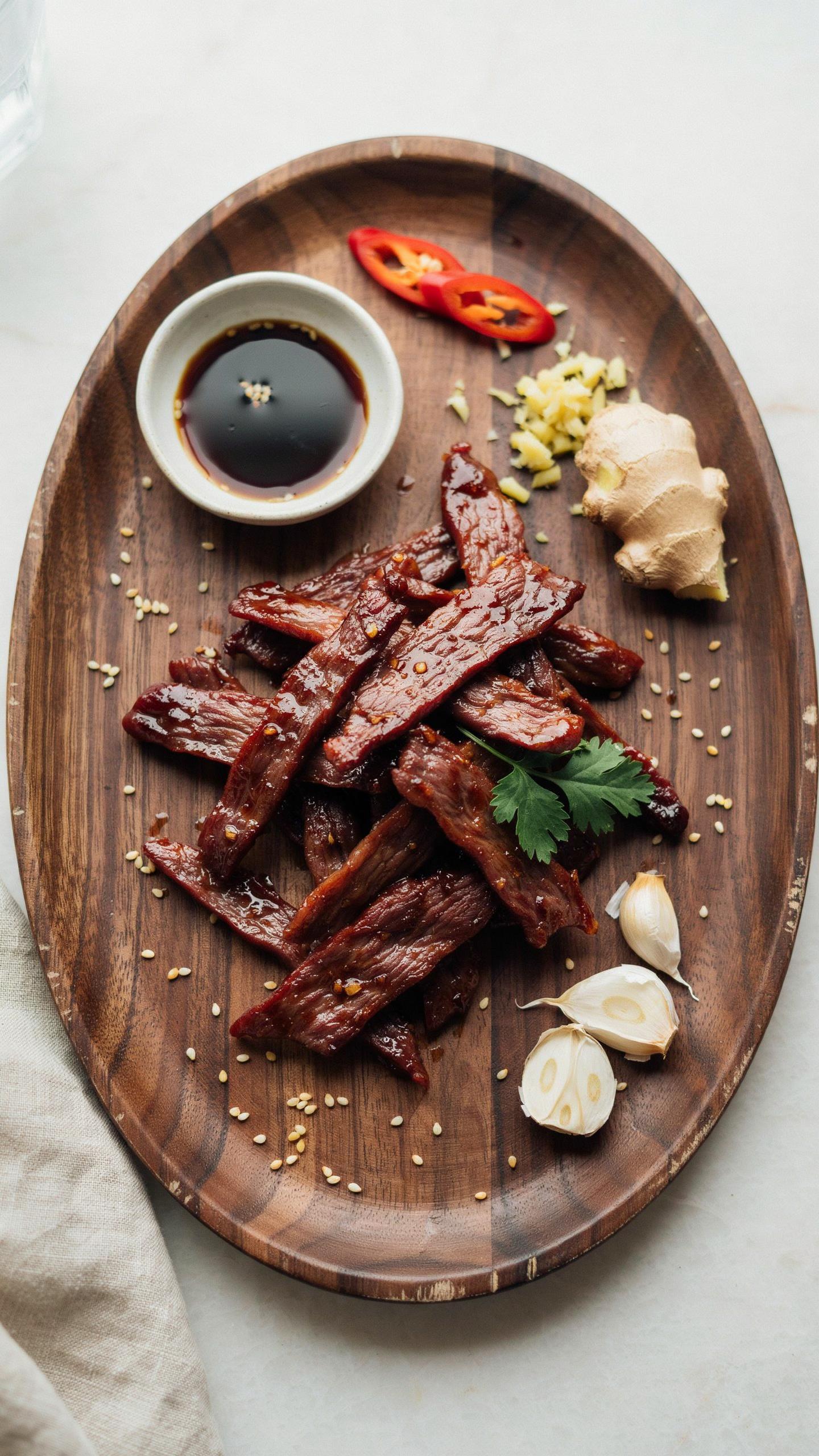
Start With Meat Grade, Not Marketing
You want the teriyaki jerky that tastes like something, not the Instagram version that looks good and tastes like salt and regret. Meat quality determines everything downstream. Use beef chuck or brisket flat, the cuts with enough marbling to stay tender after dehydration without becoming rubber. Skip lean cuts like eye of round. Grass-fed matters less than you think. Consistent fat content matters more.
For seasoning, source real ingredients. Authentic teriyaki uses soy sauce, mirin, sake, and ginger. Most commercial jerky uses soy powder, high fructose corn syrup, and ginger flavor. Buy liquid soy, actual mirin from an Asian market, and fresh ginger root. The cost difference is negligible per batch. The taste difference determines whether your prep stays consistent or turns into another failed habit.
Marinades Work Through Osmosis, Not Magic
Think like chemistry here. Osmosis pulls salt and flavor compounds through the meat’s cell walls over time, creating penetration that surface coating never achieves. This is your actual leverage point. Most jerky recipes underestimate soak time because they assume saltiness equals flavor. It doesn’t. Salt accelerates osmosis, but the real work happens when soy, mirin, and ginger molecules diffuse inward and bind with proteins.
Marinate for 12 to 24 hours minimum. Cut meat into quarter-inch strips against the grain to maximize surface area and reduce diffusion distance. The mechanics require patience because shortcuts create surface-flavored jerky that tastes great for thirty seconds then collapses into bland protein. Prepare your marinade the night before. Submerge meat fully. Place a plate on top to keep strips under liquid. Uneven exposure creates uneven flavor, and uneven flavor creates waste.
The Travel Ready Fallacy Beyond The Zip Lock Bag

Durability Principles From Military Logistics
You want to believe a zip lock bag is enough because it’s cheap and requires no thinking. It isn’t, and here’s why: military logistics borrowed a concept called “environmental stress tolerance” to keep supplies functional across extreme conditions. Jerky fails this test in standard bags. Temperature swings, humidity exposure, and oxygen permeation degrade protein structure and fat oxidation faster than most travelers realize. The bag isn’t your bottleneck. The environment inside it is.
Commercial jerky manufacturers use vacuum sealing or oxygen absorbers because they understand shelf life is a math problem, not a guess. When you pack jerky for travel, you’re introducing thermal cycling, pressure changes during flights, and moisture absorption from surrounding cargo. A zip lock bag offers zero protection against any of this. Double-seal your jerky in vacuum bags, then place those inside airtight containers with desiccant packets. This creates a buffer zone that keeps interior conditions stable regardless of what happens outside.
Weight To Energy Ratio Optimizing Your Carry Load
Physics measures efficiency through energy density per unit mass. Jerky is your best protein source for travel because it delivers 40 to 50 grams of protein per 100 grams of product while weighing almost nothing compared to alternatives. Most people pack jerky and then fill remaining space with carb-heavy snacks that add bulk without proportional caloric benefit. This is backward thinking that wastes pack real estate.
Calculate your actual caloric needs for your travel duration, then reverse engineer how much jerky you need by weight. A pound of quality jerky provides roughly 1,600 to 2,000 calories and 200 to 250 grams of protein. Pack jerky first as your anchor protein source, then fill gaps with lightweight carbs only if needed. Never pad your pack with snacks you won’t eat. Measure your target weight in ounces before you leave, then stick to it.
The Prep Protocol Engineering Your High Protein Jerky Supply

Batch Preparation Maximizes Efficiency
You want this section to tell you that prepping in bulk saves time. The real mechanism is different: batch prep reduces decision fatigue, which is the actual energy cost of snack systems. Think in terms of manufacturing yield. You’re not just making jerky—you’re engineering a production run where setup costs get amortized across volume. One marinade batch, one dehydrator cycle, one packaging session beats seven scattered prep moments across two weeks.
Most people prep small quantities because they underestimate how long dehydration actually takes. A full dehydrator run takes 5 to 8 hours minimum, sometimes longer depending on thickness and moisture content. Running it half-full is economically irrational. Commit to filling your dehydrator completely. Buy meat in 5 to 10 pound quantities, batch your marinades in one session, and load every rack. This compresses your active work time to maybe two hours total while producing enough jerky for 3 to 4 weeks.
Storage Strategies Maintain Potency
Oxygen and heat degrade protein quality faster than most people realize. This isn’t just about mold prevention—it’s basic food chemistry. Once jerky drops below 10 percent moisture, bacteria stop multiplying, but oxidation continues at the protein level, degrading amino acid bioavailability over time. Airtight containers with oxygen absorber packets aren’t luxury. They’re mandatory if you’re prepping for travel longer than two weeks.
Vacuum-sealed packs in a cool, dry environment outperform standard plastic bags by weeks. Room temperature storage works fine for week-long trips. For anything longer, use your freezer. Jerky doesn’t degrade significantly when frozen because oxidation slows drastically at cold temperatures. Portion your supply into travel-sized packs before freezing, then grab what you need. This prevents repeated exposure to temperature swings that degrade shelf life.
Beyond Beef Jerky Expanding Your Protein Rich Snack Arsenal

When Beef Runs Out Of Room
You want options because beef jerky feels safe, but safety is actually the problem. In game theory terms, you’re playing a dominance strategy when you should be playing a mixed strategy. Venison, turkey, and game meats force your palate to adapt while delivering superior protein density per ounce in many cases. Venison contains marginally less fat than beef and dries faster, which matters for travel prep timelines. Turkey jerky achieves higher protein ratios because the meat itself carries less intramuscular fat, meaning less moisture loss during dehydration.
The real mechanism is substrate availability. Most people have access to beef through any grocery chain, which creates a false ceiling on what they think jerky can be. Specialty meats like elk or bison require direct sourcing from butchers or online suppliers, but they’re not exotic status symbols. They’re just different protein matrices with different drying curves. If you’re prepping for extended travel, test your non beef options at home first. Drying time varies by fat content, and miscalculating means soggy jerky in your luggage.
Taste Stacking, Not Variety For Its Own Sake
Diversifying flavor profiles is not about collecting experiences. It’s about palatability fatigue management. Your body stops registering the same seasoning after four or five days of identical jerky packs. This isn’t preference drift. It’s habituation, the same mechanism that makes background noise disappear. Salt forward flavors, acid driven marinades, and umami dense spice blends occupy different receptor pathways, so rotating between them preserves your appetite signal across a travel week.
The common advice is to just make different flavors and call it solved. That misses the protocol. Build your flavor matrix around three anchor profiles: one salty and minimal, one with acid and heat, one with umami depth. For a seven day trip, prep two packs of each, rotating daily. This prevents flavor blindness while keeping prep complexity manageable. The rotation itself becomes automatic rather than a choice you make each day, which reduces decision friction during travel when you’re already managing logistics and fatigue.
The Jerky Recipes Dehydrator Conundrum Avoid The Common Traps
Heat Management Breaks Down Protein Quality
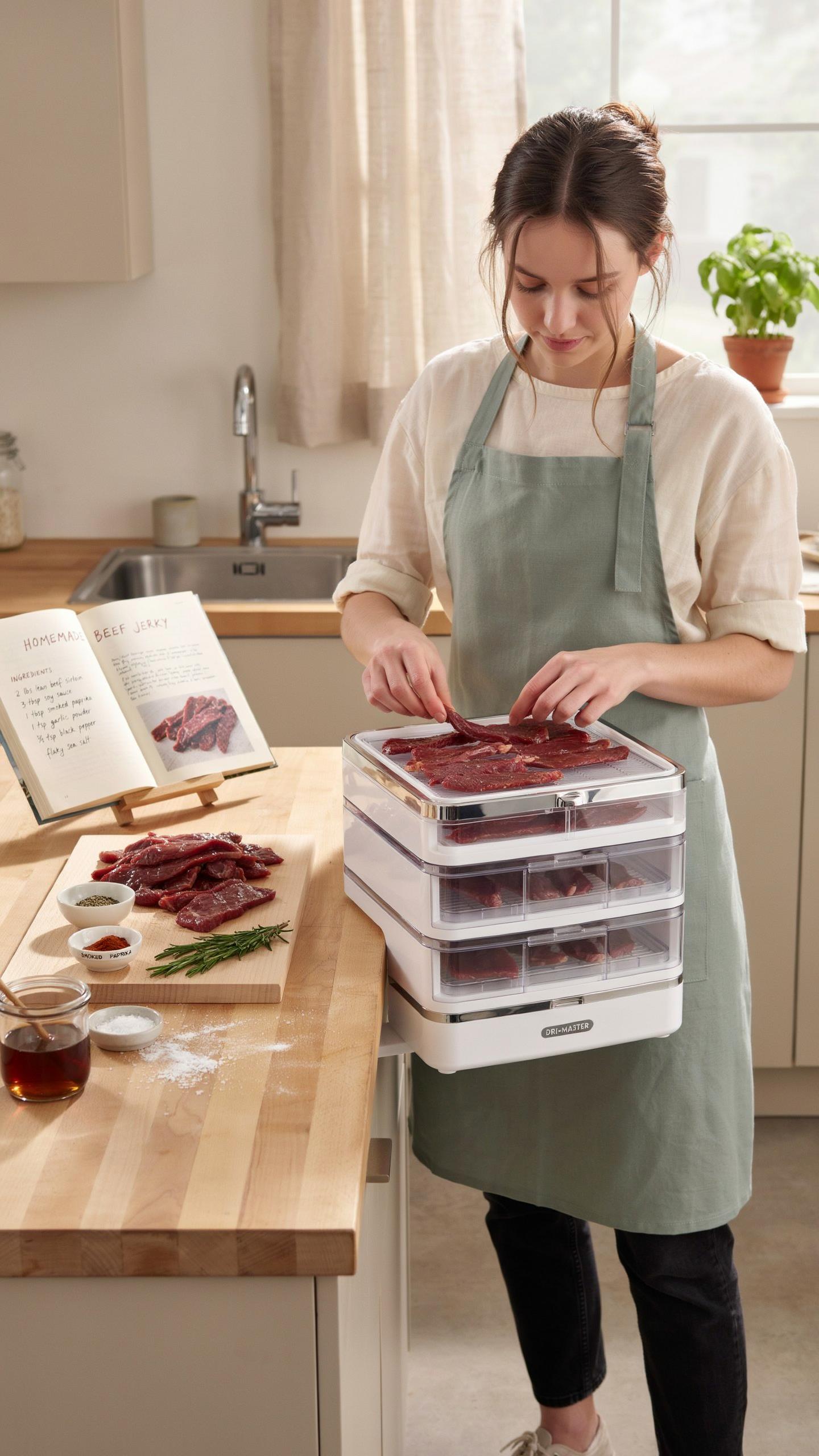
You want to believe time in a dehydrator equals shelf stability, so you run it hot and long. That’s the trap. Heat damages amino acids through a process called protein denaturation, and dehydration accelerates it. High temperatures don’t just remove moisture—they cross-link protein molecules, reducing bioavailability. Your body can’t absorb what’s been structurally compromised, no matter how many grams the label claims.
Most jerky recipes ignore this because temperature control is inconvenient. The real move: keep dehydrator temps between 160 and 180 degrees Fahrenheit, never higher. At these temperatures, moisture leaves steadily without scorching the protein matrix. Batch time extends, but amino acid integrity stays intact. That’s the trade you actually want.
Ingredients Tell The Real Story
The common advice says avoid preservatives, which is incomplete guidance masking a deeper problem. Nitrates and nitrites do prevent botulism, but they’re also taste masks. Processors use them to hide off-flavors from low-quality meat and rancid fats. Strip them out and you’re forced to use quality source material and proper storage protocol instead.
Your prep list needs three components only: lean meat, salt, and acid. Salt draws moisture and inhibits bacteria. Acid (vinegar, citrus, or soy sauce) lowers pH to hostile levels for pathogens. Everything else—soy sauce sweeteners, smoke flavoring, garlic powder, teriyaki glaze—adds marketing noise, not preservation. Measure salt at 2 to 3 percent of meat weight, and apply acid as a marinade soak for six to twelve hours before dehydrating.
The Sustained Energy Loop Fueling Performance Not Just Filling Up

Blood Sugar Stability Avoids The Crash Trap
You want steady energy because crashes kill productivity. Here’s the mechanism: protein digestion triggers a slower, flatter glucose curve than carbs alone. Jerky’s protein content (typically 10-15g per ounce) delays gastric emptying, meaning glucose enters your bloodstream gradually instead of spiking then plummeting. This is basic biochemistry, not marketing. Most travel snacks spike blood sugar hard, then leave you depleted two hours later.
High protein jerky works because the amino acid chains require longer breakdown time. Your pancreas doesn’t dump insulin in response to a threat. Fat content in quality jerky (from beef, salmon, or bison) further slows digestion and stabilizes the glucose response. The result is 3-4 hours of usable energy without the neurological cliff drop. Pack jerky with 60-70% protein by calorie ratio for maximum stability.
Sustained Focus For Demanding Work
Cognitive load is a resource your brain burns through fast. Sustained protein intake maintains stable amino acid levels in your bloodstream, which keeps neurotransmitter production steady. Dopamine, norepinephrine, and acetylcholine all depend on amino acid availability. When blood sugar crashes, neurotransmitter synthesis tanks with it. You lose focus not because you’re tired, but because your brain’s chemical fuel supply got cut off.
Jerky prevents this by sustaining amino acid flow, which keeps your prefrontal cortex supplied for hours. Work that demands decision-making, writing, or problem-solving burns dopamine and acetylcholine rapidly. A single jerky pack (1-2 ounces) eaten at the first sign of mental fog restores focus within 20-30 minutes because protein absorption begins immediately. Prep your packs in advance and consume them before focus drops, not after.
The real obstacle isnt preparation its your inherent aversion to disciplined foresight

Most people won’t prep jerky packs because consistency feels boring. You’d rather wing it, suffer through airport prices, and tell yourself convenience matters more than control. The shift happens when you realize prepping jerky isn’t about the snack. It’s about deciding in advance that your future self deserves better options than whatever’s available. Buy one pound of quality beef today, season it, dehydrate it, and portion it into five bags. You’ll see immediately that forward thinking beats impulse every time.