
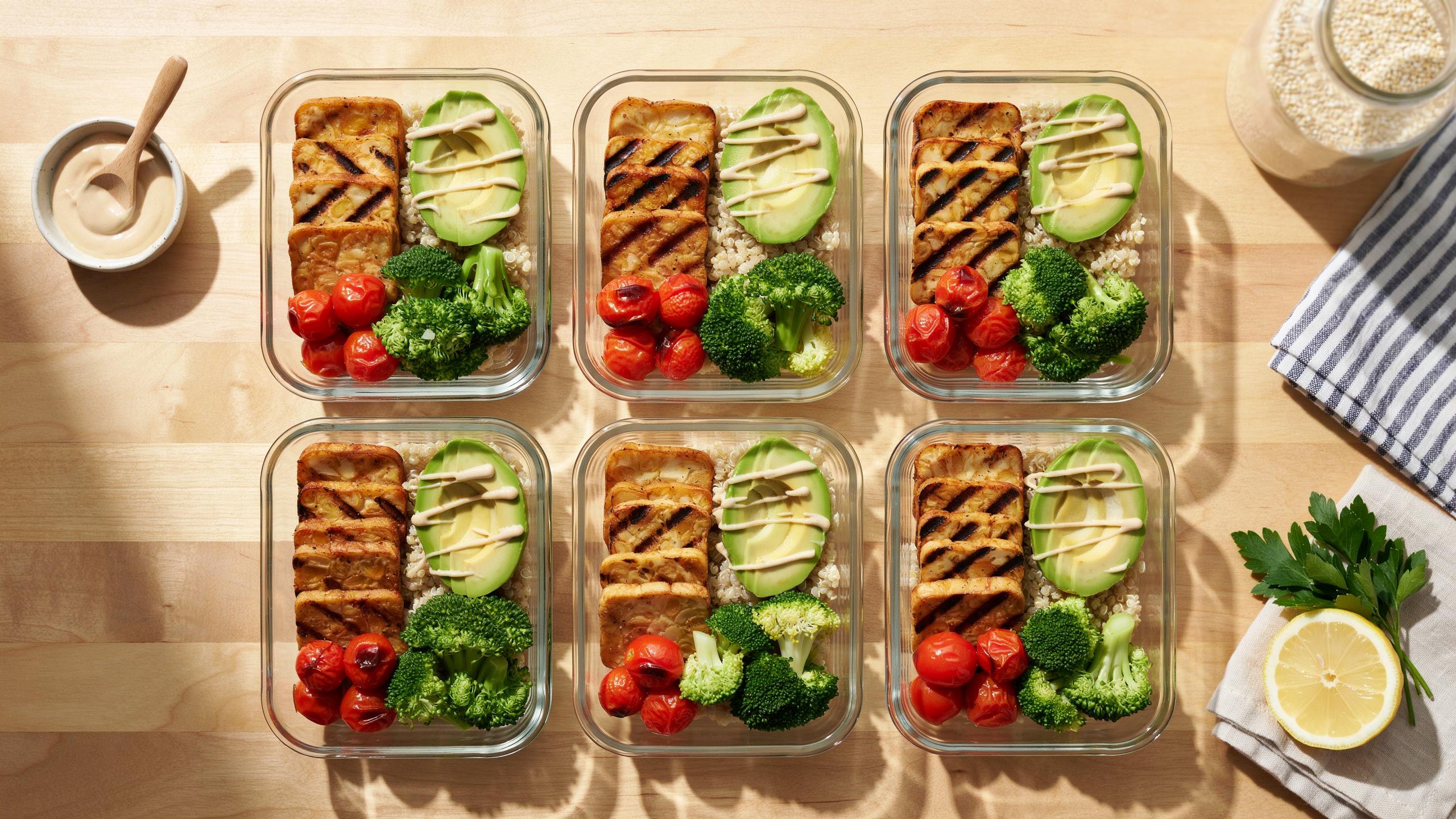
The Tempeh Deception Why Most Prep Fails

What You Think You Know About Tempeh
You want to believe tempeh is a plug and play protein that tastes good if you just season it right. It’s not. Tempeh is a fermented soybean cake with a dense, fibrous structure that rejects surface flavoring the way a sealed container rejects water. Most prep fails because people treat it like tofu, which is fundamentally wrong. Tempeh has three times the protein density and a completely different absorption mechanism.

The real issue is fiber load and moisture content. Tempeh’s tight mycelium matrix holds water and spores in a way that prevents marinades from penetrating past the outer millimeter. You can soak it for hours and still bite into bland interior. Standard prep advice tells you to marinate longer or use more salt. That’s incomplete. The prep method itself determines whether flavor reaches the center or stays trapped on the surface.
Flavor Penetration Versus Flavor Coating
This is a diffusion problem, borrowed from material science. In material science, penetration depth measures how far a substance moves into a material before resistance stops it. With tempeh, marinade doesn’t penetrate—it coats. The distinction matters because your prep strategy changes entirely once you understand this mechanism.

Most people marinate tempeh raw and expect results. The marinade sits on the exterior while the interior stays dry and resistant. You need to introduce moisture first through cooking, which opens the mycelium structure. Steam or blanch tempeh for five to seven minutes before marinating. This pre-cooking softens the matrix without cooking it through, creating pathways for liquid and salt to travel inward. After pre-cooking, marinate for at least two hours. The flavor now actually travels into the block instead of sitting on top like paint on concrete.
The Tempeh Meal Prep Protocol Flavor First
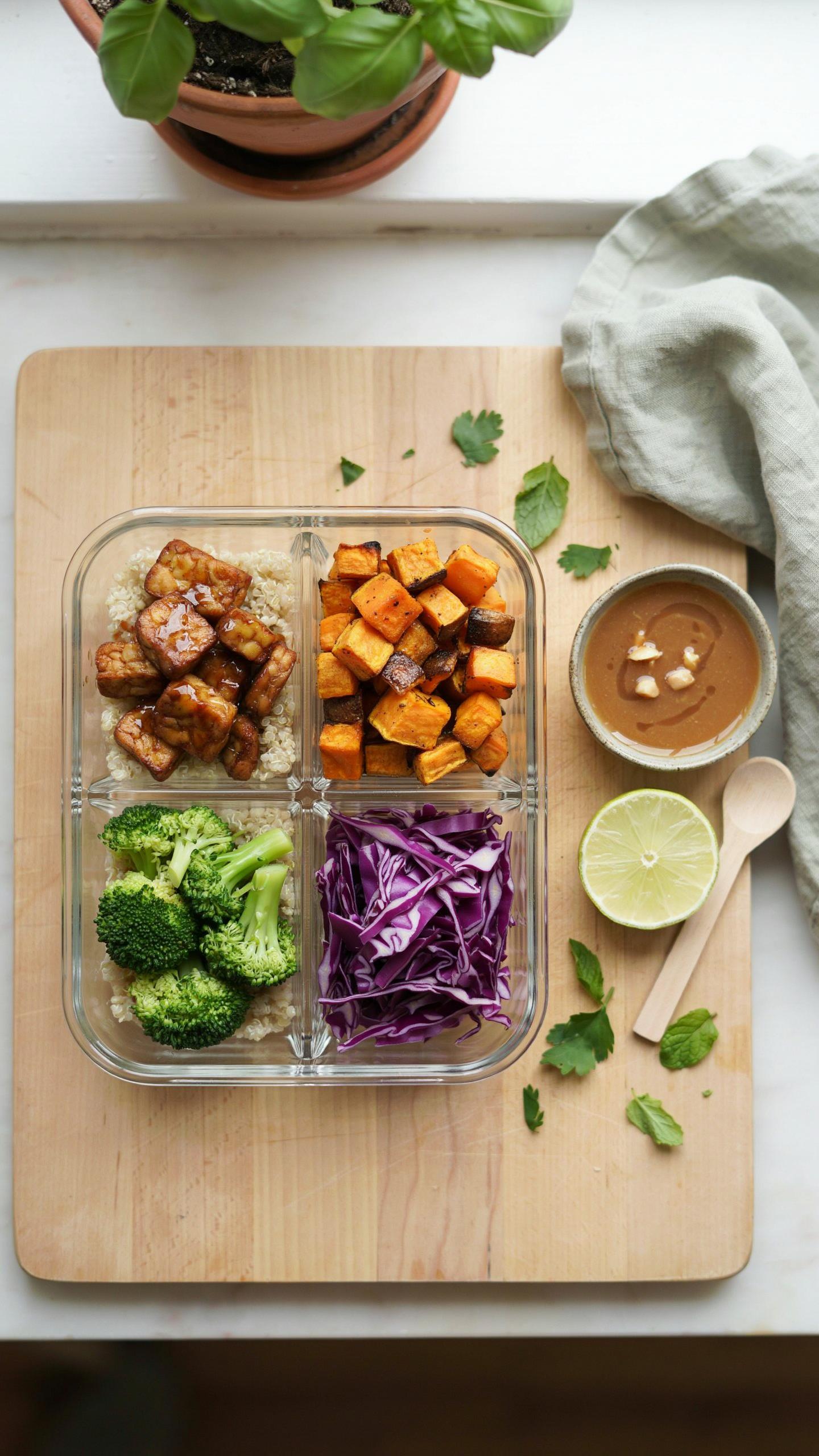
Steam Before You Marinate
You want to skip this step because it feels redundant. It’s not. Steaming tempeh first solves a texture problem most prep guides ignore entirely. Raw tempeh has a dense, slightly bitter crumb structure that resists absorption. Steam opens the cell structure, allowing marinades to penetrate instead of sitting on the surface. Eight to ten minutes over boiling water is the standard. This process also neutralizes the raw soybean flavor that makes unprepared tempeh taste like cardboard. The result is a porous substrate ready to actually take on seasoning.
The engineering principle here is porosity. Tempeh needs capillary action to work. Steaming creates micro-gaps in the protein matrix without breaking down the structure itself. After steaming, let the tempeh cool completely on a wire rack before marinating. Wet tempeh blocks marinades instead of absorbing them. You’re not rushing this step. You’re building the mechanism that makes flavor stick.
Acid, Fat, And Time Build The Penetration
Everyone says marinate tempeh longer. That’s lazy advice. What matters is the ratio of acid to fat and how they work together mechanistically. Acid denatures surface proteins and opens pores further. Fat carries fat-soluble flavor compounds into those pores and coats the exterior so moisture doesn’t escape during cooking. The ratio should favor acid slightly, around two parts acid to one part fat by volume. Vinegar, citrus, or soy sauce all work. Marinate for a minimum of four hours, ideally overnight.
Time alone does nothing without the right chemistry. A weak marinade left for two days underperforms a strong one left for six hours. The acid stops penetrating after saturation occurs. What changes after that is flavor depth from oxidation and osmotic equilibrium. Use a container with a tight seal to prevent oxidation degradation. After marinating, drain excess liquid completely and pat the tempeh dry before cooking. Excess moisture on the surface creates steam instead of browning, and browning is where the real flavor compounds form during the sear.
Optimizing Your Tempeh Ecosystem
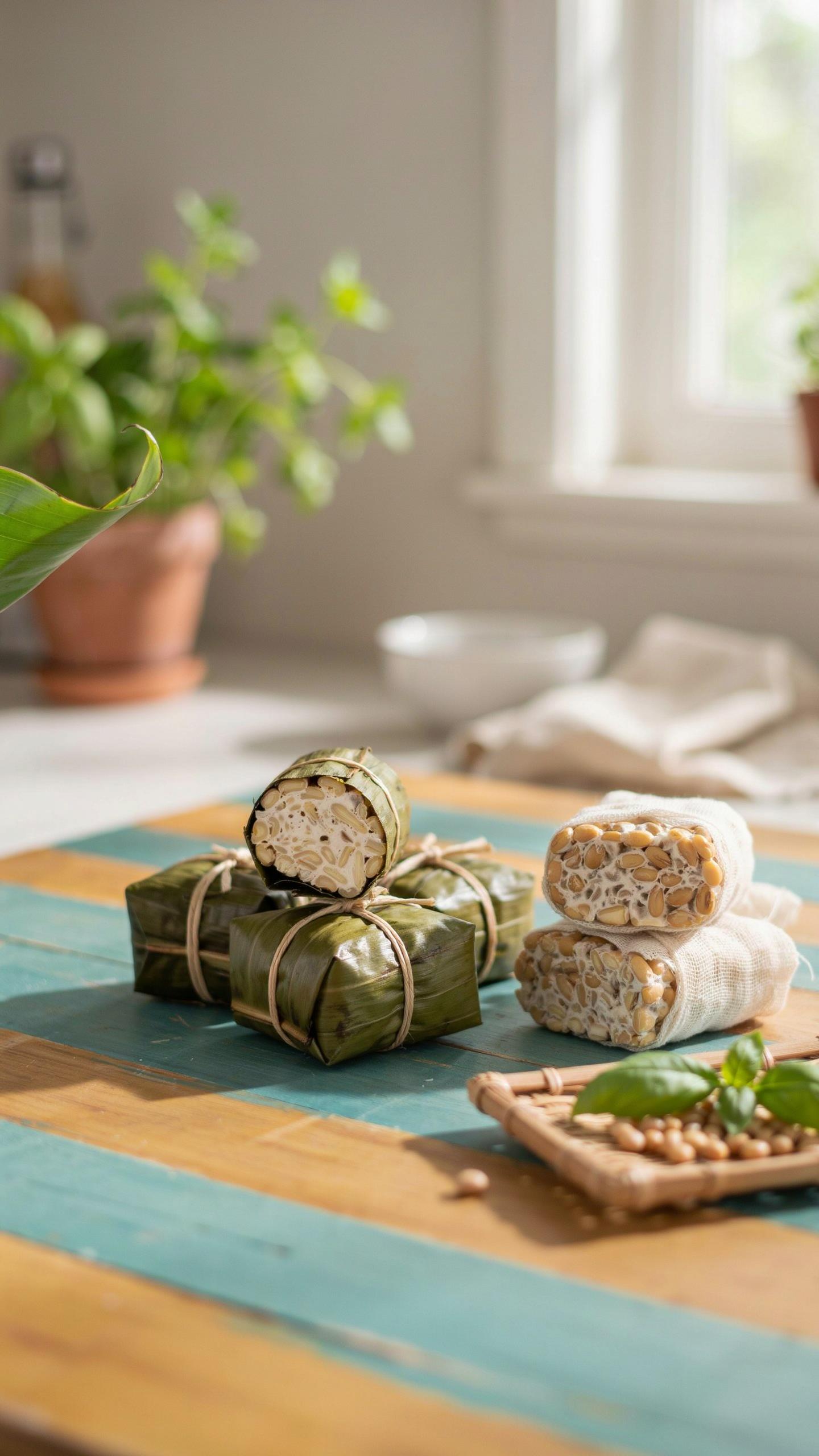
Seasoning Feedback Loops Build Better Batches
You want consistent results without thinking about it every time. The mechanism is feedback loops from cybernetics, where output from one batch informs input for the next one. Most people season tempeh the same way regardless of how it turned out, which explains why their meal prep feels flat and repetitive.
Track three variables: marinade absorption time, salt concentration, and heat application. After your first batch marinates, taste it before cooking. If it tastes weak, you didn’t marinate long enough or added too little salt. If it tastes harsh, reduce salt next time. If texture turns mushy, lower cooking temperature. This data shapes your next batch without guesswork.
The real leverage is written documentation. After cooking, write down marination time, salt ratio, and temperature, plus one note on flavor outcome. Do this three times and you stop gambling. You now have a personal baseline that works for your palate, your tempeh source, and your kitchen conditions. Seasoning feedback loops eliminate the trial and error that wastes weekends.
System Resilience Through Variable Marinades
A system that breaks when one ingredient shifts is a brittle system. Most meal preppers depend on a single marinade recipe, which means a change in soy sauce brand or tempeh freshness derails the entire week. Instead, build resilience by developing three separate marinade approaches that work with different protein ratios and flavor directions.
Create one umami-forward marinade using soy and miso for deep savory impact. Build one acid-forward marinade using vinegar and citrus for brightness when you need contrast. Develop one oil-forward marinade using toasted sesame or nut oils for richness on busy weeks. Each one performs differently under stress: acid saves stale tempeh, umami carries weak batches, oil masks texture problems. The system survives ingredient changes because you have parallel pathways, not single points of failure.
Rotate these three marinades on a fixed schedule. Week one uses umami. Week two uses acid. Week three uses oil. Week four repeats. This prevents palate fatigue while building redundancy into your meal prep operation. When one approach fails unexpectedly, you switch to the next week’s planned marinade and lose nothing.
Beyond Basic Tempeh Recipes The Power Of Umami
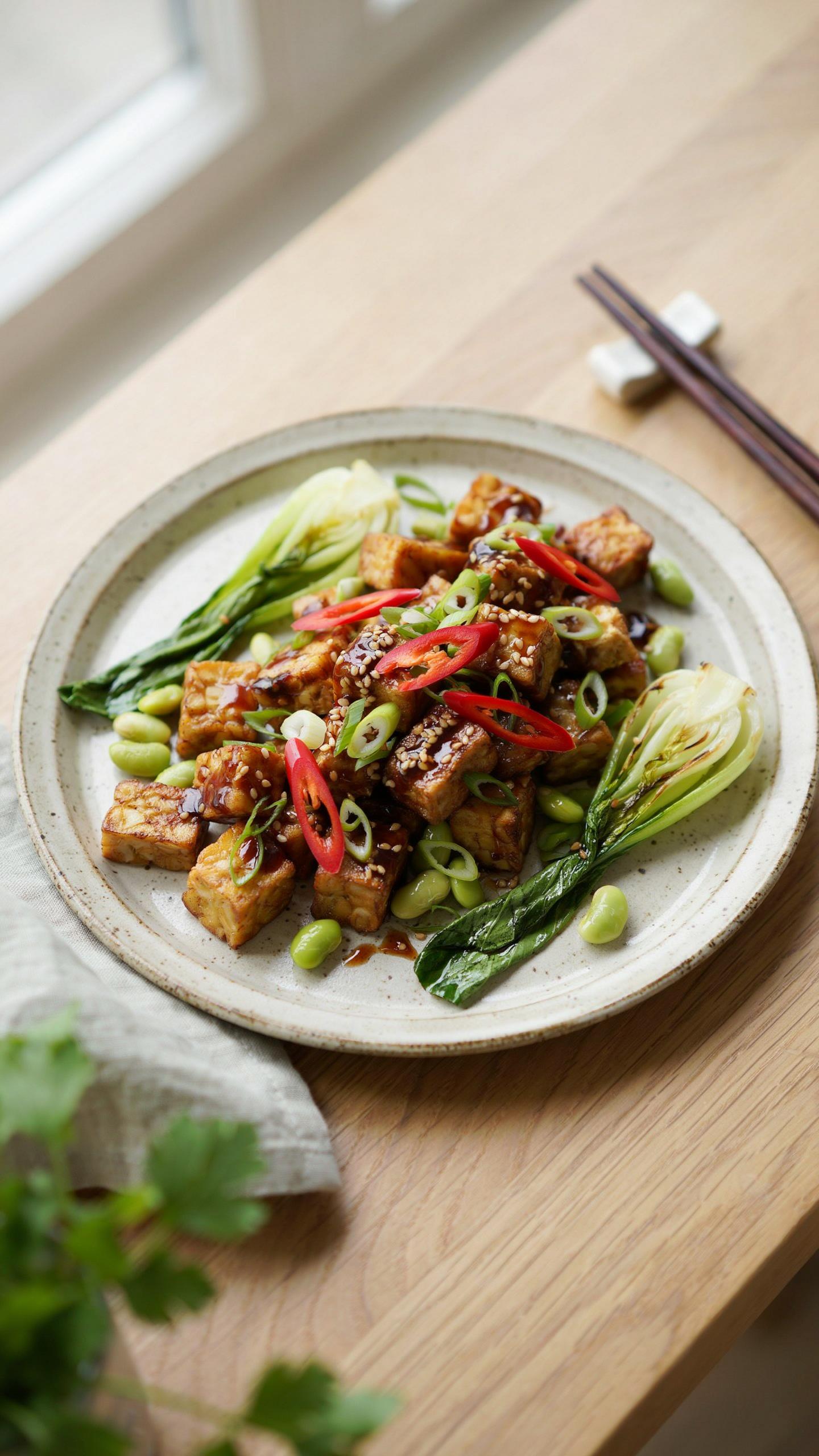
Building Savory Depth Into Every Batch
You want tempeh to taste like something worth eating instead of a protein obligation. The mechanism is simple: umami compounds stack. Glutamates and nucleotides trigger taste receptors at different intensities, and tempeh absorbs them faster than tofu because of its porous fermented structure. Most people marinade tempeh in soy sauce and call it done. That’s lazy. You need layered umami sources to hit the receptor multiple times.
Miso paste contains concentrated glutamates from soybean fermentation. Soy sauce adds nucleotides (inosinate). Nutritional yeast brings guanylate. None of these work alone at full strength. Combine them in a single marinade base and tempeh becomes the vehicle that holds all three signals simultaneously. Your palate reads this as complex richness, not one-note saltiness. This is why restaurant tempeh tastes different from home versions. They’re stacking umami on purpose.
Structural Layering For Complexity Without Confusion
Cooking technique matters more than ingredient count here. Steam tempeh first, then marinate it, then sear it. Each step opens different flavor gates. Steaming hydrates the tempeh so it accepts marinades deeper. Marinating lets the umami compounds migrate into the protein structure over time. Searing creates a crust that concentrates those flavors through evaporation and Maillard browning. Most home cooks skip steaming and wonder why their tempeh tastes thin.
Temperature staging is your protocol. Steam tempeh for eight minutes at 212 degrees. Cool it to room temperature. Marinate for a minimum of four hours in a sealed container, flipping halfway through. Sear it in a hot cast iron pan for three minutes per side. This sequence ensures flavor penetration at every layer of the tempeh block. One dish becomes a textured experience instead of a uniform paste.
Easy Tempeh Meal Prep The Batch Cooking Matrix
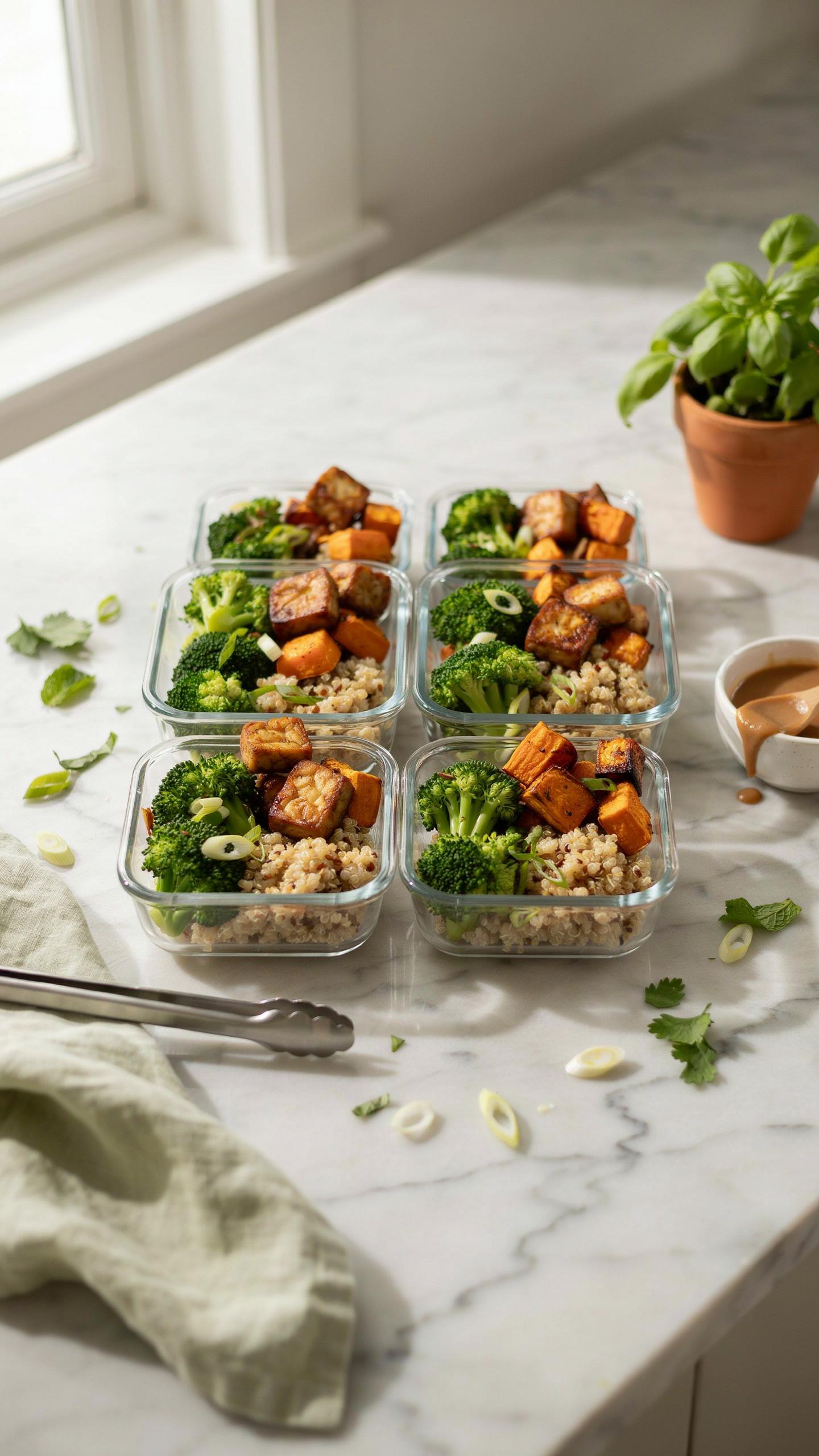
How To Cook Tempeh At Scale
You want to believe that meal prep saves time, but what you really want is permission to stop thinking about dinner. The mechanism that actually works is thermal efficiency: you’re not cooking tempeh multiple times during the week, you’re cooking it once under conditions that maximize texture and protein retention. Steam-pressing tempeh before any further cooking removes excess moisture that would otherwise trap steam and create a rubbery texture. Block form tempeh steams for 20 minutes at full pressure, which denatures the oligosaccharides that cause digestive distress and sets the protein structure.
After steaming, you have two paths. Slice into half-inch planks and pan-sear in batches on high heat with minimal oil, which creates crust while preserving interior density. Alternatively, cube it and roast at 425 degrees for 25 minutes with tossed seasoning, which requires less active monitoring and cooks more evenly. Both methods finish in one session and store refrigerated for up to five days without texture degradation. The cubed roast method scales better because one sheet pan holds more volume than a skillet does across multiple batches.
Prep Components That Stack Into Meals
Tempeh isn’t the meal; it’s the protein component in an edible equation. Strategy borrowed from meal architecture: think of components as modular units that recombine rather than as fixed plates. First, prep three tempeh variants. One batch stays neutral seasoned for flexibility. One batch gets marinated in soy, ginger, and rice vinegar for Asian-style combinations. One batch gets tossed with smoked paprika, garlic, and olive oil for Mediterranean pairings.
- Grain bases: Cook rice, quinoa, or farro in bulk. Cool completely before storing to prevent condensation and mold growth. One batch serves four to six meals depending on portion size.
- Raw vegetables: Wash and cut carrots, bell peppers, and cucumbers immediately after shopping. Store separately in breathable containers. These stay crisp for four to five days without wilting.
- Cooked vegetables: Roast broccoli, cauliflower, and Brussels sprouts at 400 degrees for 30 minutes. Season after cooking so salt doesn’t pull moisture out prematurely.
- Sauce bases: Make tahini dressing, peanut sauce, and vinaigrette in bulk. These keep refrigerated for one week and transform identical components into different meals.
- Fermented elements: Prepare miso paste mixed into warm water or keep umeboshi vinegar on hand. These add salt and flavor depth without requiring refrigeration or prep time during the week.
Assemble meals by selecting one tempeh variant, one grain, two vegetables, one sauce, and one fermented element. The same roasted tempeh and broccoli become three different meals depending on whether you pair them with rice and tahini, quinoa and peanut sauce, or farro and miso vinaigrette. Store components separately in glass containers and assemble fresh or heat through in 90 seconds. This is the actual system: prep components independently, combine them during the week based on cravings or what needs to be used first.
The Healthy Tempeh Meal Nutrient Density Maximized
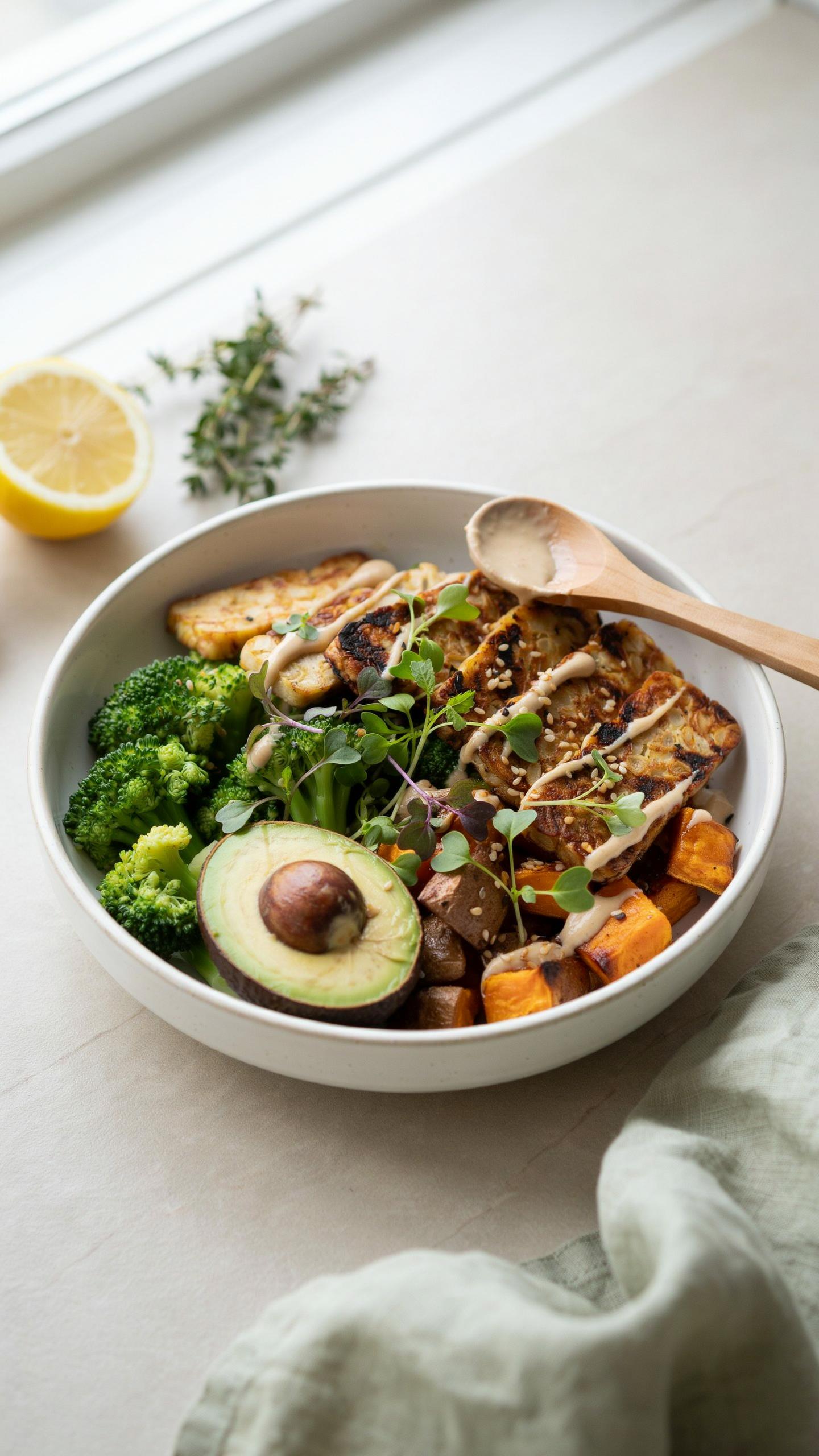
Complete Protein Through Strategic Pairing
You want the protein credit without actually understanding what makes a protein complete. Here’s the mechanism: tempeh contains all nine essential amino acids, but in ratios that don’t match human requirements exactly. Borrowing from biochemistry, think of amino acids like a chain. Your body’s only as strong as the limiting amino acid—whichever one runs out first. Tempeh pairs lysine-rich content with lower methionine, so combining it with grains corrects the ratio instantly.
Rice, quinoa, or oats beside tempeh fill the gaps tempeh leaves. A standard pairing—tempeh with brown rice—gives you a complete amino acid profile in one meal. The common advice says “eat a variety.” Wrong. Strategic pairing means choosing one grain intentionally, not rotating randomly. Cook tempeh with a grain-based sauce or serve them on the same plate. The protein utilization jumps because your body processes both simultaneously, absorbing what it needs without waste.
Fiber And Micronutrient Density Without Guessing
Most meal prep advice ignores the actual science of nutrient absorption. Tempeh fermentation breaks down phytic acid, meaning your body absorbs iron and magnesium more efficiently than from raw soy. Add leafy greens or cruciferous vegetables—the oxalates pair neutrally with tempeh’s mineral profile. One cooked cup of tempeh delivers manganese, copper, and B vitamins your muscle recovery depends on. The fiber content from tempeh plus added vegetables compounds the effect.
Stack your tempeh meal this way: fermented tempeh as the protein anchor, a cruciferous or dark leafy green for micronutrients, then a starchy vegetable for carbohydrate timing. This structure hits three macronutrient targets and multiple micronutrient systems. Prep the tempeh on Sunday, store greens separately, combine at serving to preserve texture and nutrient availability. Nutrient density isn’t about quantity—it’s about bioavailability and the order you consume components.
Tempeh Dinner From Prep To Plate In Minutes
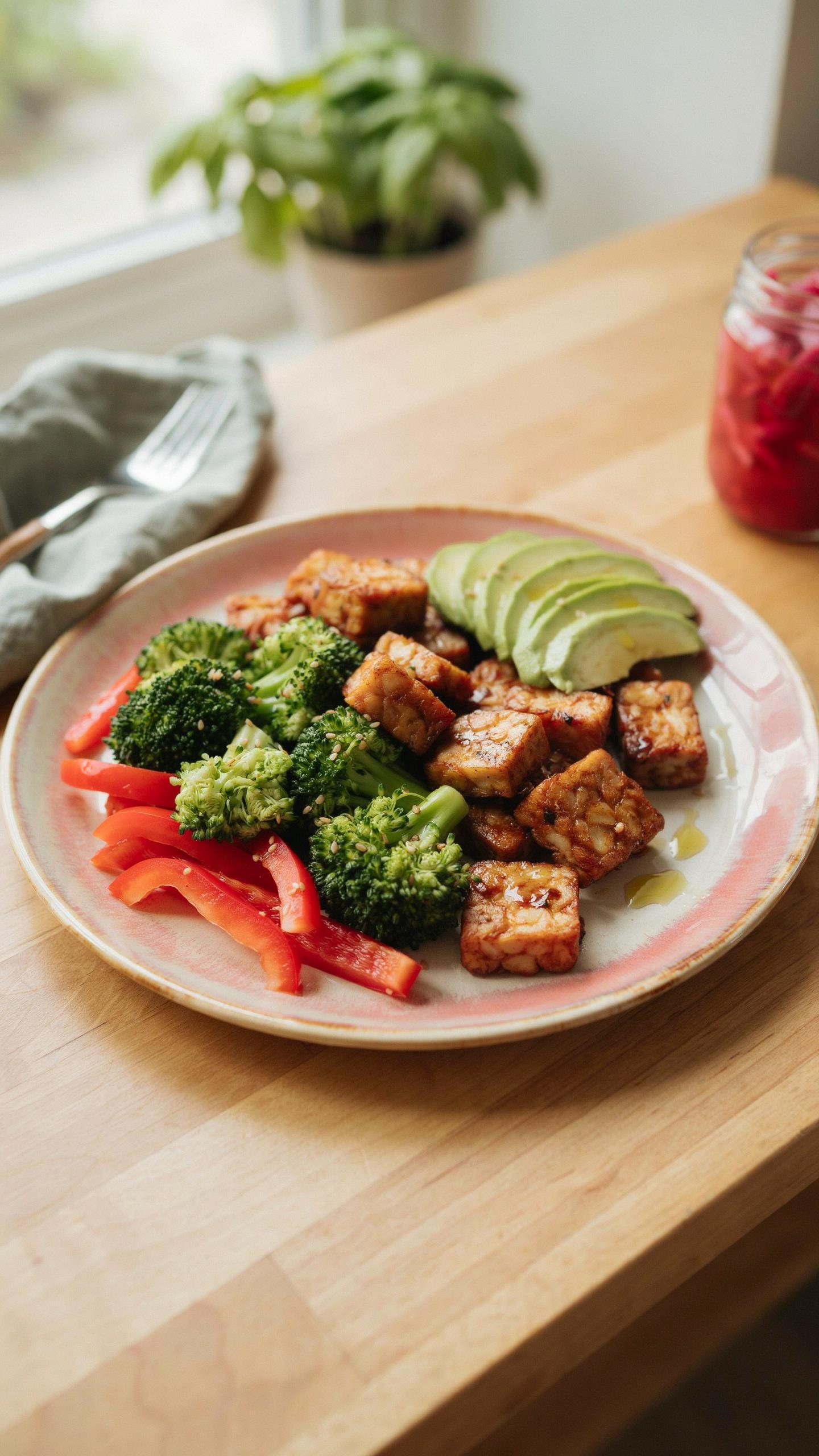
The Reheating Method That Keeps Tempeh From Turning To Rubber
You want speed without sacrificing the texture you spent time creating. That’s the real tension here, and most people solve it wrong by nuking tempeh in a microwave until it becomes a dense, bitter brick. Tempeh’s structure is fragile after cooking, especially marinated varieties. The mechanism at work is moisture loss. Microwave radiation heats water molecules violently, expelling them from the tempeh’s spongy interior faster than you can eat it. Low, dry heat then becomes your enemy post-prep.
The solution is stovetop reheating at medium heat in the same vessel you’ll eat from. Add a thin layer of oil or liquid to the pan first, then place tempeh directly on that surface without stirring for the first two minutes. This creates a barrier that returns moisture to the surface while gently warming the interior. Tempeh reaches serving temperature in four minutes. The edges stay firm. The center stays tender. You’ve essentially recreated the final minute of the original cooking process instead of destroying it.
The Assembly Pattern That Cuts Plating Time By Half
Stop thinking of meal prep reheating as a separate task from plating. The fastest dinner comes from a specific sequence that moves from cold storage to hot plate without extra steps. This is a principle borrowed from restaurant kitchen operations: mise en place, or “everything in its place.” For tempeh dinners, it means your plate components sit in the exact order you’ll need them. Your cold sides (grain, greens, sauce) stay in their containers until the tempeh hits heat.
The real advantage appears in the transition. The moment your tempeh reaches temperature, your other components are already staged at arm’s length in their original containers. You scoop grain onto the plate, add tempeh while it’s still hot, then dress with sauce and greens last. Total plating time drops to ninety seconds. The tempeh doesn’t cool while you’re searching for containers. Everything moves in one continuous motion from storage to consumption without hesitation.
Healthy Tofu And Tempeh Dish When To Choose Which
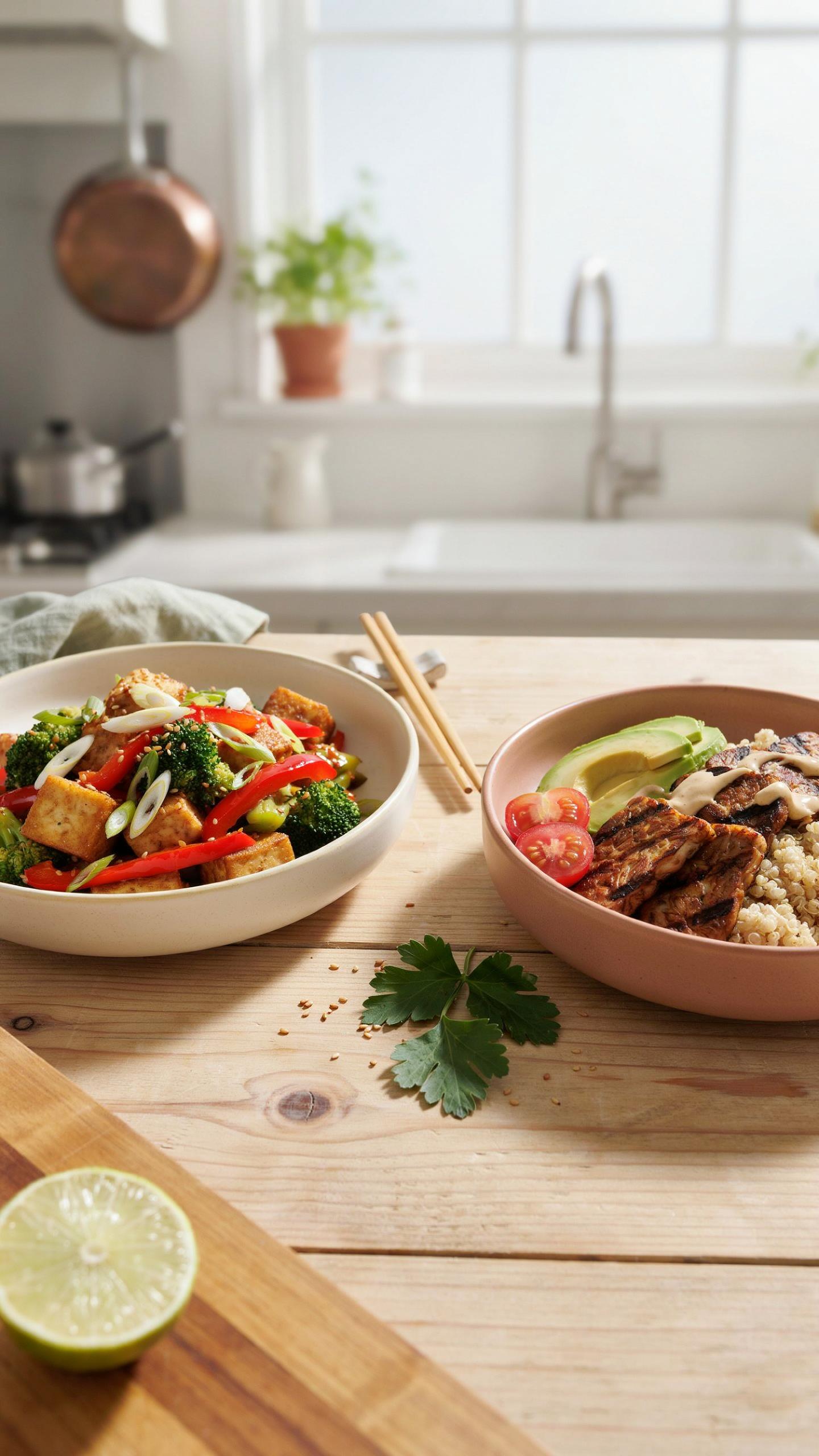
Structure Determines Your Cooking Method
You want the protein source that requires the least mental load during your week. That’s the real reason you’re reading this. Tempeh and tofu differ in architecture, which controls how they behave under heat and hold marinades. Think of structure like load-bearing capacity in engineering: tempeh is a solid block, tofu is a porous sponge. Tempeh ferments whole soybeans bound together, creating density. Tofu coagulates soy milk into curds, leaving water channels throughout. This matters for meal prep because it changes your cooking window and storage behavior.
Tempeh holds its shape through aggressive cooking: steaming, pan-frying, baking at high heat. Tofu breaks apart unless you press it first and handle it gently. For meal prep, tempeh wins on logistics. You steam or sauté it once, portion it into containers, and reheat it without collapse. Tofu requires more attention during cooking and degrades faster when reheated multiple times. Pick tempeh if you’re prepping five days at once. Pick tofu only if you’re cooking fresh each time or portioning into freezer containers immediately.
Flavor Profile Determines Your Sauce Strategy
Tempeh has a nutty, slightly mushroom-like taste. Tofu is bland by design. The common advice says tofu absorbs marinades better, which is half true but backwards for meal prep. Tofu absorbs liquid fast but only holds flavor on its surface because the marinade can’t penetrate the interior evenly. Tempeh’s tight structure means marinades coat slower but distribute more consistently after cooking. For meal prep containers sitting for three days, tempeh keeps its intended flavor. Tofu tastes watered down or worse, one-dimensional.
Pair tempeh with bold seasonings: miso, tamari, fermented hot sauce, smoked paprika. These work because tempeh’s nuttiness complements funk and smoke. Tofu pairs with fresh herbs, light acids, and delicate spices because anything strong overwhelms it. Save tofu for stir-fries eaten the same day or blended applications like scrambles or desserts. Tempeh meal prep demands you season aggressively during cooking, not afterward. Cook your tempeh in a reduction of tamari, rice vinegar, and garlic until the liquid nearly evaporates and clings to the surface, then portion and store.
Tempeh Dinner Recipes The Anti Recipe Playbook
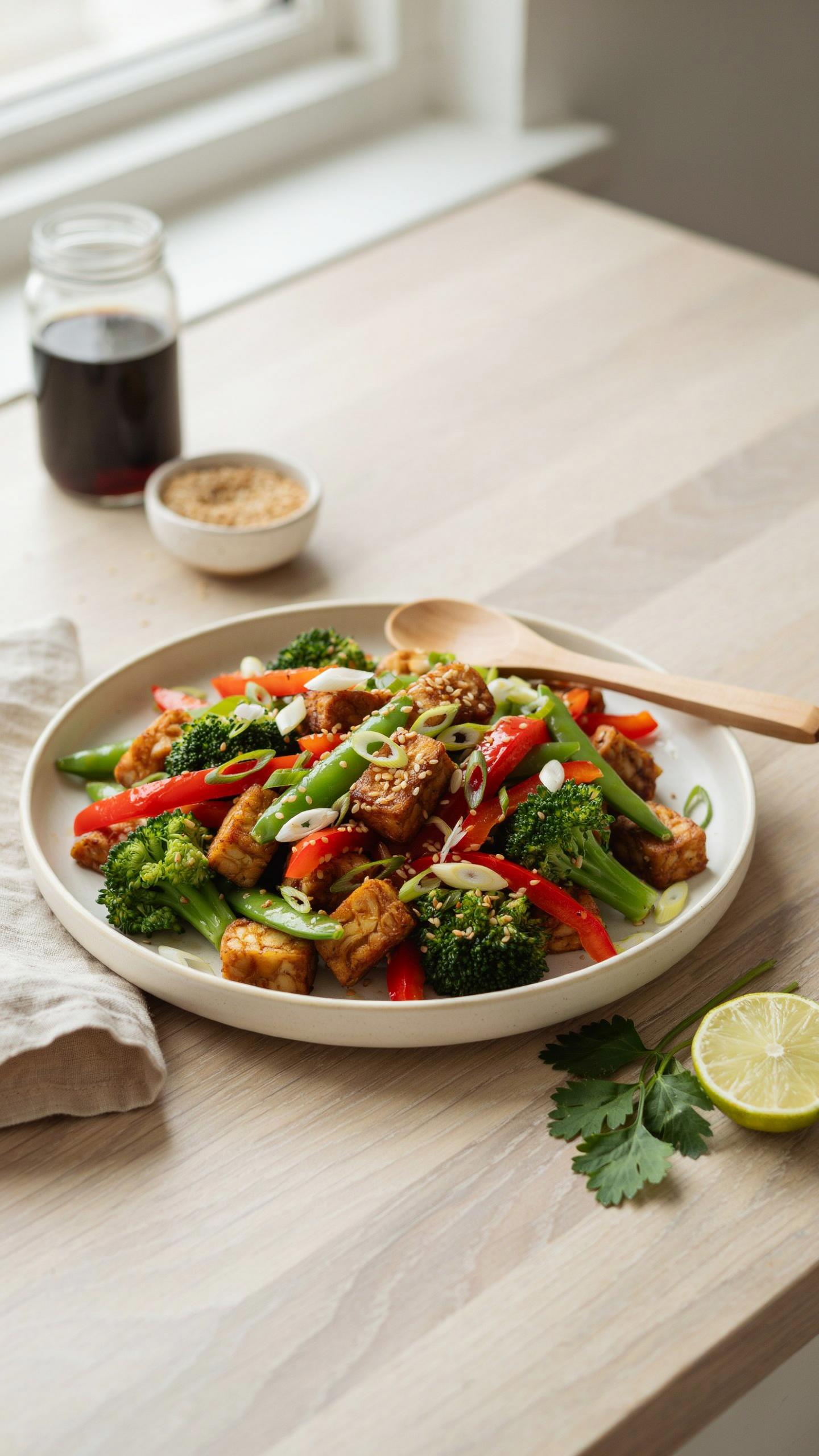
The Three Flavor Bases That Actually Work
You want a system that doesn’t require you to hunt down new recipes every week. The mechanism is borrowed from chemistry: saturation point. Your palate saturates on novelty faster than on principle. Stop chasing variety. Instead, nail three distinct flavor profiles and rotate them. Most people fail here because they think rotation means constant change. It means controlled repetition with minor adjustments.
Fermentation creates umami in tempeh that amplifies salt and acid. Use this. Your three bases should be: soy-ginger-sesame (Asian), smoked paprika-cumin-lime (Latin), and miso-mushroom-thyme (European). Each one pulls different compounds from the same protein. You prep tempeh identically. The flavor base changes everything. This isn’t boring. This is efficient.
The Components You Stack And Rearrange
Tempeh dinner success requires what systems engineers call modularity: independent parts that combine without friction.
- Protein block: Crumbled or cubed tempeh, pressed and pan-fried until edges crisp. Golden exterior holds flavor. Takes 8-10 minutes. Make five portions at once.
- Grain or base: Cooked rice, quinoa, or farro. Prep weekly in bulk. Stores five days. Neutral enough to absorb any flavor base without conflict.
- Raw or roasted vegetable: Shredded cabbage, roasted broccoli, or sautéed greens. Add texture and fiber. Prevents the meal from feeling flat or dense.
- Sauce layer: Your chosen flavor base mixed into tahini, coconut milk, or stock. Binds everything. Stores separately for four days. Combine day-of.
- Crunch element: Toasted seeds, nuts, or crispy fried onions. Non-negotiable. Breaks monotony at bite level. Changes the entire eating experience.
The power of modularity is that you never get bored and you never waste prep time on complexity. One night you eat soy-ginger tempeh on rice with cabbage and sesame seeds. Three nights later, same components, miso-mushroom sauce instead. Your brain registers it as different. Your prep time stays constant. Assembly takes four minutes when components exist.
The real obstacle isnt the food its your inability to commit to a repeatable scalable process

You’ll fail at tempeh meal prep because you treat it like a hobby instead of a system. Pick one recipe. Buy the same ingredients every Sunday. Cook the same way for four weeks straight. Your brain resists this because repetition feels boring, but boring is what builds muscle on a vegetarian diet. Stop optimizing recipes and start optimizing consistency. The protein doesn’t care about your creativity. Your gains do.