
The Protein Noodle Paradox Why Your High Protein Isnt Enough
The Number On The Label Lies To You
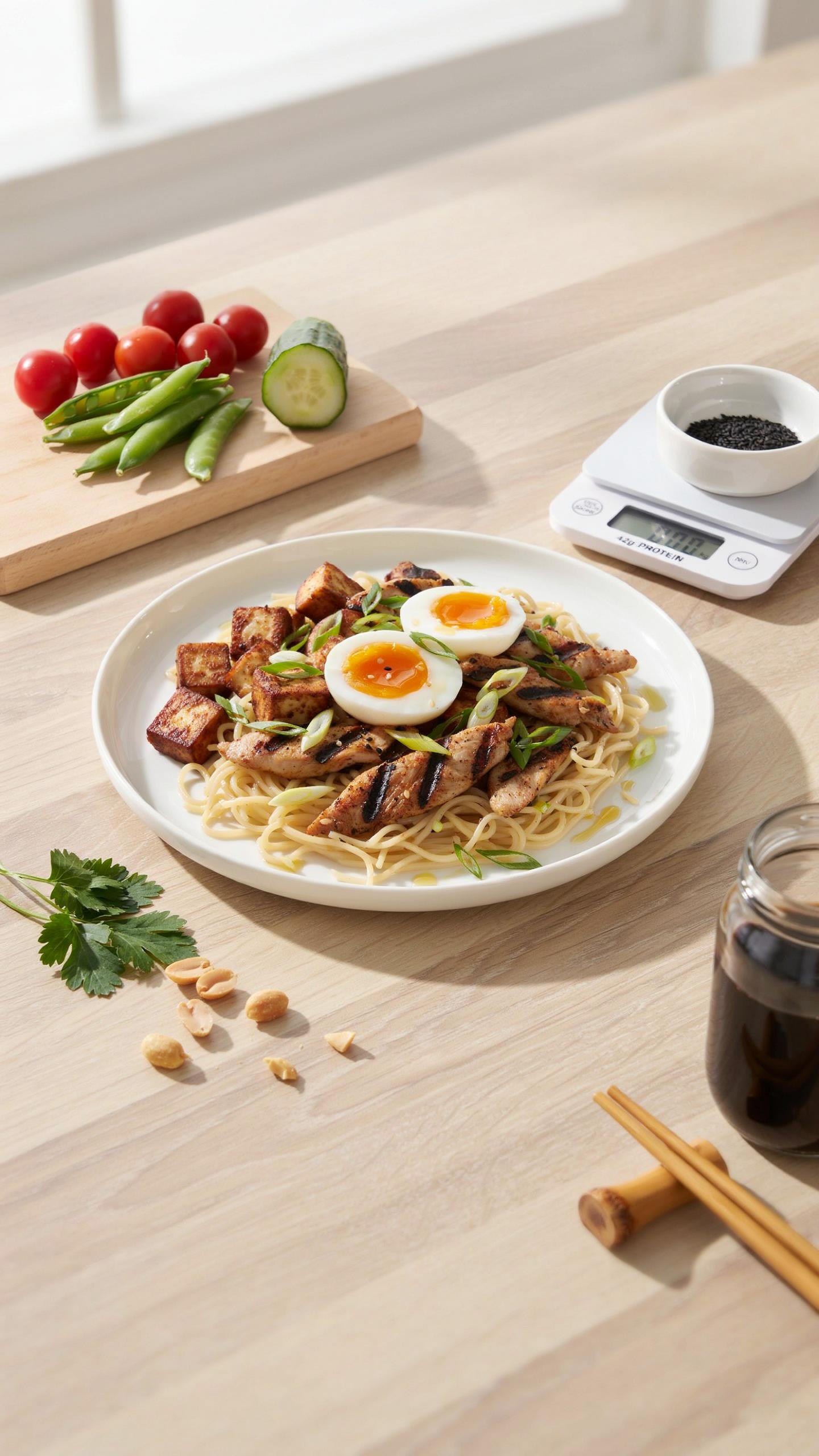
You want to believe that 25 grams of protein in your noodle bowl means 25 grams will build muscle. It won’t. Protein bioavailability determines what your body actually absorbs and uses, and most noodle-based proteins rank lower than whole food sources. Standard wheat noodles with added whey isolate sound efficient until you measure real absorption rates. Whey isolate absorbs at roughly 90-95 percent efficiency when consumed alone, but combine it with carbs, fat, and fiber in a bowl and digestive transit time extends. You lose the metabolic advantage you paid for.
Plant-based noodle proteins perform worse. Chickpea or lentil noodles contain complete amino acids, but their leucine content trails animal sources by 20-40 percent, and antinutrients like phytates reduce mineral absorption in the gut. Adding tofu or tempeh to these bowls helps, but most people don’t track the actual amino acid profile. They see “30g protein” and assume they’ve solved the problem. The mechanism here is simple: bioavailability compounds with amino acid composition. High numbers mean nothing without both.
Inefficiency Costs Muscle More Than You Think
Muscle protein synthesis operates like a supply chain where every step must execute or the entire delivery fails. Biology doesn’t reward close calls. If your protein source delivers suboptimal leucine timing or incomplete amino acids, your body initiates less mTOR activation during the post-workout window. You miss the anabolic signal when it matters most. A poorly absorbed 30-gram serving leaves muscle-building stimulus on the table compared to 25 grams of fully bioavailable animal protein consumed at the right time.
The real cost compounds over weeks. Missing 3-5 grams of usable protein per meal across 8-10 meals weekly means you forfeit 30-50 grams of muscle-building substrate monthly. That gap prevents progressive strength gains and forces you to eat more total food just to hit your actual protein requirement. Meal prep noodle bowls solve this only when you combine high-bioavailability protein sources with proper portion timing and sufficient leucine concentration, ideally above 2.5 grams per serving at each meal.
The Anabolic Catalyst Protocol Maximizing Protein Noodle Uptake
How Enzyme Pairing Breaks Down Protein
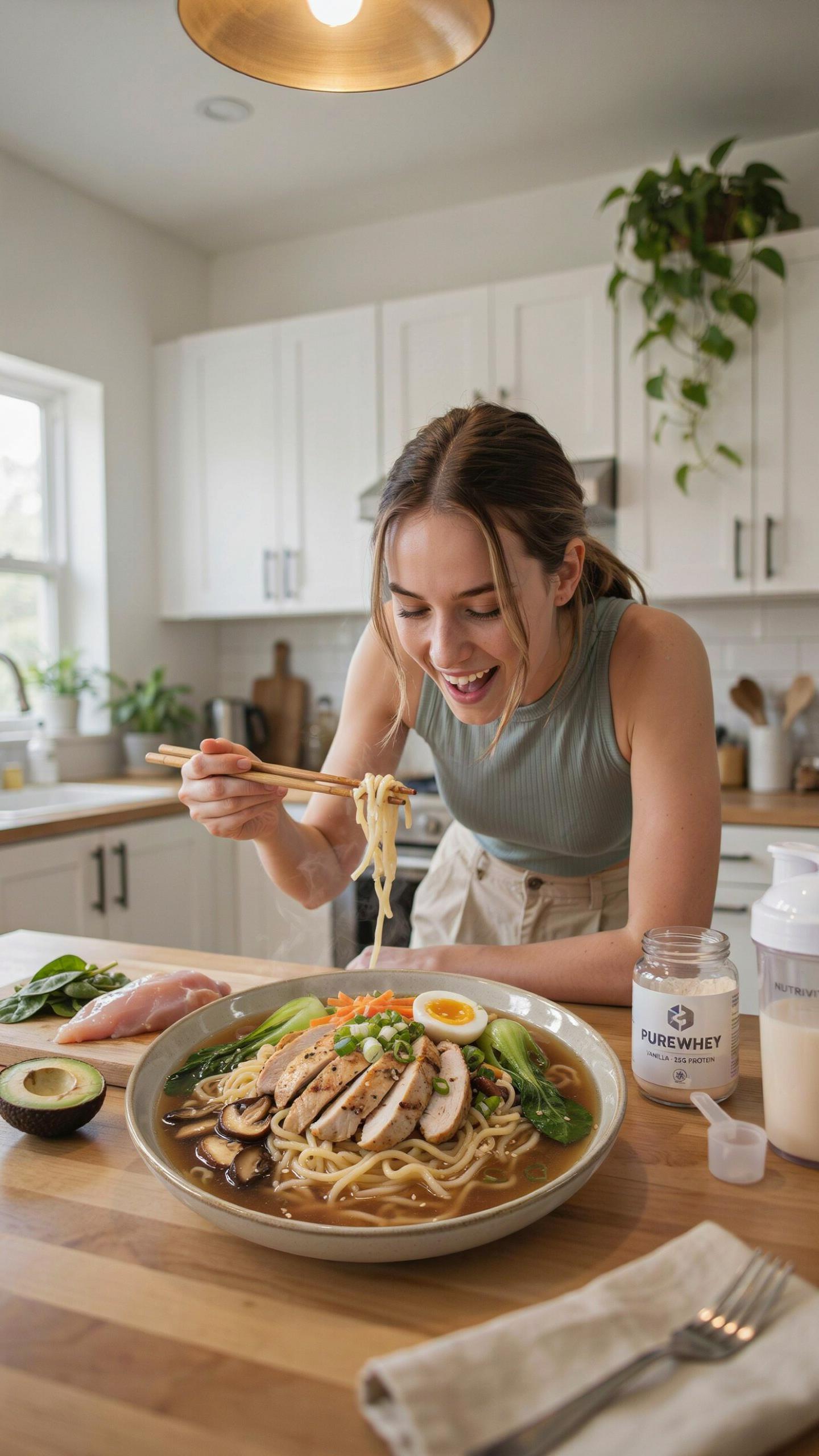
You want to believe that eating protein noodles means your body automatically uses all that protein. It doesn’t. Protein utilization is a chemistry problem, not a willpower problem. Think of digestion like a lock and key system from biochemistry: your enzymes are the keys, and protein structure is the lock. Most meal prep advice ignores this entirely. You need proteases working at peak efficiency the moment food hits your stomach, which means pairing your noodle bowl with specific compounds that accelerate protein breakdown before it enters your small intestine.
Vitamin C and acidic foods boost protease activity. Add fresh lemon juice, lime, or vinegar to your noodle bowl immediately before eating or pack it separately and combine at mealtime. Raw ginger contains compounds that stimulate gastric acid production and speed gastric emptying. Bromelain from pineapple and papain from papaya work synergistically with your body’s native proteases, but heat destroys them, so fresh fruit added post-cooking matters. The concrete move: prepare a simple acidified dressing with lemon juice and raw ginger that you drizzle over your pre-made noodle bowl right before consumption.
Carbohydrate Fat Ratios That Actually Work
The common advice says protein matters most. True, but incomplete. Carbohydrates and fat control the rate at which your digestive system processes protein and how effectively your muscles absorb amino acids. Think of it through insulin dynamics: carbs trigger insulin release, which acts as the transport mechanism for amino acids into muscle tissue. Without the right carb timing and fat composition, protein becomes expensive calories instead of muscle building material. Your ratio should run 2:1 carbohydrate to protein by weight in a standard meal prep bowl, with fat comprising 25 to 35 percent of total calories.
Noodle thickness and pasta type directly impact glycemic response. Thicker wheat noodles or legume-based noodles release glucose slower than thin rice noodles, which means steadier insulin response and better amino acid uptake. Pair high-glycemic noodles with 8 to 12 grams of fat per serving to moderate blood sugar spike. Add your fat source during assembly: olive oil, avocado, or coconut oil work mechanically to slow noodle digestion and create sustained nutrient delivery. The protocol: use legume noodles as your base, maintain a 2:1 carb-to-protein ratio, and add fat at meal time rather than during prep to preserve texture and micronutrient stability.
Beyond Generic Protein Noodles The Ingredient Matrix
Protein Source Selection Matters More Than Brand
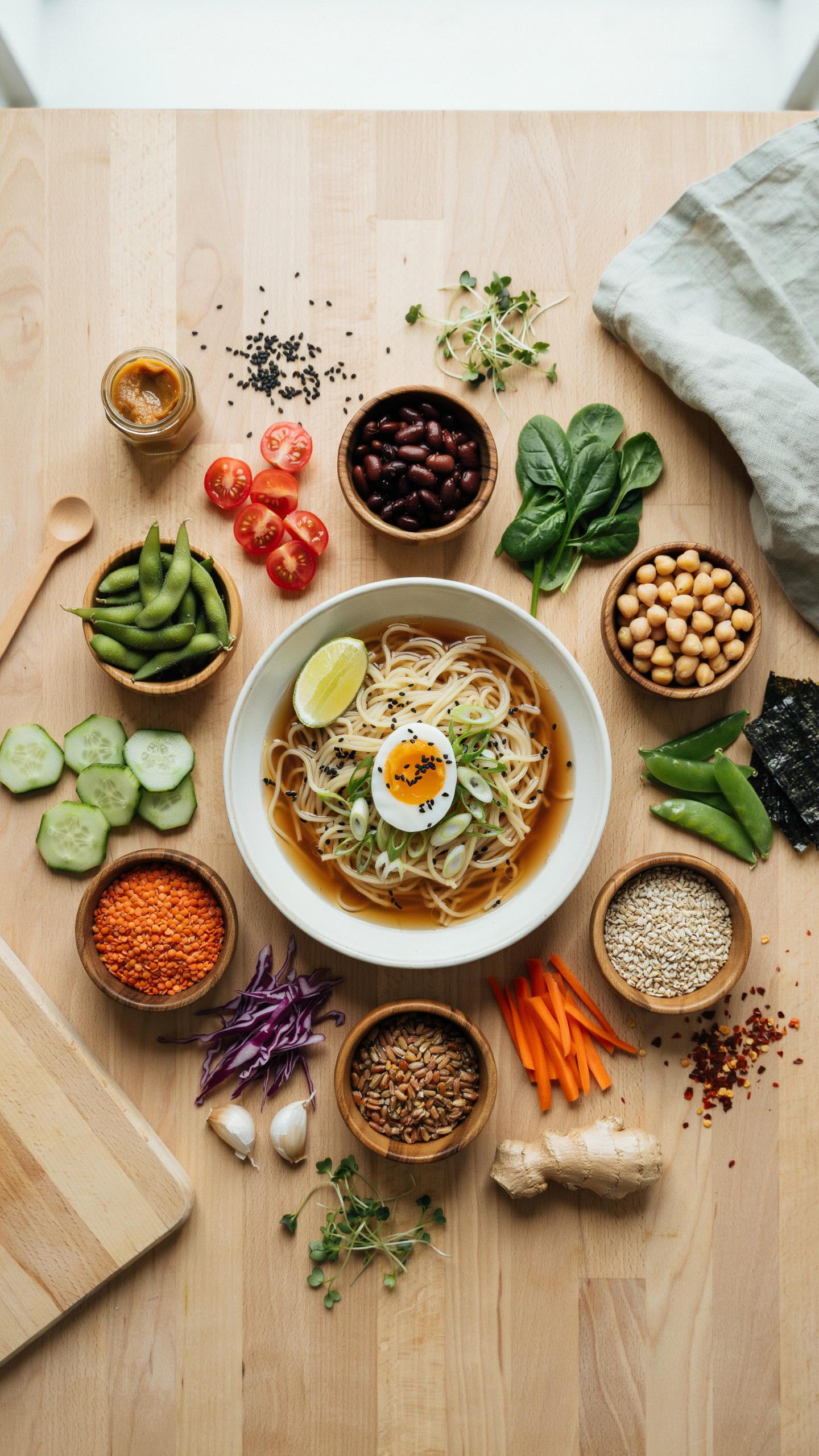
You want to believe the label tells you everything. It doesn’t. The mechanism here comes from biochemistry: bioavailability is the percentage of ingested protein your body can actually use, and it varies wildly between sources. Egg-based noodles hit 97 percent bioavailability. Most plant-based protein noodles land between 70 and 85 percent depending on processing. Animal sources also deliver complete amino acid profiles in a single ingredient. Plant sources require combining multiple items to hit all nine essential amino acids your body cannot produce.
The practical move is identifying what sits in your chosen noodle’s ingredient list, not just the protein gram count. Wheat-based noodles with whey protein isolate added give you 25 grams per serving and full amino acid coverage. Chickpea or lentil noodles give you 15 to 18 grams but lack methionine without a complementary protein source. For meal prep containers you’ll eat five days straight, bioavailability compounds over time. Your body will extract more usable amino acids from the animal-derived option, meaning better recovery and muscle retention across the week.
Micronutrient Stacking In The Bowl
Protein noodles solve one problem and create another. They’re nutrient-dense relative to pasta, but they’re still noodles. Micronutrient density requires intentional pairing. Add leafy greens and you gain iron, magnesium, and K vitamins. Add cruciferous vegetables like broccoli or cabbage and you gain glucosinolates that support detoxification pathways. Add red peppers and you gain vitamin C, which enhances iron absorption from plant sources. The synergy is real: vitamin C doesn’t just add value, it unlocks the iron you’d otherwise leave on the plate.
Layer your bowl with color first, then check nutrient gaps. A bowl with only noodles and chicken is incomplete. The same bowl with noodles, chicken, broccoli, red peppers, and shredded carrots covers protein, fiber, micronutrients, and phytonutrients. For meal prep specifically, this matters because frozen or refrigerated containers degrade certain vitamins over five days. Add raw elements like shredded vegetables or leafy greens on day one and cooked proteins separately, then combine portions two hours before eating. This single step preserves micronutrient integrity better than mixing everything ahead.
Flavor As A Force Multiplier Engineer Your Protein Noodle Bowls
Why Taste Determines If You Actually Eat This
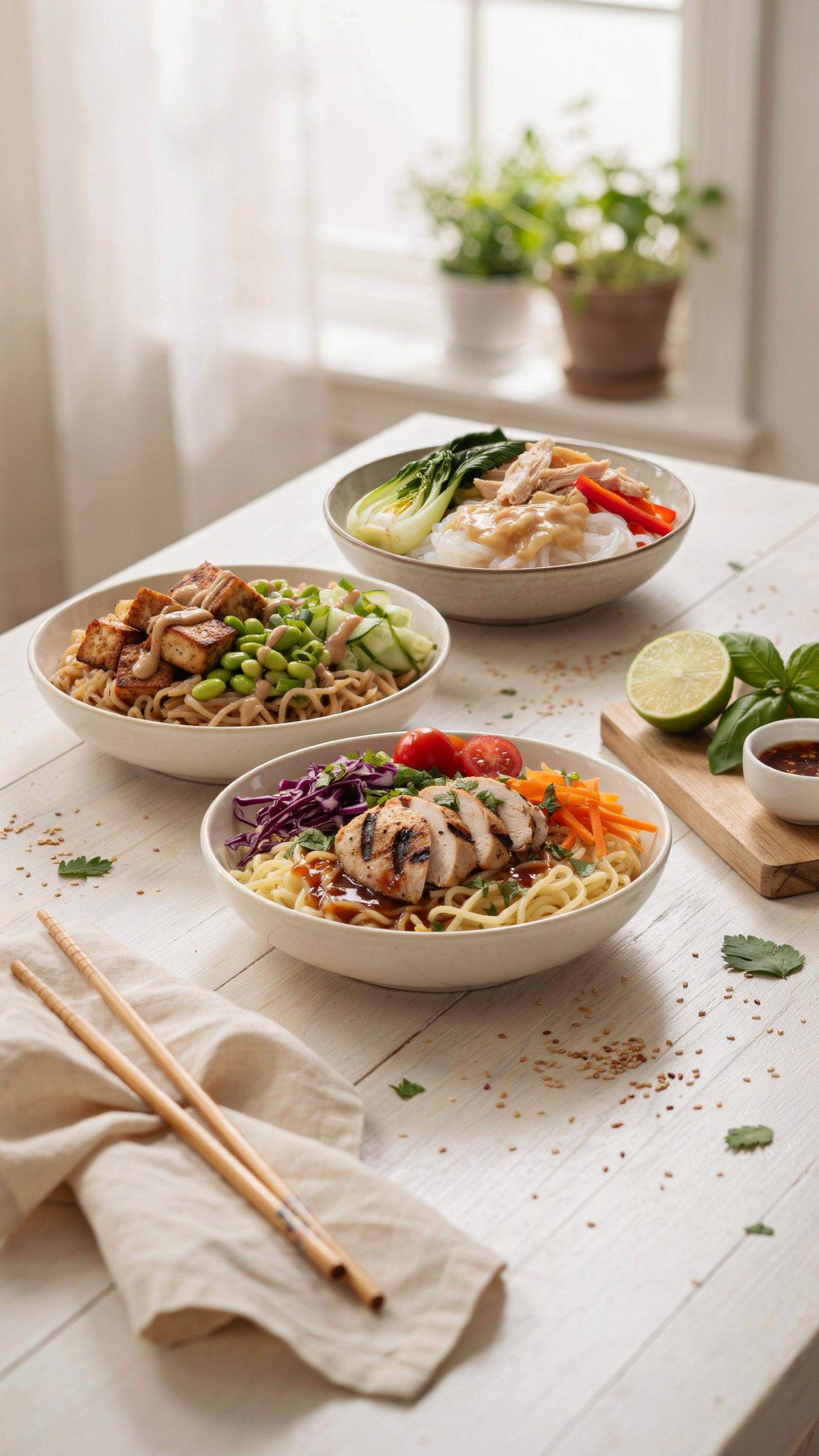
You want meal prep to work because you’re afraid consistency won’t happen without it. The real blocker isn’t logistics. It’s that bland food gets thrown away. Your brain runs on dopamine feedback loops, and food without flavor triggers won’t activate the reward system enough to override the friction of reheating. Taste is the mechanism that converts meal prep from theoretical compliance into actual consumption.
Dopamine doesn’t spike from nutrition facts. It spikes from flavor intensity and novelty. When you build noodle bowls with minimal seasoning, you’re fighting biology. The first two bites hit different because novelty is high. By day three, your brain has adapted to the signal and stops releasing dopamine on schedule. You skip the bowl. The fix is straightforward: layer flavors so aggressively that your brain stays engaged through repetition. Hot sauce, soy sauce, sesame oil, rice vinegar, garlic, ginger. Not as toppings. As structural components built into the base.
Umami Stacking For Extended Satiety
Umami is the fifth taste, and it’s the mechanism food science borrows from neurobiology to explain why some bowls keep you full for five hours while others don’t. Umami activates glutamate receptors in your mouth and triggers prolonged satiety signals. The common advice to “add soy sauce” is incomplete. You need umami layering across multiple components so the signal compounds instead of plateauing.
Build umami through fermented proteins and flavor bases. Use miso paste mixed into the dressing, not just soy sauce alone. Add bone broth or dashi to your noodle cooking liquid instead of plain water. Include aged or smoked proteins like smoked salmon or miso-cured chicken breast. Finish with a sprinkle of nutritional yeast or parmesan. Each layer triggers the same glutamate receptors differently, extending the satiety window and preventing the mid-afternoon blood sugar crash that kills meal prep compliance. The protocol: mix miso and sesame oil into your base dressing, cook noodles in broth, choose one fermented or umami-dense protein, top with aged cheese. This stacks satiety mechanically.
The Anti Fragile Noodle Meal Prep For Peak Performance
Monitor What Actually Degrades
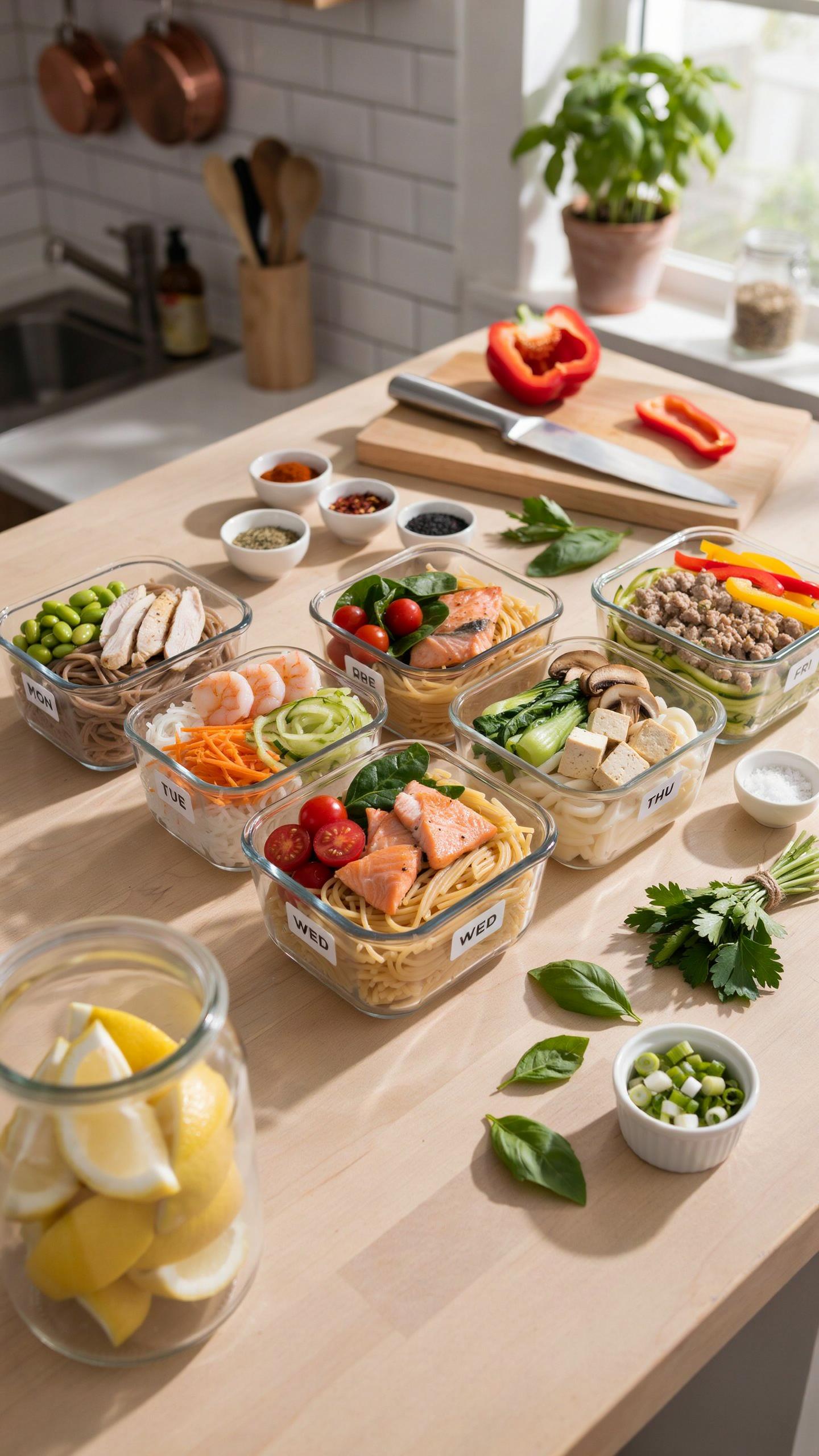
You want your meal prepped bowls to still hit macros on day five because losing 15 grams of protein to degradation feels like failure. Cybernetics teaches feedback loops: a system survives by measuring what changes and correcting before collapse. Your noodle bowl has three degradation vectors that matter. Protein denatures when moisture invades and bacteria multiply in warmth. Noodles absorb liquid and turn to paste. Fats oxidize and go rancid. You measure these in real time by tasting a sample on day three, noting texture and smell, then adjusting storage method for the remaining bowls.
The fix isn’t buying expensive containers. It’s understanding that cooked noodles in sealed environments create their own moisture trap. Drain noodles completely after cooking, cool them to room temperature before sealing, and store the protein separate from the sauce until you eat. This single protocol stops the feedback loop that kills your prep. Check one bowl mid-week. If it’s degraded, you know your system failed and adjust the next batch immediately.
Design Components That Rewire Themselves
Most meal prep advice treats your five bowls like identical clones you make once and forget. That’s backwards. Real systems adapt. Self-organization in meal prep means building modular components so you can swap pieces based on what’s actually working, not what a template promised.
Cook your noodles in one batch. Prep your proteins separately. Prepare sauces in their own container. Keep vegetables raw or barely cooked depending on type. On assembly day, you’re combining independent modules, not heating a locked-in combination. If your chicken dries out by day four, you switch to canned tuna for next week’s batch without redoing everything. If rice noodles hold better than wheat, you change that component alone. The system strengthens itself through small iterations, not wholesale overhauls. Each bowl becomes an experiment in what actually sustains both nutrition and palatability across five days.
High Protein Noodle Meal Prep The Strategic Component Stacking
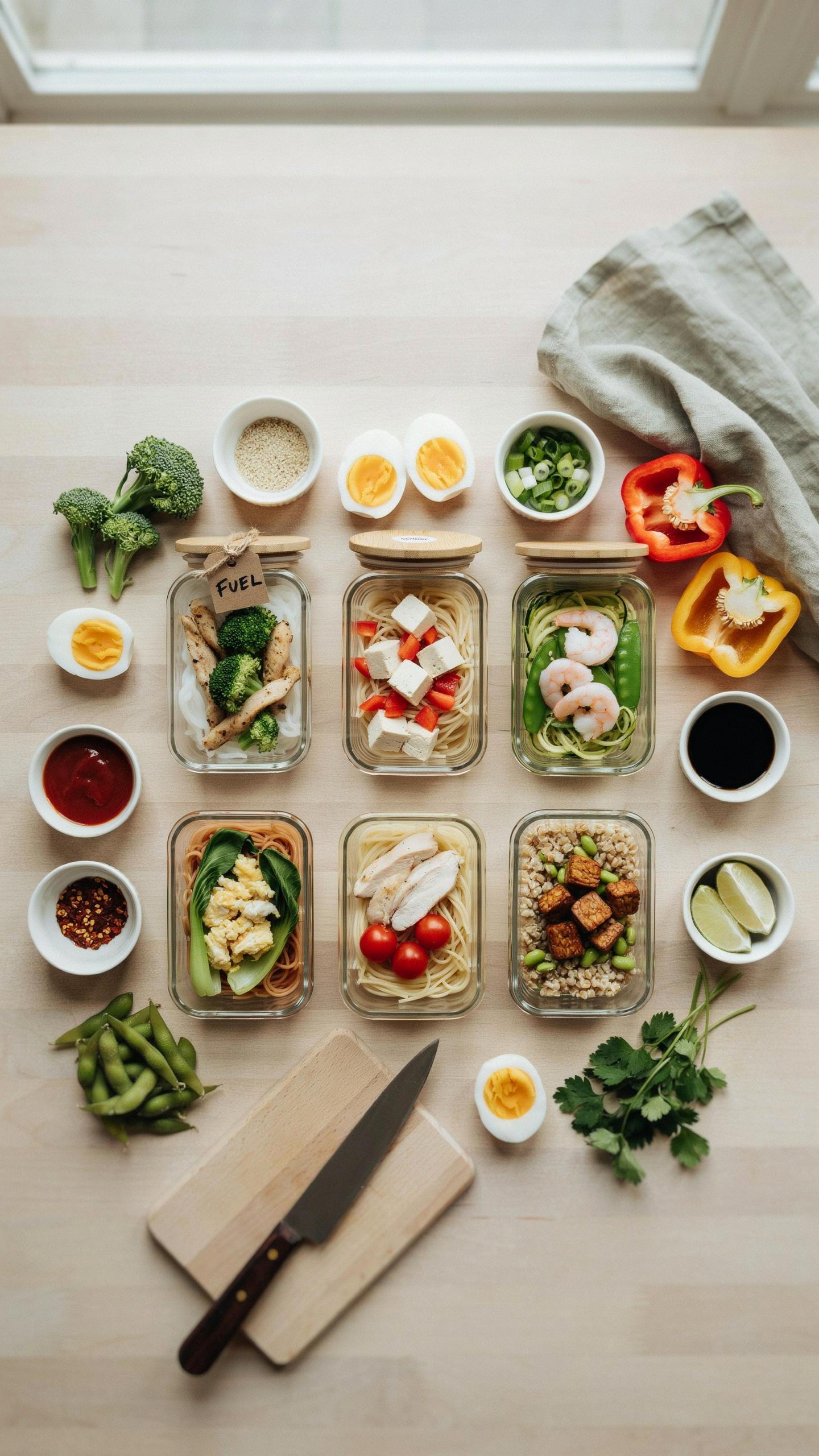
Cook Proteins And Noodles Separately
You want to believe one container solves everything. It doesn’t. The mechanism here borrows from supply chain logistics: inventory control. Keeping wet and dry components apart extends shelf life, prevents sogginess, and lets you swap proteins without waste. This is the actual reason meal prep fails for most people—they mix too early and eat the same thing until it tastes like cardboard.
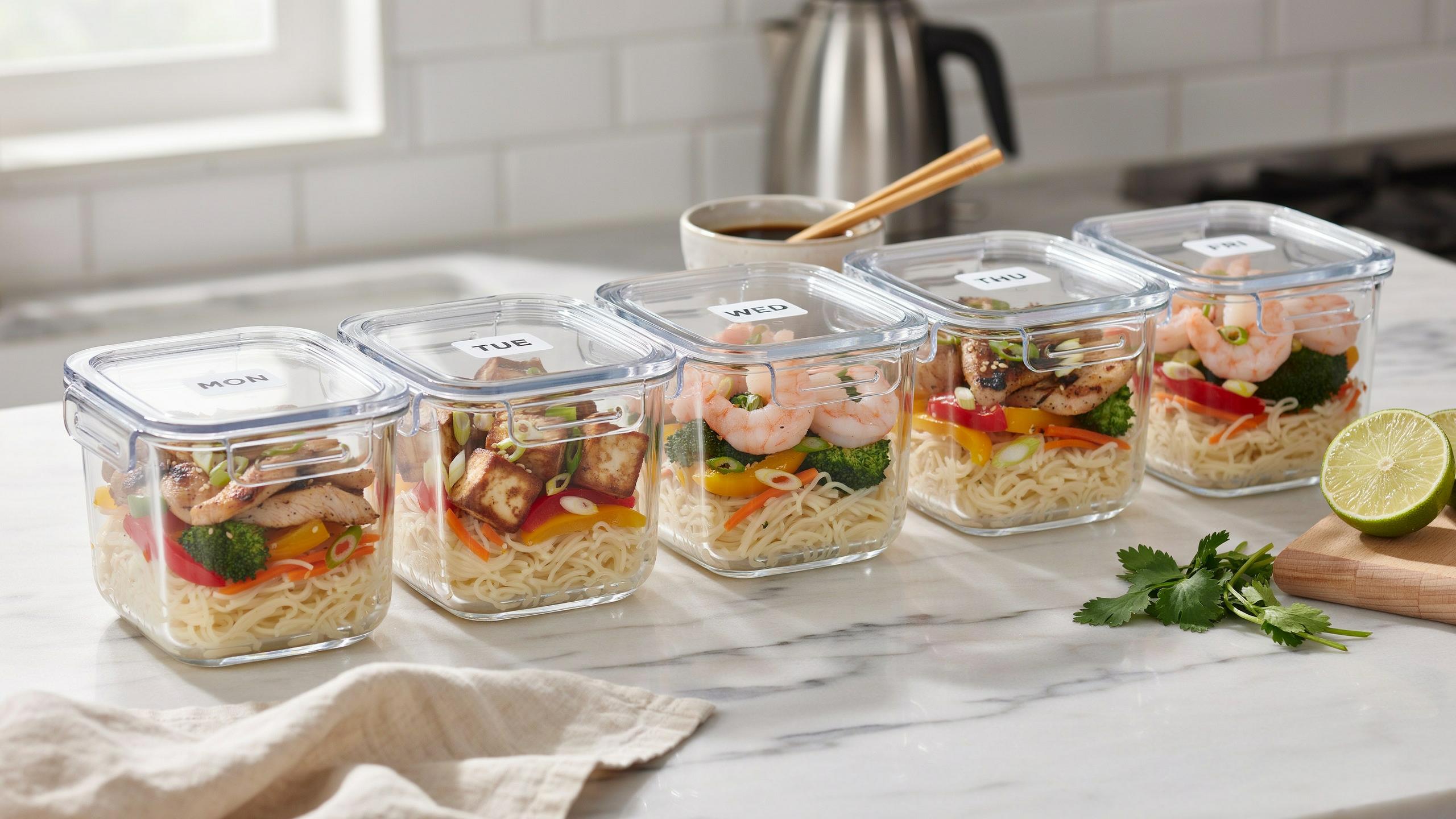
Cook your protein in bulk first. Chicken breast, ground turkey, tofu, or canned fish go into containers with minimal sauce. Cook noodles in a second batch, then cool and store dry in their own containers. This separation gives you a five to seven day window instead of three. When assembly happens, moisture transfer hasn’t started yet.
- Protein containers: Store cooked protein plain or with light seasoning. Keep in airtight containers on the lowest shelf. Freeze half if prepping more than five days out.
- Noodle containers: Cool cooked noodles completely before sealing. Store separately from sauce and protein. Toss lightly with neutral oil to prevent clumping.
- Sauce containers: Mix vinegar-based, soy-based, or oil-based dressings in small containers. Never combine with noodles until assembly. These stay stable for two weeks.
- Vegetable prep: Cut raw vegetables and store in separate sealed containers. Cooked vegetables go in their own section to avoid moisture issues.
- Assembly order: Protein first, then noodles, then vegetables, then sauce last. This sequence minimizes water transfer and maintains texture.
The moment you combine these elements is the moment degradation starts. Most people don’t account for this timing gap. Store each component at the same temperature, but keep them physically apart. This one protocol shift removes the single biggest complaint about meal-prepped noodle bowls: everything tastes identical by day four.
Build Recipes From Interchangeable Parts
You’re treating each meal prep day like you need five completely different recipes. You don’t. The system that works is modular assembly. Pick one base noodle type per week (ramen, soba, rice noodles). Pick two proteins. Pick three vegetable combinations. Pick two sauces. Now you have twelve different taste experiences from the same four components.
The math scales differently than you think. Instead of five separate recipes taking four hours, you cook one noodle batch, two protein variations, five vegetable medleys, and two sauces. Assembly becomes pattern recognition, not cooking. Tuesday’s sesame ginger noodle bowl with chicken and bok choy becomes Wednesday’s peanut noodle bowl with ground turkey and broccoli. Same noodles. Different protein. Different sauce. Different vegetable. The system absorbs variation without increasing actual work.
This approach also solves the burnout problem directly. You’re not bored because flavor changes across six days even though your prep work stayed the same. You’re not wasting time cooking five separate noodle recipes when one batch feeds into multiple outcomes. The mechanism is constraint-based creativity, not unlimited choice. Set your boundaries tight, then play within them. That’s when meal prep compounds instead of collapses.
Debunking Quick Fix Protein Pasta The Long Game Advantage

The Burnout Trap Nobody Names
You want this to feel effortless. That’s the real reason you’re reading this. The mechanism is simple: novelty crashes. You prep five bowls with excitement. Week three hits and the routine feels like punishment. Most people quit here and blame the food instead of blaming their expectations. High protein noodle bowls work only if you stop treating them like a temporary diet hack and start treating them like infrastructure for your body.
The fix isn’t finding the perfect bowl recipe. It’s designing a system that survives boredom. This means rotating two to three base noodle types, varying your protein sources between chicken, ground beef, and tofu, and keeping sauce combinations simple enough to mix in 30 seconds. You’re not optimizing for excitement. You’re optimizing for the day you don’t feel like cooking. Build that day into your prep schedule from the start.
Compound Returns Of Consistency
Biology calls it adaptation. Your body doesn’t change from one good meal. It changes from the accumulated signal of repeated actions. Eat 30 grams of protein in a noodle bowl three times daily for three months and your body composition shifts. Miss one week and you reset the clock. This isn’t motivation talk. This is how muscle tissue works.
The compounding edge lives in small protocol improvements stacked weekly. Week one: nail your base recipe. Week two: add a vegetable that actually tastes good in your bowl, not a vegetable you feel obligated to eat. Week three: test a new noodle type that keeps your macros stable. By month three, you’ve built a system that’s genuinely better than month one, and you didn’t need willpower to get there. The key is testing one variable per week, measuring what actually stuck, then moving forward only from what worked.
Beyond The Bowl Integrating Protein Noodles Into A Macro Strategy
Matching Macros To Your Actual Goal
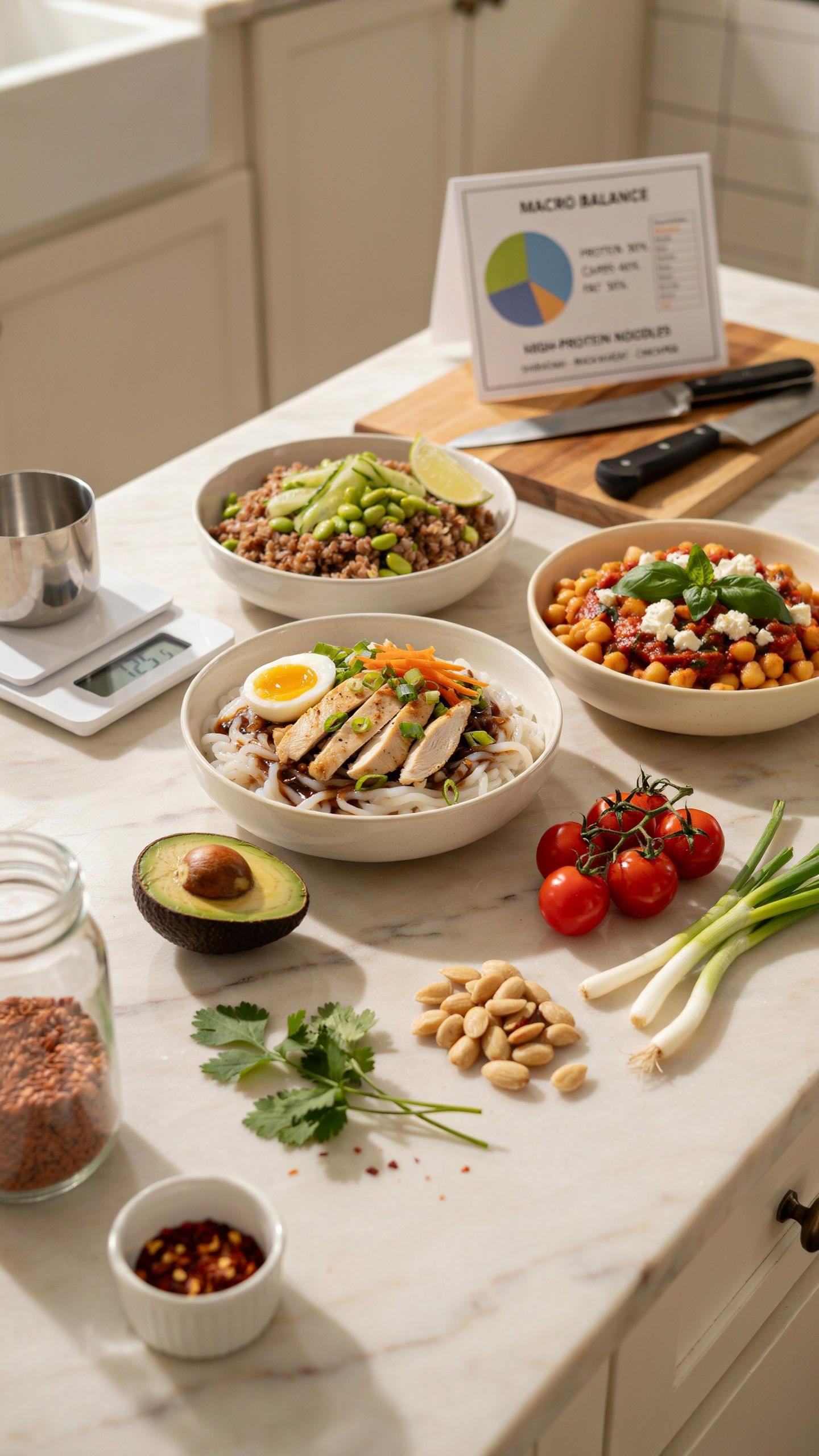
You care about this section because you want proof that meal prep won’t derail your specific plan, not because you suddenly love tracking. The mechanism is simple: protein noodle bowls work across different dietary goals because you control the ratio of three variables—noodle type, protein source, and fat addition—independently of each other. That flexibility is rare in meal prep. Most foods lock you into one macro distribution. Noodles don’t.
If you’re in a calorie deficit, use shirataki or legume-based noodles (low calorie, high fiber) with lean protein and minimal oil. The bowl stays under 400 calories while hitting 30 grams of protein. If you’re building muscle in a surplus, swap in regular wheat noodles, increase the portion size, add eggs or fatty fish, and hit 600 calories with 40 grams of protein. Same structure, different inputs. The noodle bowl becomes a container you fill based on what your actual macro targets demand that week, not what some diet trend says you should eat.
Measure, Adjust, Repeat
The fitness industry taught us that progression without measurement is guessing. Apply the same rule to meal prep: weigh your cooked noodles, protein source, and add-ons for one week to establish your baseline macros. Don’t estimate. Use a kitchen scale. Record what you actually ate and how you felt—energy levels, hunger signals, gym performance—against those numbers. After seven days you have data, not assumptions. Then adjust one variable. If you’re still hungry, add 30 grams of protein. If you’re gaining too fast, drop the oil by half. One change per week makes causation visible. Most people skip this step and wonder why meal prep fails them. They never learned what their body actually needs because they never measured what went in.
Your true obstacle isnt finding protein its your naive belief in simple solutions Stop settling for merely high protein Demand strategic nutrition
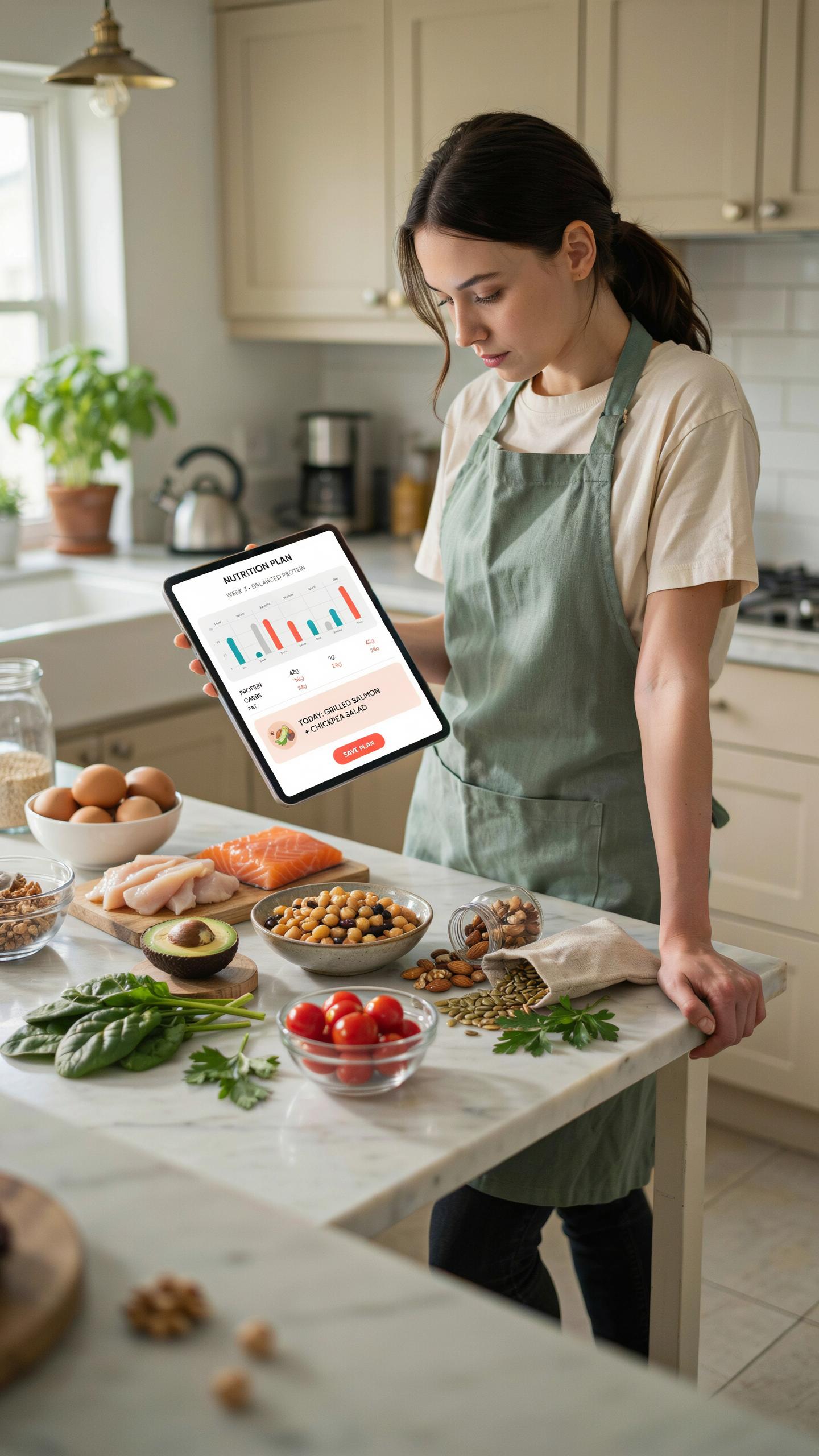
Most people fail at meal prep because they treat protein like a checkbox. They dump chicken on noodles and call it strategy. Real progress demands you reverse-engineer your goals first. Pick your actual outcome today: muscle gain, fat loss, or sustained energy. Then build your bowl backward from that single target. Your macros shift. Your ingredients shift. Your entire prep shifts. Stop chasing generic high protein and start chasing the specific body you want.