
Introduction
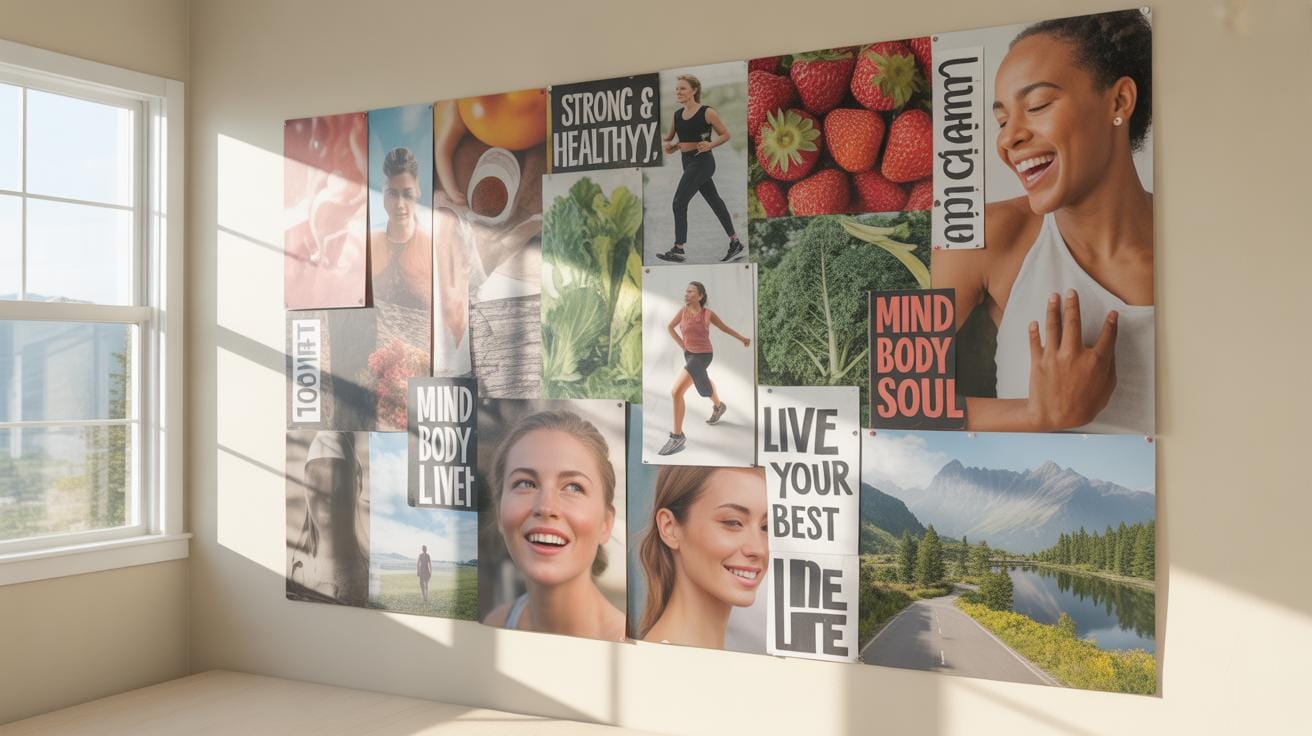
A vision board is a powerful tool that can inspire and push you to achieve your health and wellness goals. It is a collection of images, words, and affirmations that represent your dreams and desires for a healthier life. When used correctly, vision boards serve as a constant reminder of your objectives, igniting motivation and guiding your everyday choices toward wellbeing.
This article covers the concept of vision boards and how they connect to health and wellness. We will examine their role in motivation and goal-setting, highlight practical ways to make your own vision board, and discuss healthy habits and self-care strategies. You will learn how a vision board can boost your mental and physical health, helping you take control of your wellness journey.
Motivation For Health And Wellness


Motivation is, well, a kind of internal push that moves you to act toward certain goals. When it comes to health and wellness, motivation is what drives people to make choices—maybe to eat better or exercise more. It’s not just about starting something new; it’s about keeping at it, even when it feels tough or tedious. Motivation has this strange mix of factors: it can come from wanting to feel good inside (that’s intrinsic motivation) or from external reasons, like doctor’s advice or wanting to fit into those jeans you love (that’s extrinsic motivation).

Psychologists study motivation a lot and show that it isn’t constant. Sometimes it’s strong and you’re fired up; other times, it’s weak, and you might just skip the gym or grab fast food. What keeps your motivation alive? Often, clarity of goals and understanding why you want those health goals matter plays a huge role. It’s like a compass pointing where to head, and if that compass is fuzzy, it’s harder to stay on track.
What Is A Vision Board
A vision board is essentially a visual collection of images, words, and quotes that represent where you want to go or what you want to achieve. You cut, paste, and arrange these elements on a board—whether physical or digital—with the purpose of making your goals feel tangible. The idea is that looking at this board regularly can inspire and remind you why you’re working toward certain changes.
Creating a vision board isn’t complicated: gather magazines, printouts, or even drawings, then find images or statements that reflect your health and wellness aspirations. Maybe a picture of a person doing yoga or a phrase like “strong and balanced.” Some people say this visual reminder helps keep motivation on track by bringing your goals into daily focus. But it’s a mix—while it can encourage hope and action, it won’t do the work for you; it’s a nudge, not magic.
Why Motivation Matters For Health
Sticking to health habits isn’t easy. Motivation plays a crucial role because it’s what sustains effort through hurdles, boredom, or setbacks. Without it, planning workouts or choosing salads over snacks can feel pointless. Studies show that people who set clear health goals and find personal meaning in them tend to be more successful long-term. For example, someone motivated to manage their diabetes might be more diligent about medication and diet than someone with no strong reason.
But here’s a subtle point: motivation isn’t just about “pushing” yourself hard all the time. Sometimes, motivation can fluctuate, and that’s normal. The trick is not to expect perfect consistency, but to find ways to rekindle motivation—maybe revisiting that vision board or celebrating small victories, like an extra five minutes jogging or choosing water over soda. Those small wins accumulate, keeping you interested and moving forward.
Creating Effective Vision Boards
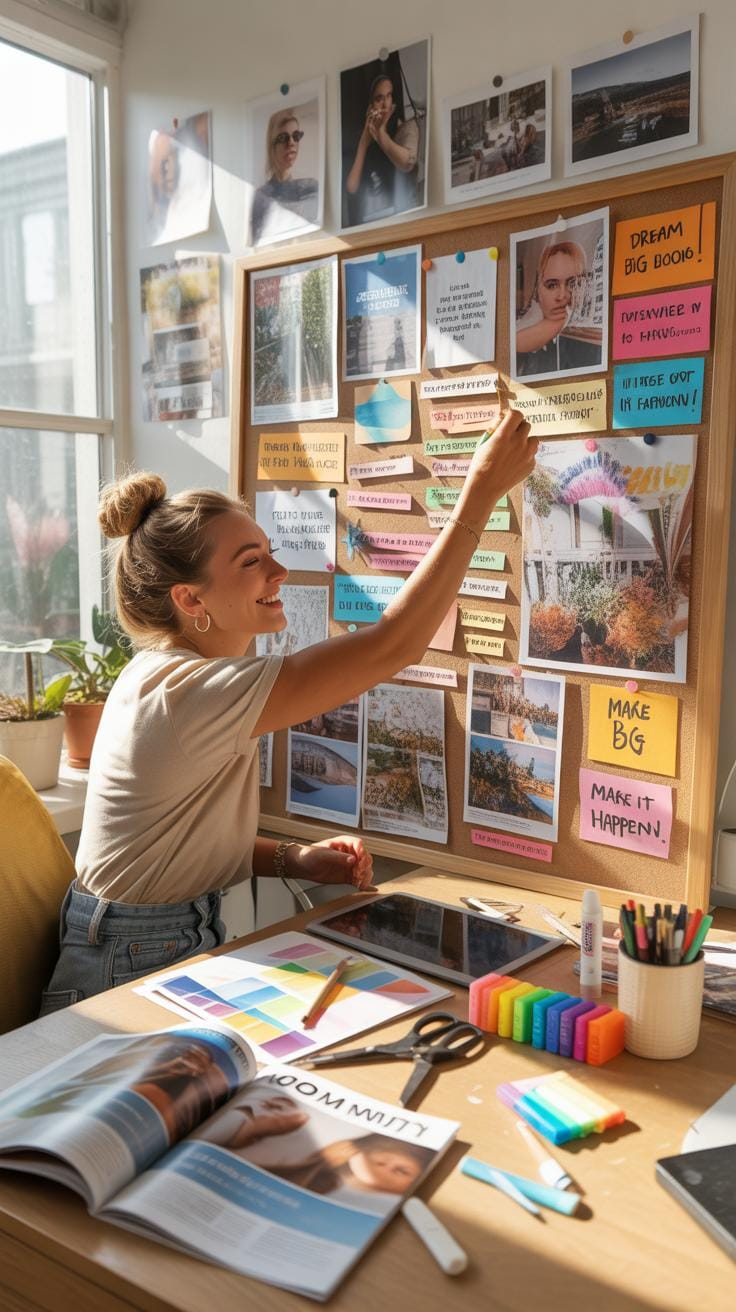
Making a vision board that centers on health and wellness isn’t just about slapping on any images or words. It’s a process that requires thought. To start, gather materials like a sturdy board or poster, scissors, glue, and magazines or printed pictures. You might also want markers, stickers, or washi tape to personalize it.
Begin by carving out a quiet moment for reflection. Consider what health and wellness mean to you. Are you focusing on physical fitness, mental calm, or balanced nutrition?
Then, arrange the images, affirmations, and goal notes you have collected in a way that feels inspiring. Don’t worry about perfect symmetry—your board should feel alive, not forced.
Place your board somewhere visible; it needs to regularly catch your eye, nudging you toward your health intentions without overwhelming.
Selecting Images And Affirmations
Choosing images and words for your health vision board can be tricky. Look for pictures that genuinely resonate rather than just pretty visuals. Suppose your goal is to eat healthier; an image of a vibrant salad or someone joyfully cooking might hit the mark.
Affirmations should feel believable yet encouraging. For example, “I am learning to listen to my body” can motivate without sounding like an unattainable demand.
Quotes can remind you of why you started or how far you’ve come, but go easy on overly generic phrases—they can feel hollow after a while.
Setting Clear And Measurable Goals
On your vision board, it’s crucial to list goals that are specific and measurable. Instead of vague aims like “get fit,” consider “walk 30 minutes five times a week” or “drink 8 glasses of water daily.” This clarity fuels motivation by turning ambition into achievable steps.
Make sure your goals feel realistic. It’s okay if you adjust them later—what matters is that the goals coax you forward rather than paralyze you with pressure.
Ask yourself: Can I track this? Will reaching this goal feel meaningful in my wellness journey? If the answer is yes, it belongs on your board.
Mental Health Benefits Of Vision Boards

Creating a vision board can do more than just organize your goals visually. It offers some mental health benefits that you might not expect at first glance. For one, it can reduce stress by providing a clear focus on positive aspirations, diverting your mind from anxiety-inducing thoughts. When you actively engage with images and words representing your desired health and wellness outcomes, you cultivate a mindset centered on hope and progress. This alone can foster a sense of control and optimism.
Interestingly, vision boards also encourage positive thinking by constantly reminding you what you’re working toward. It’s like giving your brain a consistent nudge to focus on the good rather than the obstacles. Such repetition can reshape your mental space, although it may not work the same way for everyone. But even if it’s subtle, it can help stave off negative thinking patterns.
Moreover, vision boards enhance focus by serving as a physical anchor for your intentions. You can glance at your board during moments of distraction to realign your thoughts. The process of sorting and selecting images can increase mental clarity and support emotional wellness. For me, there have been times when just looking at my vision board helped me feel calmer and more centered when life felt overwhelming.
Vision Board And Stress Reduction
Focusing on future goals through a vision board can lessen anxiety in surprising ways. By externalizing your hopes, you free up mental space otherwise consumed by worry. Visual reminders of your goals act as a buffer against stress triggers, calming the nervous system. This can be particularly powerful during stressful periods when you need something steady to hold onto.
However, it’s not just about seeing the pictures. Engaging emotionally with your vision board—feeling the excitement or peace associated with those goals—can amplify stress reduction. It’s a bit like guided meditation but more visual and personalized. So, next time you’re feeling wound up, spending a few minutes with your vision board might offer some relief.
Enhancing Focus And Emotional Wellness
Vision boards bring more than just motivation; they help sharpen your ability to concentrate on what matters most. When cluttered thoughts cloud your mind, your board can serve as a gentle reminder of priorities, helping you cut through mental noise. This can be crucial for emotional balance since clarity often reduces feelings of overwhelm.
Emotional wellness benefits as well, partly because vision boards encourage reflection and self-awareness. As you update and adjust the images and goals on your board, you become more in tune with your feelings and changes in your desires. Of course, the effect isn’t instant nor guaranteed for everyone, but many find the practice grounding amid emotional turbulence.
Have you noticed how a simple image can brighten your mood or refocus your energy? That’s energy you can harness through a vision board, even if it feels small. It’s an accessible tool that blends planning with emotional care, inviting you to nurture both simultaneously.
Physical Health Goals Visualized

Creating a vision board can make your physical health goals clearer and more tangible. When you see images or reminders of your desired exercise routines, healthy meals, or consistent sleep habits regularly, it’s easier to stay focused. You might realize that just picturing yourself jogging in the park or eating a colorful salad actually sparks motivation. It’s like holding a mirror to your goals daily. Over time, these visuals become little nudges towards healthier choices.
Tracking Exercise And Activity Goals
Including exercise-related goals on your vision board can help keep physical activity at the forefront of your mind. Maybe you cut out pictures of different activities you want to try — yoga, swimming, or hiking — to keep things interesting. You could also add milestones: “Run a 5K,” “Do 20 push-ups,” or “Try a new fitness class.” Seeing these goals represented visually nudges you to stick with your workouts even on tough days.
Nutrition And Sleep Visual Cues
Nutrition and sleep are often underestimated in wellness, yet vision boards spotlight their importance. Clip images of balanced meals, fresh fruits, or water bottles to remind yourself to eat well. Similarly, adding representations of rest, like cozy bedrooms or clocks set to an early bedtime, can encourage better sleep habits. These cues aren’t just decoration; they become quiet reminders that your health goals involve more than exercise—they’re about whole-body care.
Healthy Habits With Vision Boards
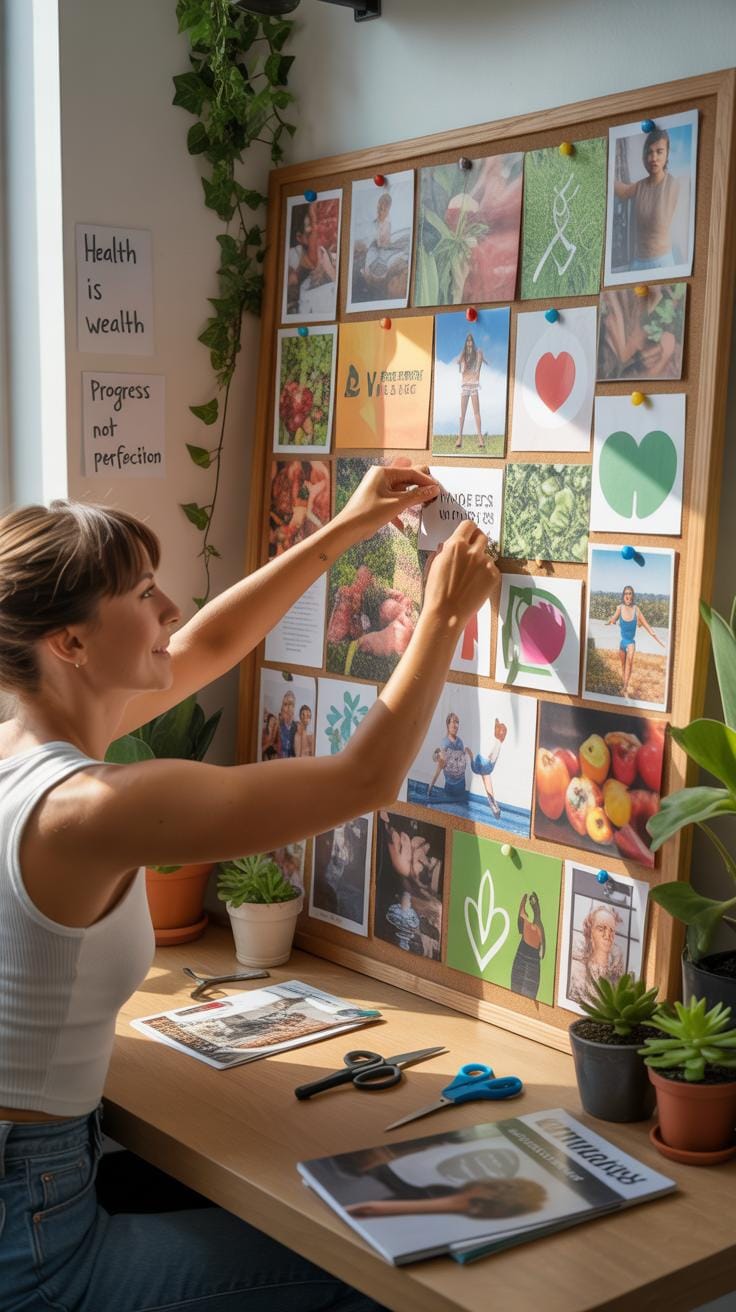
Using vision boards to develop and maintain daily healthy habits can be surprisingly practical. When you put specific images or words representing your intended habits—like drinking more water, taking short walks, or preparing balanced meals—you create a kind of visual contract with yourself. This isn’t just about seeing pretty pictures; it’s a tangible reminder that helps bridge the gap between intention and action.
Take for example a vision board that includes pictures of fresh fruits, a person meditating, and an alarm clock set for early morning. Those images alone can nudge you to eat better, practice mindfulness, or wake up earlier for a workout. It’s like those boards crystallize your goals into daily steps so it’s easier to follow through.
What’s interesting is how seeing these images repeatedly can make the habits feel more familiar, less of a chore. Even when motivation dips, a quick glance can rekindle that spark to keep going. It’s worth asking yourself: which habits do you tend to drop, and how could visual cues help nudge you back?
Building A Self-Care Routine
Vision boards aren’t just about big, dramatic goals; they’re also fantastic for shaping a gentle self-care routine. You might include reminders for drinking herbal tea, journaling a few minutes each day, or scheduling regular breaks from screens. These aren’t flashy habits but they do matter a lot for wellness and often get overlooked.
In my own experience, seeing a cozy image of a warm bath on my board helped me remember to take time to unwind, which I sometimes neglect when life gets busy. You could also paste in affirmations or quotes that encourage patience and kindness towards yourself. Little things like these accumulate, contributing to a stronger sense of well-being over time.
Consistency Through Visual Reminders
The real power of vision boards lies in consistency. Daily exposure to your board creates a gentle, ongoing reminder that keeps your habits alive. It’s not just about motivation but about embedding behaviors into your routine until they become second nature.
Try placing the board somewhere you pass by often—like on your fridge or next to your bathroom mirror. Each glance reinforces your intention. Even on days when you’re tired or distracted, these visual cues can pull you back on track. Think of it like a quiet, persistent friend nudging you onward.
Still, this isn’t foolproof. Sometimes the reminders get ignored or blend into the background. That’s why it helps to refresh your board occasionally to keep it engaging and aligned with your evolving goals. What small tweak could make your board more effective? Maybe changing images or adding a new habit worth developing?
Steps To Maintain Health Motivation

Keeping motivation alive over time for health and wellness goals can be tricky. It’s not a one-time thing; it demands ongoing attention and effort. Here’s a basic checklist to help you stay on track:
- Set clear, realistic goals that you can measure and track.
- Break your goals into smaller, manageable steps rather than thinking only about the big picture.
- Schedule regular check-ins with yourself to assess progress and adjust plans as needed.
- Incorporate variety to prevent boredom—change your workout, try new healthy recipes, or explore different wellness practices.
- Find a support system, whether it’s friends, family, or an online group, to share your journey and challenges.
You might wonder how often these check-ins should happen—it varies, but a weekly or biweekly review often keeps motivation fresh without feeling overwhelming.
Review And Update Your Vision Board
The vision board isn’t a “set it and forget it” tool. You should revisit it regularly to see what’s working and what feels outdated. Maybe an image or a goal no longer excites you. That’s okay. Swap it out.
Try scheduling a monthly or quarterly session to review your board. Ask yourself questions like: “Have I made progress here? Do these goals still feel aligned with what I want? What new inspirations can I add?”
This process keeps the vision board relevant and, importantly, keeps you engaged. It’s a visual reminder that your health journey is evolving—not static.
Celebrate Small Wins
Recognizing small successes is often overlooked but really crucial. Did you choose a healthy lunch three days in a row? That counts. Managed to get off the couch and walk for 10 minutes? That’s progress.
Rewarding these wins builds positive momentum. The rewards don’t have to be big—a relaxing bath, listening to a favorite song, or buying a small treat for yourself can work.
Celebrating small achievements makes your health goals feel doable rather than daunting. It can help you see that change happens in steps, not leaps, and that those steps matter.
Vision Boards Versus Goal Journals
Visual Inspiration Benefits
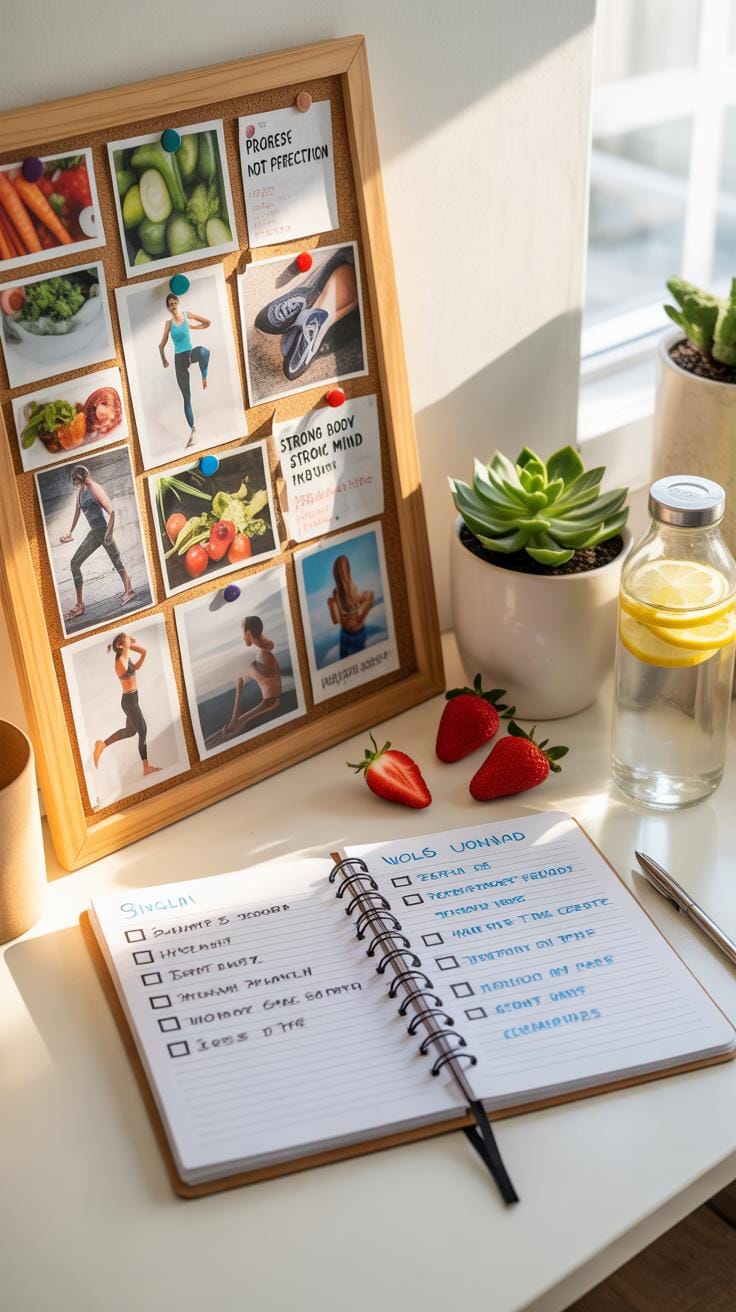
Vision boards have a unique appeal because of their visual nature. They collect images, affirmations, and symbols that resonate emotionally with you. This kind of display can stir feelings and create a kind of immediate motivation—perhaps stronger than words on a page. When you glance at a vision board, it feels like a reminder of your dreams in a way that’s quick and impactful.
But this emotional punch might also mean that the vision board stays more in the realm of daydreams, sometimes making it harder to translate those feelings into real action. I find that the connection is powerful, yet it can lack the detailed focus needed for steady progress.
Tracking And Reflecting With Journals
Journals let you capture more than just feelings; they track your journey. Writing down your efforts, setbacks, and successes forces you to reflect. This reflection, I think, is key to understanding what works or what drains you. It’s not as flashy as a vision board, but journals invite you to engage deeply.
The detailed records can reveal patterns over time, which are hard to spot in a vision board’s images alone. Yet, some might say that journaling feels more like a chore, especially if you prefer inspiration over analysis.
So, in a way, vision boards and journals serve different roles—one sparks emotions and focus, while the other supports ongoing understanding and adjustment. The mix of both might be worth considering if you want both motivation and structure in your health and wellness journey.
Addressing Common Pitfalls

Avoiding Unrealistic Goals
When setting health and wellness goals on your vision board, it’s easy to get carried away with what feels inspiring but might be out of reach. For example, picturing a marathon when you haven’t run a block in years might set you up for disappointment. Instead, try to focus on goals that match your current lifestyle and abilities. Maybe start with a goal like walking 15 minutes a day or trying one new vegetable each week. Small wins matter—they build your confidence and keep you moving forward. When goals feel doable, frustration is less likely to sneak in, making it easier to keep your motivation alive.
Taking Action Beyond Visualization
Vision boards can be a powerful motivator, but they aren’t magic. You can spend hours putting together images and quotes, yet if you don’t take concrete steps, the board alone won’t do the work for you. Turning your vision into real habits means breaking down your goals into actions—like scheduling workouts, meal prepping, or setting reminders to drink water throughout the day. I’ve seen people get stuck just admiring their boards, maybe feeling inspired in the moment but overwhelmed when it’s time to actually act. Asking yourself, “What’s one small thing I can do today to move toward this vision?” can make all the difference. It’s about that balance between dreaming and doing.
Examples Of Vision Boards In Practice

Case Study Of Weight Loss Motivation
Take the example of Sarah, a woman in her early 30s who struggled with weight for years. She created a vision board filled with photos of healthy meals, active people, and motivational quotes about perseverance. Each morning, she glanced at it while sipping her tea. The board wasn’t a magic fix, but it constantly reminded her of why she wanted change. Gradually, she swapped fast food for home-cooked meals and took up walking. Over a year, Sarah lost 40 pounds. Her vision board helped her stay focused—especially on tough days when results felt slow. It was like a quiet nudge, making her decision to stick with healthier choices rather than give up. It’s interesting how something so simple influenced real shifts in behavior.
Mental Health Improvement Stories
Then there’s Jason, who battled anxiety and depression. His vision board was less about images and more about affirmations—phrases like “I am enough” and “Breathe through the storm.” He included pictures of peaceful scenes and people meditating, which helped anchor him on difficult days. Jason used his vision board as a daily reminder of self-compassion and the importance of mental self-care. This subtle, visual encouragement motivated him to keep attending therapy sessions and practicing mindfulness. Although progress wasn’t always linear, the board helped him reconnect with hope. It’s a poignant example of how vision boards can support mental health by visualizing not just goals but states of well-being.
Conclusions
Vision boards can be a practical resource to keep your health and wellness goals visible and motivating. They encourage you to focus on the steps needed to improve your lifestyle. By combining vision boards with goal-setting techniques, you amplify your chances of making lasting changes.
Remember, motivation is just one part. Consistency in self-care and healthy habits plays a large role in your overall wellness. Use the vision board as a guide but pair it with real actions. Your wellness journey benefits most when you keep your goals clear, stay motivated, and work daily on your physical and mental health.