
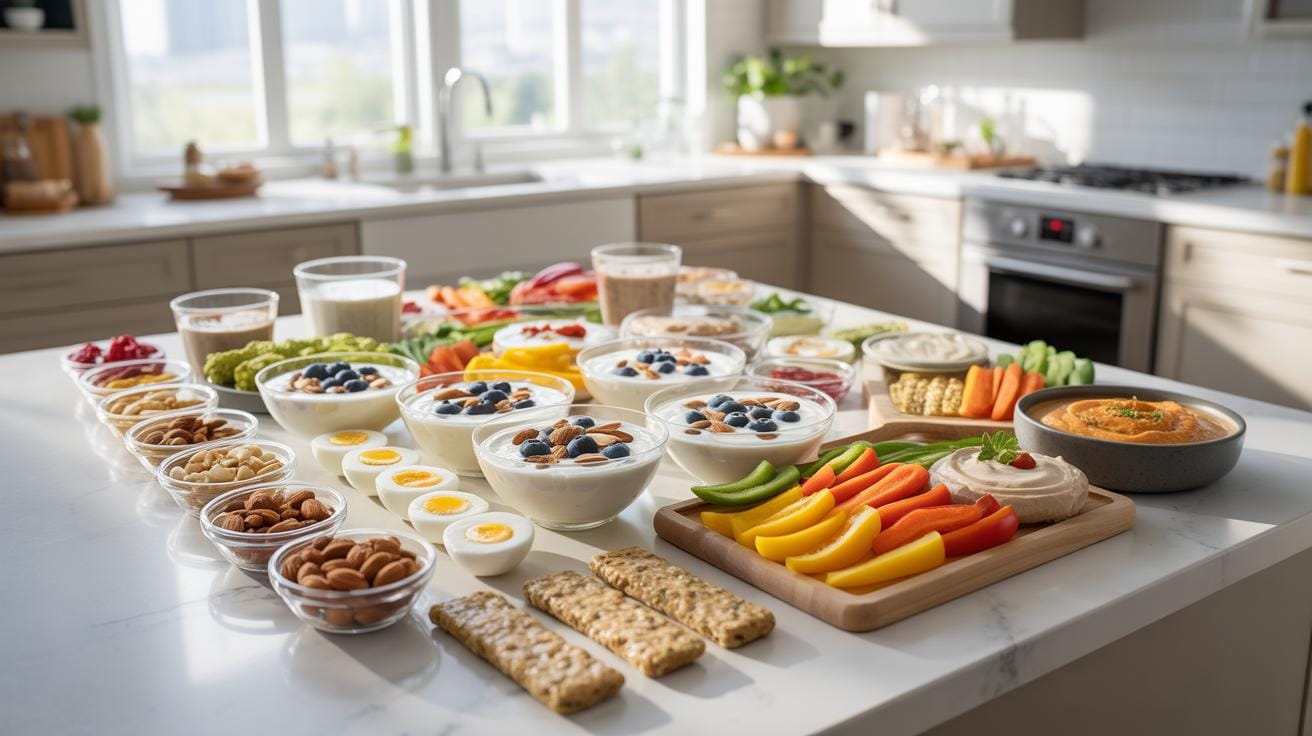
Protein Snacks for Meal Prep and Energy
Healthy protein snacks support your body by giving it the fuel it needs to stay strong and active. Protein is an important part of your diet because it helps build muscles and keeps you full between meals. These snacks are great for meal prep and can give you a quick energy boost when you need it the most.
If you plan your meals ahead and include protein snacks, you can save time and eat better. This article will guide you through the benefits of protein snacks, how to choose the right ones, and tips for preparing snacks that keep your energy high throughout the day.
Benefits Of Healthy Protein Snacks
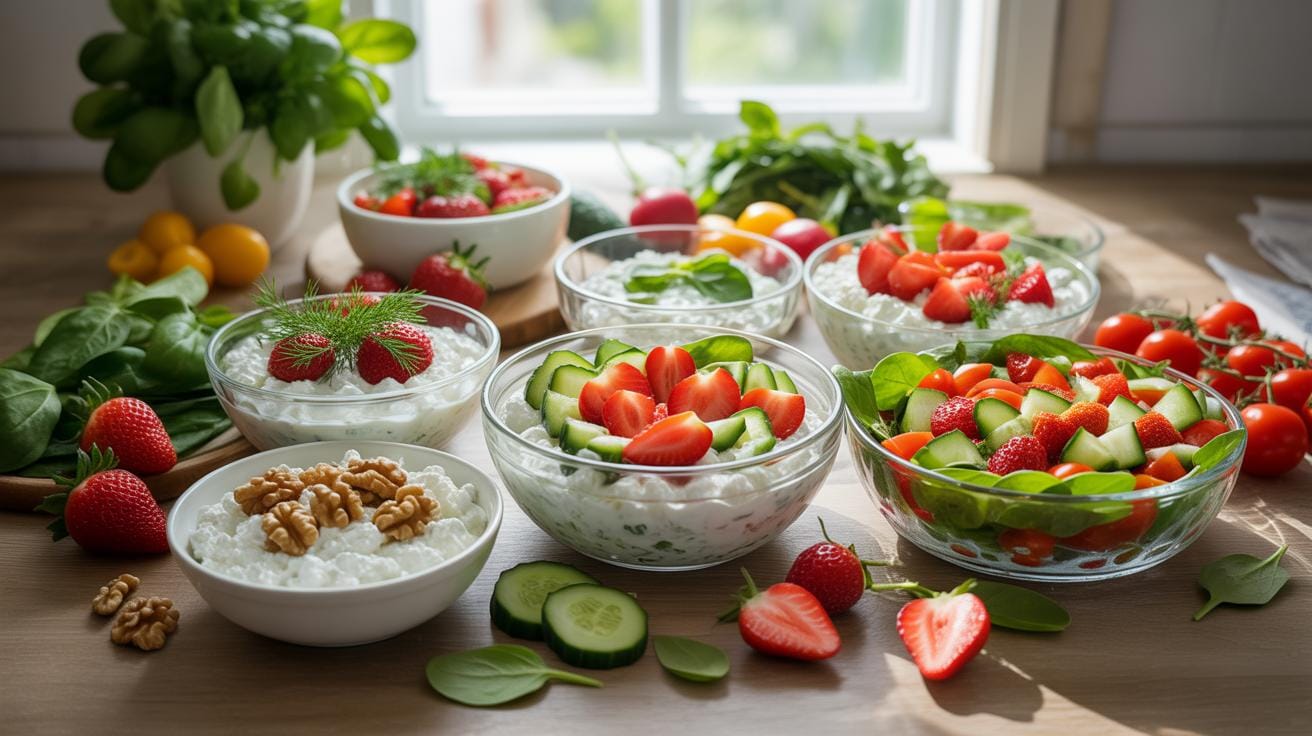

Including healthy protein snacks in your daily diet can make a stronger difference than you might expect. Protein plays a big role in repairing your muscles after activity. When you work out or even just move around a lot, tiny tears happen in your muscle fibers. Protein helps those fibers rebuild and grow back stronger. It’s a kind of recovery fuel for your body.
Besides muscle repair, protein snacks can keep you feeling full for longer. Unlike sugary or carb-heavy snacks that often lead to energy crashes, protein provides a steadier source of fuel. That sense of fullness might mean fewer cravings and less snacking on unhealthy options throughout the day. I sometimes notice, after eating a small handful of nuts or a boiled egg, I’m less tempted to grab chips or sweets later.
On top of that, protein supports your overall health in subtle ways. Your body needs protein to produce hormones, enzymes, and other important molecules. Skimping on it may affect things like your immune system or how quickly you recover from illnesses. So, a well-timed protein snack isn’t just about immediate hunger—it’s about helping your body function better over time.
Importance Of Protein For Your Body
Your body is constantly breaking down and building up protein. This process is what keeps your muscles healthy and growing. When you don’t get enough protein, your body struggles to repair daily wear and tear. This isn’t just about working out. Even normal activities cause small muscle damage that needs fixing.
Protein also provides the amino acids your body can’t make on its own. These essential amino acids come only from food. Without them, muscle growth slows down, and even simple healing processes can lag. For people trying to stay active or recover from injuries, that makes protein a sort of dietary priority.
It’s interesting—sometimes people think only athletes need lots of protein, but everyone benefits from a steady supply. Your skin, hair, and nails also rely on protein to stay strong. So, including healthy protein snacks between meals covers more than just one area of health.
Protein Snacks And Appetite Control
Protein snacks do something that might surprise many—help control your appetite. When you eat protein, your body releases hormones that signal fullness to your brain. This can slow down hunger pangs and reduce thoughts about food for a while. It’s not magic, but it’s definitely noticeable for many who switch to protein-rich snacks.
Because of this, snack choices rich in protein might help prevent overeating later on. If you’ve tried skipping snacks or only eating carbs between meals, you probably experienced sudden hunger waves that make you reach for bigger portions at breakfast or dinner. Protein can curb those waves.
One could wonder, is it about the protein itself or just the act of eating? While eating does help, protein triggers a stronger and longer-lasting feeling of satiety. So, if you want to avoid mindless munching or late-night snacking, including a protein snack might be the way to go.
How To Choose Protein Snacks
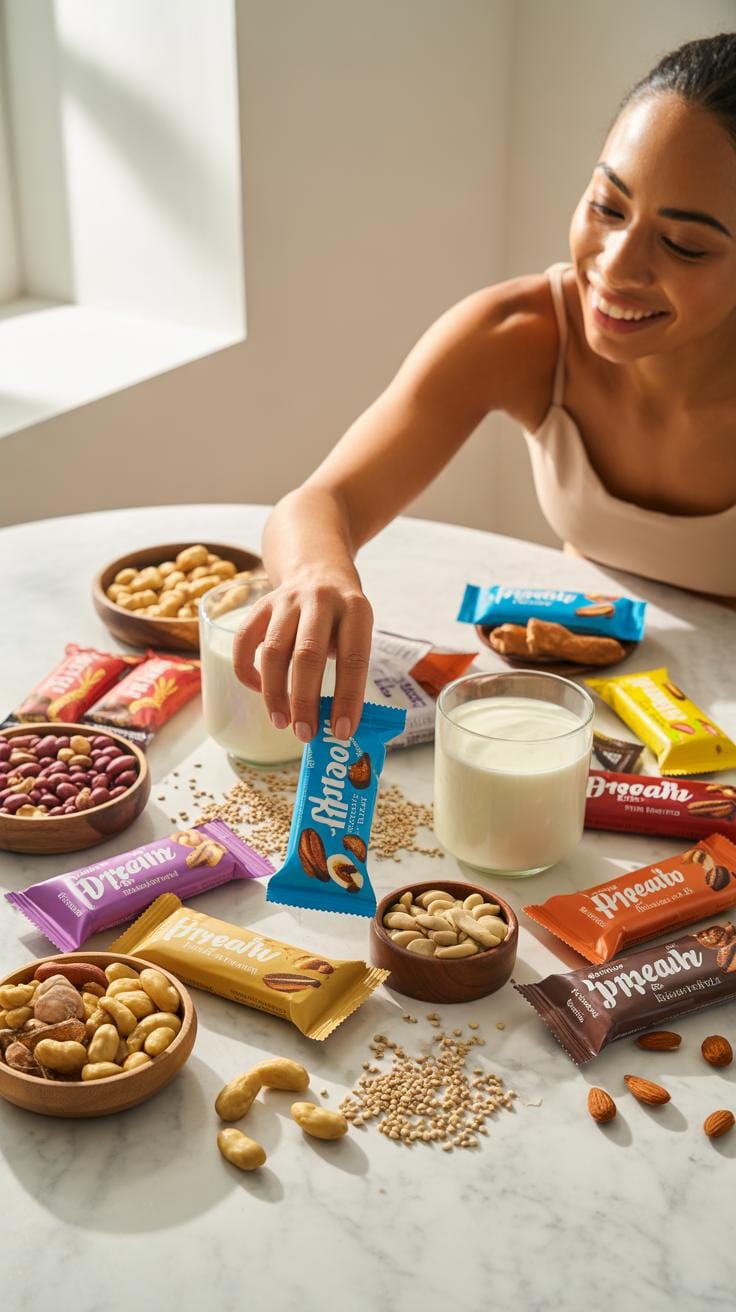
When picking protein snacks, it’s not just about grabbing the first bar or pack that says “high protein” on the label. There are a few key things to keep an eye on that actually make a difference.
First, start with protein amount per serving. You want snacks that have a meaningful protein punch—usually around 10 grams or more. Less than that, and you might be better off with a small meal instead of a snack. Protein fuels your muscles and keeps hunger at bay, so low numbers can feel disappointing or just won’t do the trick.
Then, the ingredient list says a lot more than the front label. Look for snacks made with recognizable, natural ingredients. Things you can pronounce or find in your kitchen. If it’s mostly a chemical soup or “artificial” something, that’s a sign to reconsider. Real nuts, seeds, whole grains, or dairy tend to indicate better quality.
Portion size can sneakily make a snack unhealthy, too. Some packs look small but hide many servings inside. Check the grams and calories—if it’s too large, it might derail your meal prep goals or energy balance. Smaller, controlled portions usually work best for staying on track without overeating.
Lastly, scan for hidden sugars and fats. Labels can be tricky. Avoid snacks where sugars or fats are listed near the top of ingredients or added in forms like corn syrup, hydrogenated oils, or palm oil. These add calories without benefits and can make energy dips worse later on.
Choosing wisely means paying attention beyond just “high protein”—you want a snack that supports your body and your goals, without surprise extras that undermine your effort. It’s a bit of a balancing act, but with practice, it becomes second nature. What’s your go-to protein snack, by the way? Have you noticed any differences based on what you pick?
Preparing Protein Snacks At Home
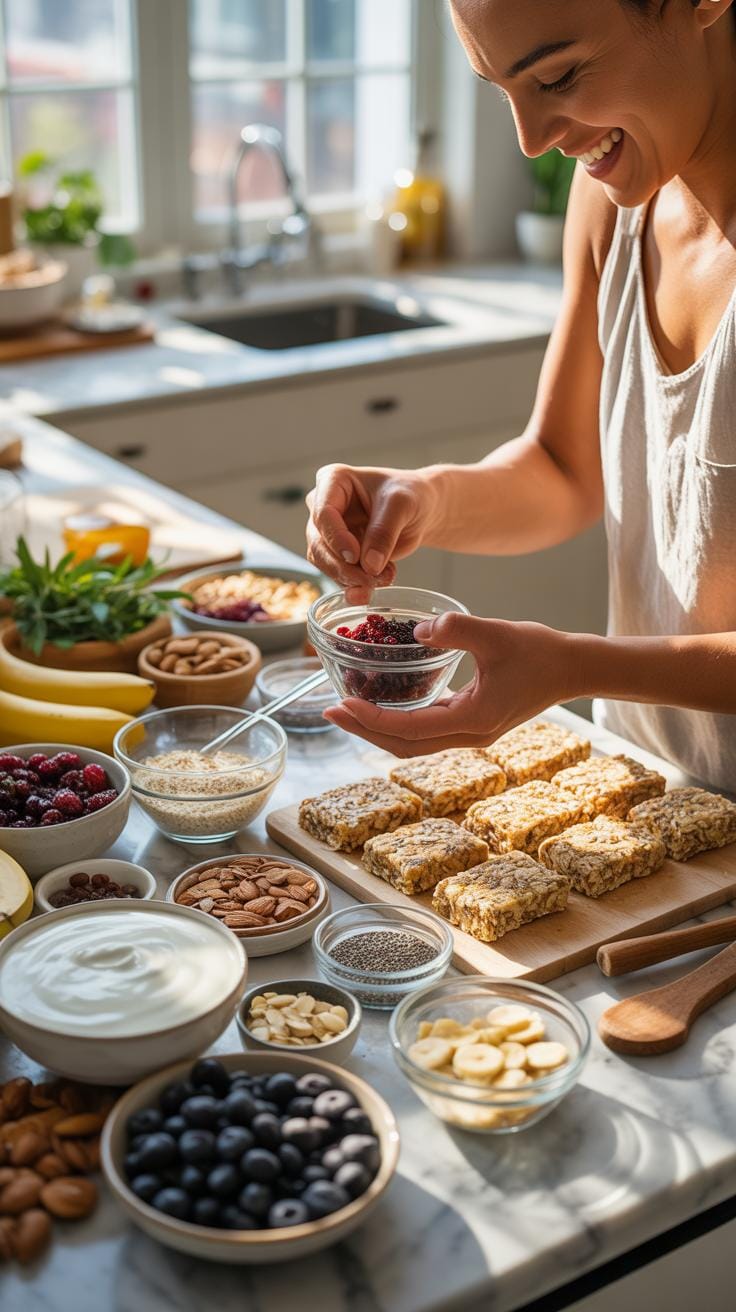
Making protein snacks at home doesn’t need to be complicated or time-consuming. You probably already have staples like eggs, nuts, yogurt, or beans sitting in your kitchen. These can be the foundation for quick snacks that keep you energized between meals.
For example, hard-boiled eggs are a simple choice. Boil a few at once, peel, and store them in the fridge. They’re grab-and-go, and you can sprinkle some salt or paprika for extra flavor. Or try mixing Greek yogurt with a scoop of protein powder and a handful of berries for an easy, creamy snack.
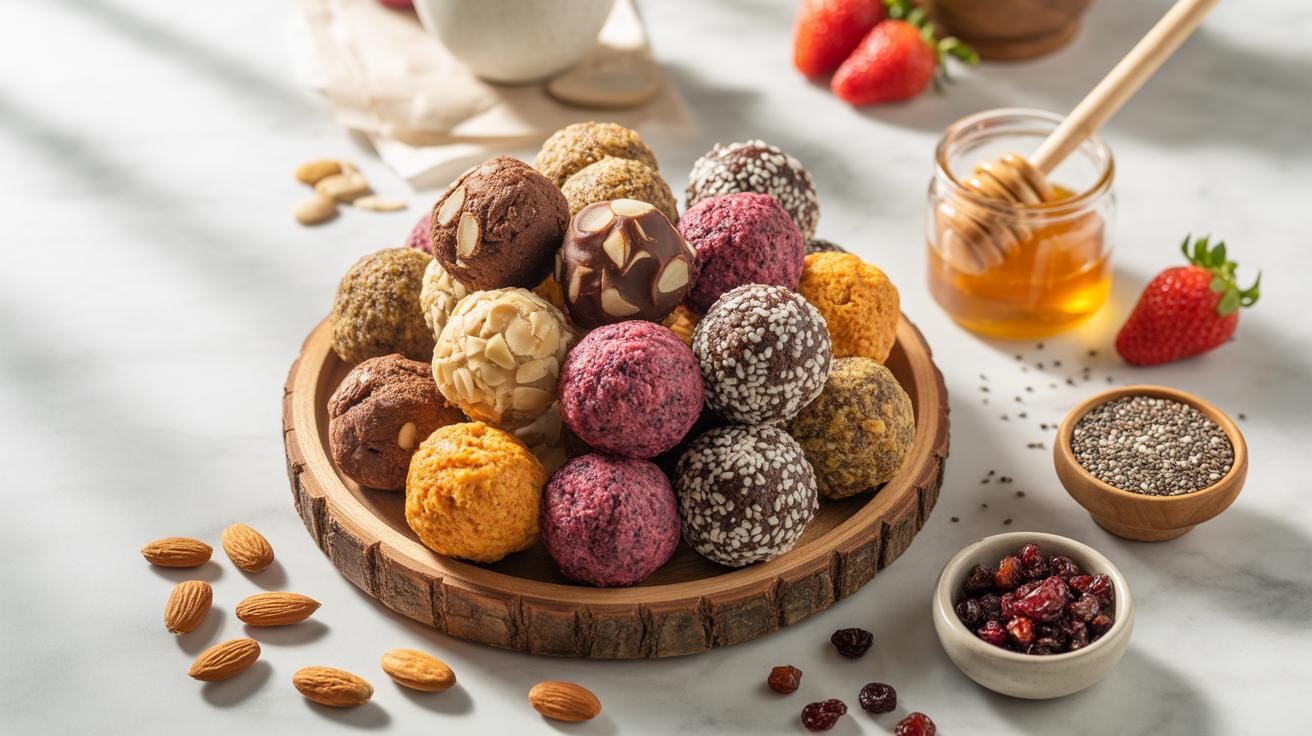
Energy bites are another favorite. Combine peanut butter, oats, chia seeds, and a bit of honey or maple syrup into small balls and refrigerate. Trust me, they’re surprisingly satisfying and you can tweak the ingredients based on what’s on hand.
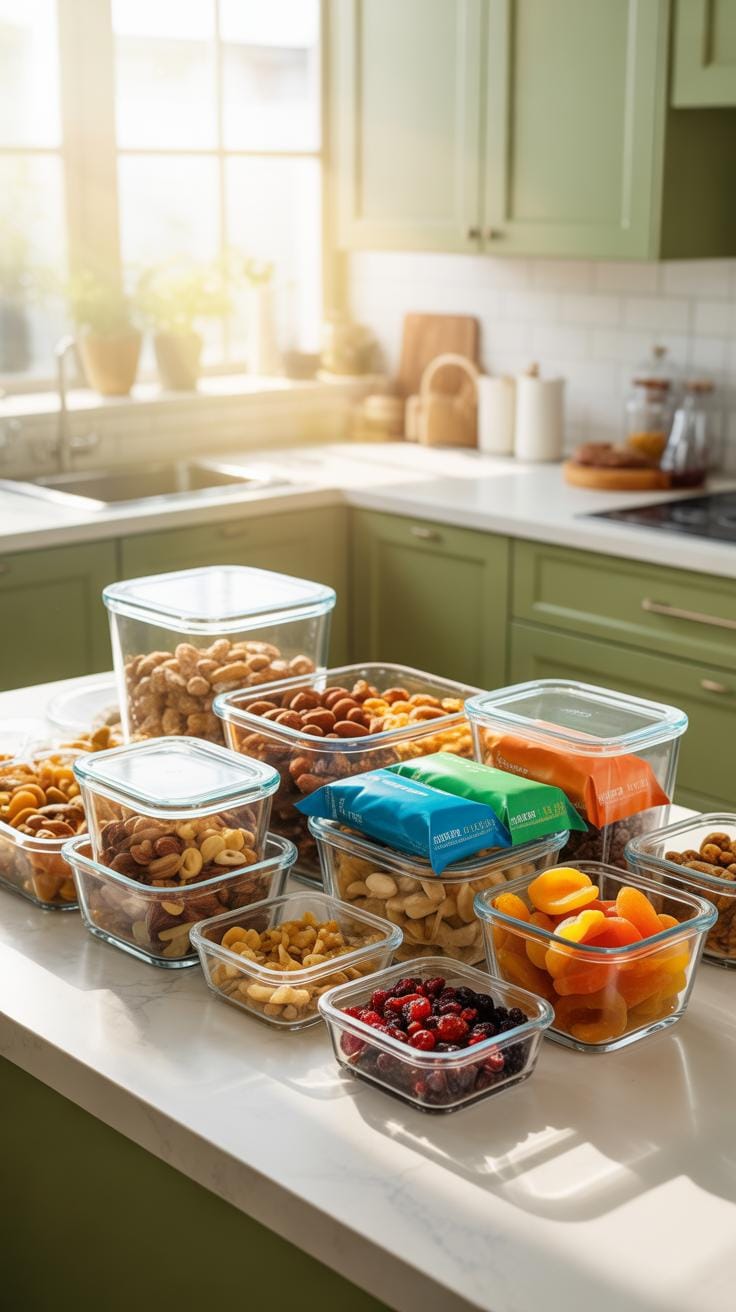
Batch prepping these snacks lets you avoid last-minute, less nutritious options. Store your snacks in clear containers so you actually see what you have and might be more willing to eat them. It’s oddly motivating.
Simple Protein Snack Recipes
Here are a few quick recipes you might find handy:
- Tuna Salad Lettuce Wraps: Mix canned tuna with a little olive oil, mustard, diced celery, and pepper. Spoon into large lettuce leaves for a crunchy, protein-rich snack.
- Cottage Cheese and Pineapple: A small bowl of cottage cheese with pineapple chunks balances sweet and savory, delivering protein and some natural sugar.
- Roasted Chickpeas: Drain and rinse canned chickpeas, toss with olive oil and spices, then roast until crisp. They store well and satisfy a crunchy craving.
These recipes use basic ingredients and come together in minutes. They might not be gourmet, but they do the job.
Batch Prepare Snacks For The Week
Preparation is key. On one day, dedicate 30 minutes to make several snacks at once. For example:
- Boil a dozen eggs, peel and store them in a sealed container.
- Make a big batch of energy bites and portion them into small containers.
- Cook and roast chickpeas or other legumes, then split into snack-sized bags.
Use airtight containers or reusable bags, and keep snacks refrigerated if needed. This way, you avoid the “what do I eat now?” question. Having snacks ready encourages healthier choices, especially when you’re in a rush or feeling low on energy.
Also, mixing up the snacks each week helps prevent boredom. You’ll be less tempted to skip snacks altogether. I’ve found that even just rotating between eggs one week and roasted chickpeas the next keeps things interesting enough to stick with it.
Protein Snacks For Meal Prep Success
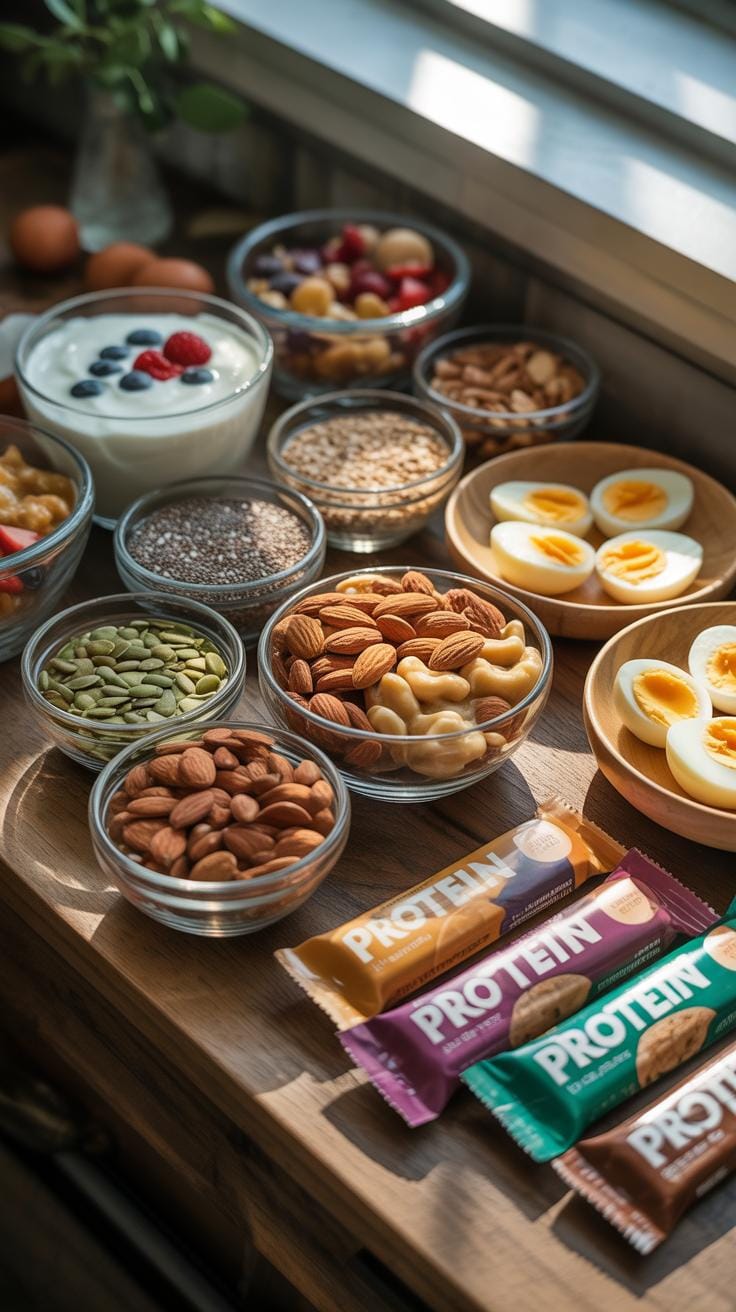
When you add protein snacks to your meal prep routine, you’re not just tossing in extra food. It can actually shift the whole balance of your meals in a good way. Protein helps fill you up and keeps your blood sugar steadier, which means fewer random cravings that throw off your plans. This can make the difference between sticking to your goals or reaching for whatever’s quick and easy.
Protein snacks do more than just help with fullness. They add variety, too. If your weekly menu feels a bit repetitive, a well-chosen snack can change the pace — think hard-boiled eggs, Greek yogurt, or a handful of nuts instead of just salad or sandwich repeats.
There’s also a practical angle here. Having snacks ready means less fumbling around looking for something to eat when hunger strikes. This saves you time throughout the day, which is especially helpful if you’re juggling work and other commitments. I’ve found that prepping little protein portions ahead of time reduces the stress of last-minute meal decisions and stops me from reaching for less nutritious options out of haste.
You might wonder if protein snacks just complicate things further. But really, they often simplify your day by filling nutritional gaps and keeping meals balanced, which can be tough when you’re simply trying to get through a busy week.
Energy Boost From Protein Snacks
Protein Versus Sugar For Energy
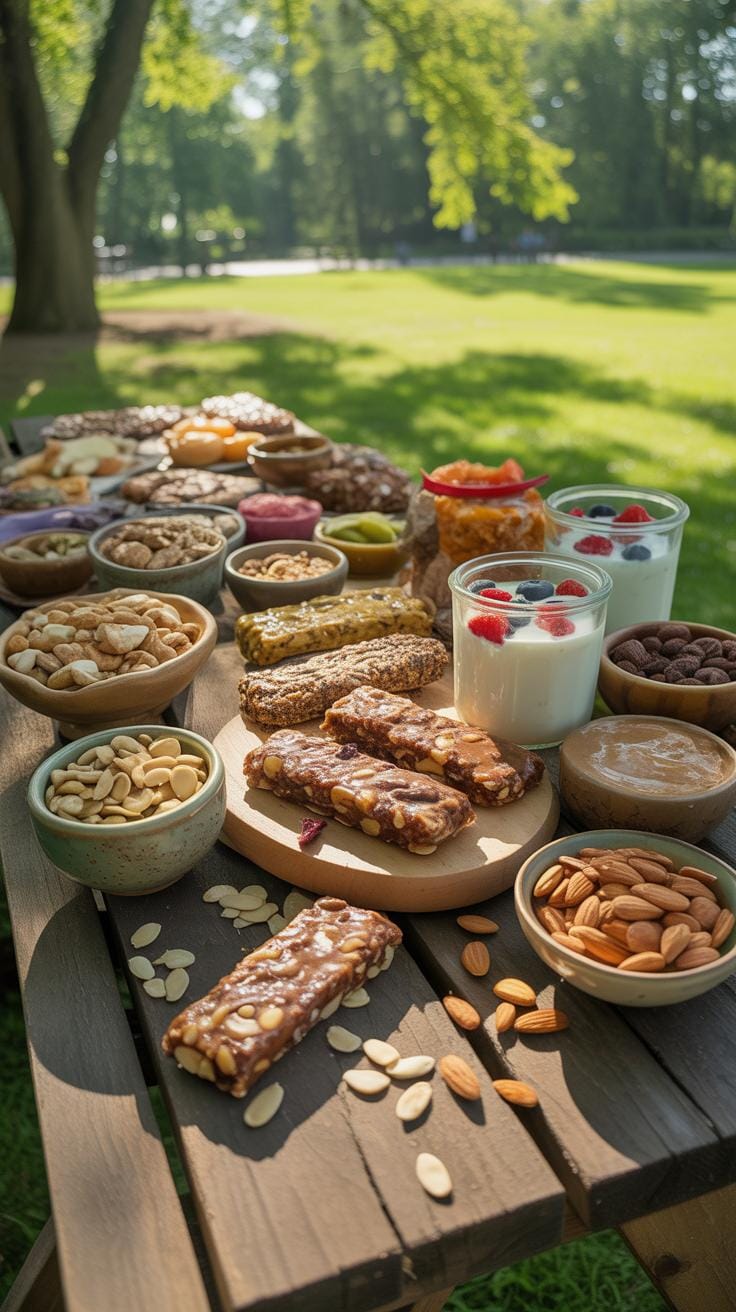
Protein snacks deliver a slower, steadier source of energy compared to sugary snacks. When you eat something sugary, you often feel a quick surge of energy. It’s kind of like a spark. But that spark tends to burn out fast, sometimes leaving you more tired than before. That crash can hit unexpectedly, which is frustrating when you need to stay productive.
On the other hand, protein takes longer to break down in your body. This means your blood sugar levels stay more balanced, and your energy doesn’t spike wildly or fall off a cliff. You may notice you feel fuller, too, which helps curb mindless snacking. While some days sugar might tempt you with its instant effect, protein tends to support more consistent energy throughout the day.
When To Eat Protein Snacks For Energy
Timing protein snacks is a bit of a balancing act—there’s no one-size-fits-all. Many people find that mid-morning or mid-afternoon snacks rich in protein help fend off that sluggish lull often creeping in between meals. I’ve noticed sometimes a protein bite before a run or workout keeps me energized longer than carbs alone.
Before long meetings or when you need to focus, protein snacks might help with alertness and concentration, preventing energy dips. But if you snack on protein too close to a big meal, you might feel uncomfortably full or sluggish. It’s about experimenting with your schedule and paying attention to how your energy shifts after eating.
What’s your experience—do you reach for protein when you feel tired, or is it more of an afterthought? There’s a bit of trial and error before you find that sweet spot where protein snacks really keep your energy stable.
Common Protein Snack Examples

Finding a good protein snack that fits easily into your day can sometimes feel tricky. You want something simple, but also something that actually helps keep you going. Some popular options are boiled eggs, turkey or chicken slices, and tuna packets. These are all straightforward, no-fuss snacks that you can grab quickly whether at home or on the go.
Other easy-to-prepare protein snacks include cottage cheese topped with a bit of fruit, or a small handful of trail mix with nuts and seeds. These not only supply protein but also bring in healthy fats and fiber, which can help you feel fuller longer. Sometimes, I just slice some grilled chicken breast and eat it cold as a quick bite, which surprises me with how satisfying it can be.
Have you tried roasted chickpeas? They’re crunchy, lightly salted, and have a good protein kick. They’re easy to season yourself in the oven, so you’re in control of how much salt or spice you add. If you’re pressed for time, pre-made versions are widely available, making them a nice alternative to more typical protein bars.
Whole Food Protein Snack Ideas
Snacking from whole foods often feels more natural, maybe even a bit more nourishing. Think nuts—almonds, walnuts, pistachios—packed with protein and healthy fats. Greek yogurt is another solid choice, especially when it’s plain, letting you add your own fresh fruits or a drizzle of honey. It’s rich in protein and helps you avoid the sugars often hidden in flavored yogurts.
Cheese doesn’t have to be reserved for meals only. Small cubes of cheddar, mozzarella sticks, or string cheese are easy and portable. They provide not just protein but calcium, which often gets overlooked. For a crunchy alternative, try edamame pods—frozen and steamed, they’re fun to eat and full of plant-based protein.
Peanut butter, while something to watch portion-wise, also counts here. Spread a bit on celery sticks or apple slices for a balance of protein and fiber that keeps your energy steady. The beauty of whole food snacks is their simplicity—you rarely need more than a few ingredients to build a satisfying, protein-rich snack.
Packaged Protein Snacks To Try
Packaged protein snacks offer convenience, especially when you’re moving through a busy day or traveling. Common options include protein bars, beef jerky, and ready-made protein shakes or powders. Choosing the right ones, though, takes a bit of care. Not all protein bars are equal—some are more sugar than protein, which can actually leave you feeling sluggish.
Look for bars that list protein near the top of their ingredients and have natural sugars from fruit or nuts, rather than added sweeteners. Beef jerky can be a strong protein source, but some brands load it with sodium or preservatives. Picking choices with fewer additives can make a difference overall.
If you prefer shakes or powders, check for ones that use clean ingredients, like whey or pea protein, without too many artificial flavors. It’s sometimes tricky to find a product you like on the first try, so experiment a little. Sometimes what works best for energy and satiety isn’t just what’s popular or trendy.
Protein Snack Storage Tips
Best Containers For Snack Storage
Choosing the right container can really make a difference in keeping your protein snacks fresh. For dry snacks like nuts, seeds, or protein bars, airtight containers or resealable bags work well—they keep moisture out and preserve texture. Glass jars with tight lids are useful; they don’t absorb odors, which can be an issue with plastic sometimes. For snacks with moisture, such as boiled eggs, yogurt, or protein-rich dips, using BPA-free plastic containers or glass containers with secure lids helps prevent leaks and keeps the snacks from drying out.
Portion control can be easier when you use small containers for single servings. Have you ever grabbed a full tub of nuts, only to realize it’s more than you planned to eat? Storing snacks in small batches can help avoid that.
Shelf Life And Expiry Awareness
Knowing when your protein snacks have gone bad is key, but it’s not always obvious. Always check the expiry date on packaged items like protein bars or jerky. For homemade snacks, track storage time mentally or with a label. Some things smell off, but others spoil silently—like some dairy-based protein snacks that might just taste a bit sour before you notice.
Keep an eye out for signs like mold, strange smell, or changes in texture—slimy surfaces, excessive dryness, or crumbling can all be clues. For example, cooked chicken slices used as snacks typically last about 3-4 days refrigerated, and keeping them any longer can risk foodborne illness.
Does it ever feel tricky to decide if something’s still safe, especially if you’re unsure how long it’s been stored? Trust your senses but when in doubt, throwing out may be smarter. You don’t want to waste snacks, but risking your health is worse.
Avoiding Pitfalls In Protein Snacking
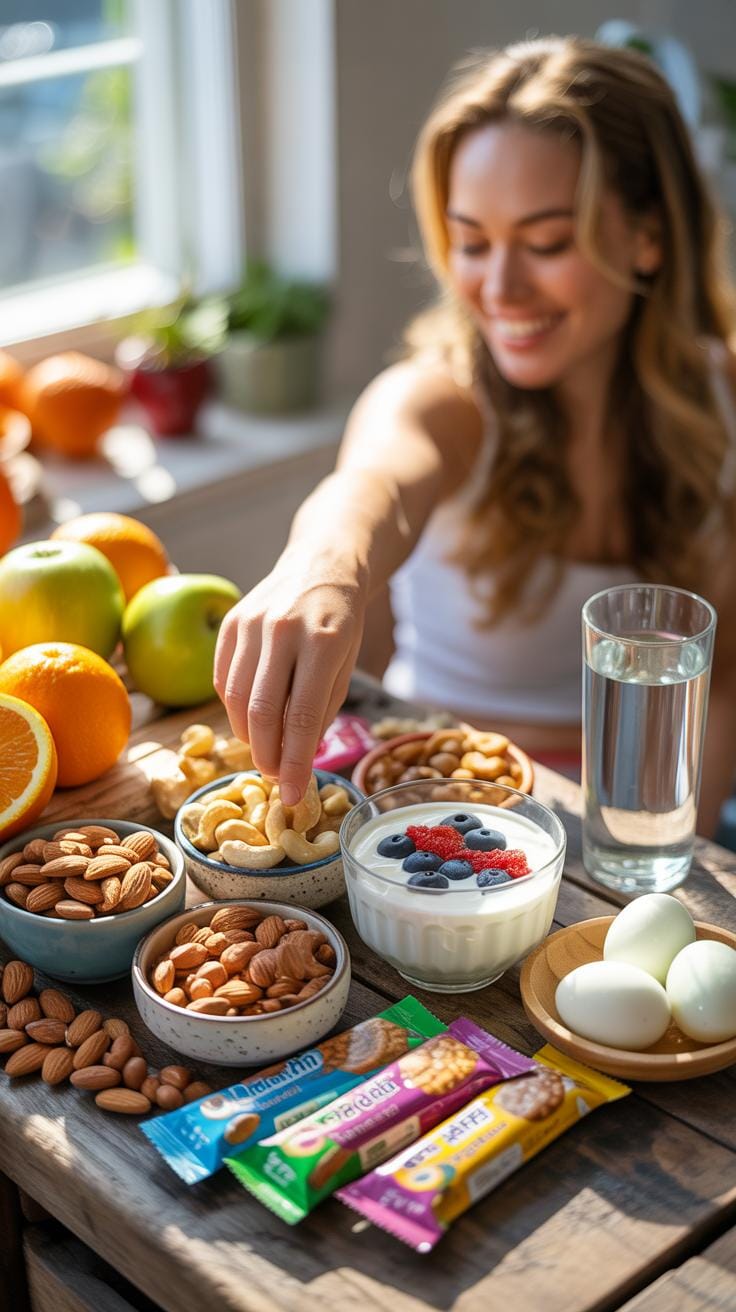
Many people think that grabbing any protein snack is automatically a smart choice, but that’s not always true. It’s easy to fall into traps like overeating simply because something is labeled “healthy” or “high protein.” Even with good intentions, a protein bar or shake can become a hidden calorie bomb if portions aren’t watched closely.
Portion control can feel tricky. You might assume a bag of nuts or a container of yogurt is fine to eat all at once, but those calories add up fast. Small servings are usually enough to keep your energy stable without leading to unwanted weight gain.
Another common mistake is choosing snacks based on protein quantity alone, without looking at quality. Many ready-made options pack in additives like sugar, artificial flavors, or low-grade protein isolates. These can leave you feeling sluggish, not fueled.
Try to steer clear of protein snacks with:
- Excess added sugars or sweeteners
- Unrecognizable ingredients lists
- Highly processed protein sources low in essential amino acids
Have you ever eaten a “protein” bar only to crash an hour later? That might be why.
Picking simple, whole food snacks, like Greek yogurt with nuts or a boiled egg, often prevents that sluggish feeling. It’s about quality and quantity, not just hitting a protein number.
Tracking Your Protein Intake
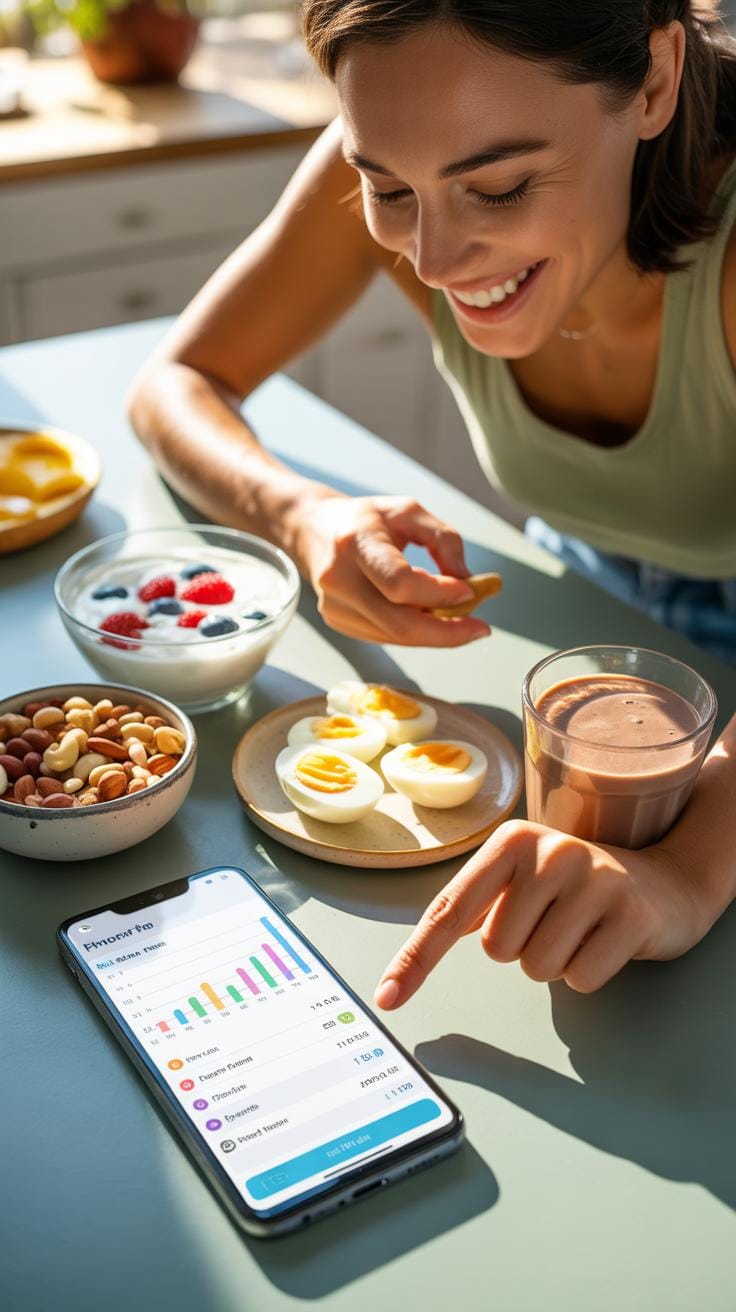
Tracking protein every day can feel tedious, but it doesn’t have to be complicated. When you have clear goals in mind—whether for muscle gain, weight maintenance, or just balanced energy—snacks packed with protein can make a big difference. Think of them as little checkpoints that help you stay on track between meals.
One easy approach is to jot down protein amounts as you eat. It’s surprisingly helpful to see numbers upfront rather than guessing. Protein snacks like nuts, yogurt, or boiled eggs can fill gaps you might otherwise ignore. Simply carrying a few protein-rich snacks can prevent you from falling short.
Have you ever thought about how a small handful of almonds or a protein bar actually adds up by the end of the day? Sometimes you realize you’re closer to your target than you thought, just by counting protein snacks. It also makes adjusting your main meals easier—if you snack smart, you don’t have to overload dinner.
Simple Methods To Count Protein
When it comes to counting protein, the nutrition label is your best friend. Almost every packaged snack lists grams of protein per serving. Just check the serving size first, because that’s crucial. If you eat double the serving, you’ll need to double the protein number too.
Apps are a handy alternative if you don’t like reading labels or want a bit more help. Many let you scan barcodes, search foods, or input homemade items. Some apps even estimate your daily protein needs and alert you if you’re close or low. This can be surprisingly motivating.
If you don’t want to rely on tech, a rough estimate based on common snacks works too. For example:
- One boiled egg: about 6 grams
- A quarter-cup of almonds: roughly 7 grams
- A small Greek yogurt: around 10 grams
- A standard protein bar: anywhere between 15-20 grams
Knowing these simple numbers makes it easier to mix and match until you hit the protein target for your snack or the day.
Adjusting Intake Based On Your Needs
Your protein needs aren’t fixed. They shift depending on what you’re doing or aiming for. On days when you’re more active—maybe you did a tough workout or a long hike—you might want a bigger protein snack to help recovery.
On less active days, smaller protein snacks may suffice. The body simply doesn’t demand as much muscle repair or rebuilding without that extra strain. But if your goal is weight loss or managing hunger, increasing protein intake even on rest days might help with satiety.
People with certain health goals, like improving muscle tone or managing blood sugar, can also tweak their protein portions accordingly. You might experiment by adding an extra boiled egg or swapping regular yogurt for a higher-protein version.
It can feel a bit like trial and error—I guess that’s just part of figuring out what works for you. But listening to your body, noticing how you feel after different protein snacks, and adjusting gradually is a solid way to hit your targets without stress.
Make Protein Snacking Part Of Routine
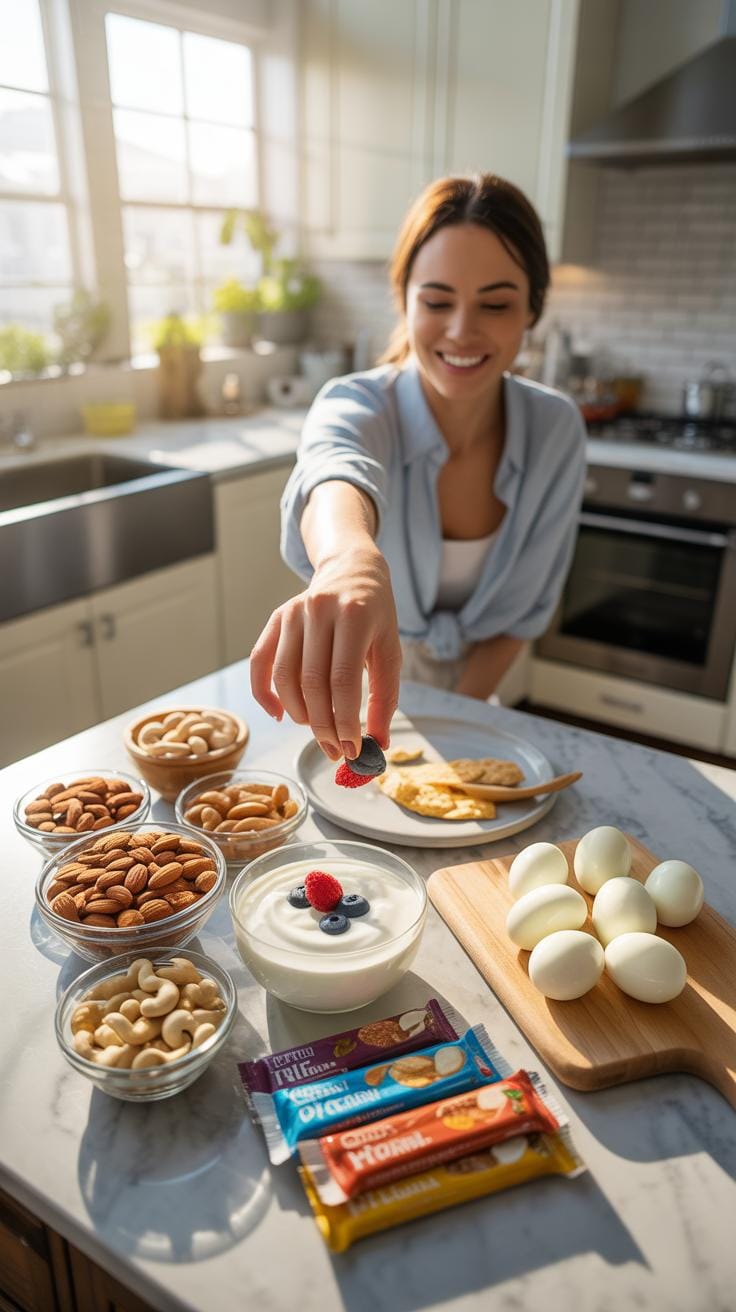
Building a habit around protein snacking isn’t as simple as just grabbing a bar or a handful of nuts. It takes thought and some repetition. When you make protein snacks a regular part of your day, you begin to notice how they affect your energy and cravings. Maybe you start feeling more steady between meals or less tempted by sugary treats.
Think of it like this: instead of waiting to get hungry and then just grabbing whatever’s handy, you prepare protein snacks in advance and set specific times to enjoy them. This way, your body learns when to expect fuel. That predictability can actually calm down those annoying energy dips.
Plan Your Snacks Like Meals
When you see snacks as mini-meals, it changes your approach. You want snacks that balance protein with a bit of carbs or healthy fats to keep you feeling full and focused. Planning ahead also means you don’t rely on vending machines or unhealthy quick fixes.
- Decide what snacks you’ll eat and when—it could be mid-morning, mid-afternoon, or whenever your energy usually fades.
- Mix it up. One day have Greek yogurt with nuts, the next boiled eggs or a small turkey wrap.
- Prep snacks the night before or on weekends, so grabbing something healthy feels natural, not like a chore.
Even if your schedule changes, having a plan helps you adapt without falling into default tempting foods.
Stay Consistent For Results
Consistency might sound like a boring word, but when it comes to protein snacking, it really matters. Eating protein snacks steadily over days and weeks can improve your metabolism and mood. Yet, life isn’t always predictable, so don’t stress if you miss a day.
What counts is getting back on track rather than perfection. Maybe keep a small log or set reminders until the habit feels natural. Over time, you might even notice better focus or fewer energy crashes. And then you’ll probably want to keep going without much effort.
What’s your current snack routine? Could adding protein-rich options at certain times change how you feel? Sometimes a small habit shift can make a noticeable difference.
Conclusions
Including healthy protein snacks in your meal prep can make a big difference in your daily energy and nutrition. They help keep hunger away and provide the nutrients your body needs to work well. You can prepare snacks in advance that fit your taste and lifestyle easily.
By choosing the right protein snacks, you take control of your health and energy. Start with simple options and see how small changes can improve your meals and your day. Keep learning and making good choices for your body.